

This post contains affiliate links. Please see our disclosure policy.
If there is one thing that frustrates new Big Green Egg owners the most, it is temperature control, which is exactly why I created this Big Green Egg Temperature Control Guide for Beginners.
Coming from a gas grill or traditional smoker, the Big Green Egg behaves differently. The ceramic design holds heat incredibly well, airflow matters more than you think, and small vent adjustments can make a big difference.
The good news? Once you understand how temperature control actually works, the Big Green Egg becomes one of the easiest and most versatile cookers you will ever use.
In this guide, I will walk you through how airflow controls heat, what the top and bottom vents actually do, how to stabilize your cooking temperature, and the most common mistakes that frustrate new Egg owners. By the end of this post, you will understand how to confidently manage your Big Green Egg whether you are smoking low and slow, grilling steaks at high heat, or cooking anywhere in between.
Table of Contents
- How does a Big Green Egg work?
- How to Start Your Big Green Egg for Better Temperature Control
- Understanding Airflow: The Real Secret to Temperature Control
- Why New Big Green Egg Owners Overshoot Temperature
- Temperature Control for Low and Slow Cooking
- Temperature Control for High-Heat Grilling
- Temperature setting guide
- Troubleshooting Common Temperature Problems
- Recommended Tools for Better Temperature Control
- Frequently Asked Questions
- Final Thoughts
Get My NEW Book
The Ultimate Big Green Egg Cookbook

How does a Big Green Egg work?
Before you can master temperature control, it helps to understand what makes the Big Green Egg different from a gas grill or traditional smoker.
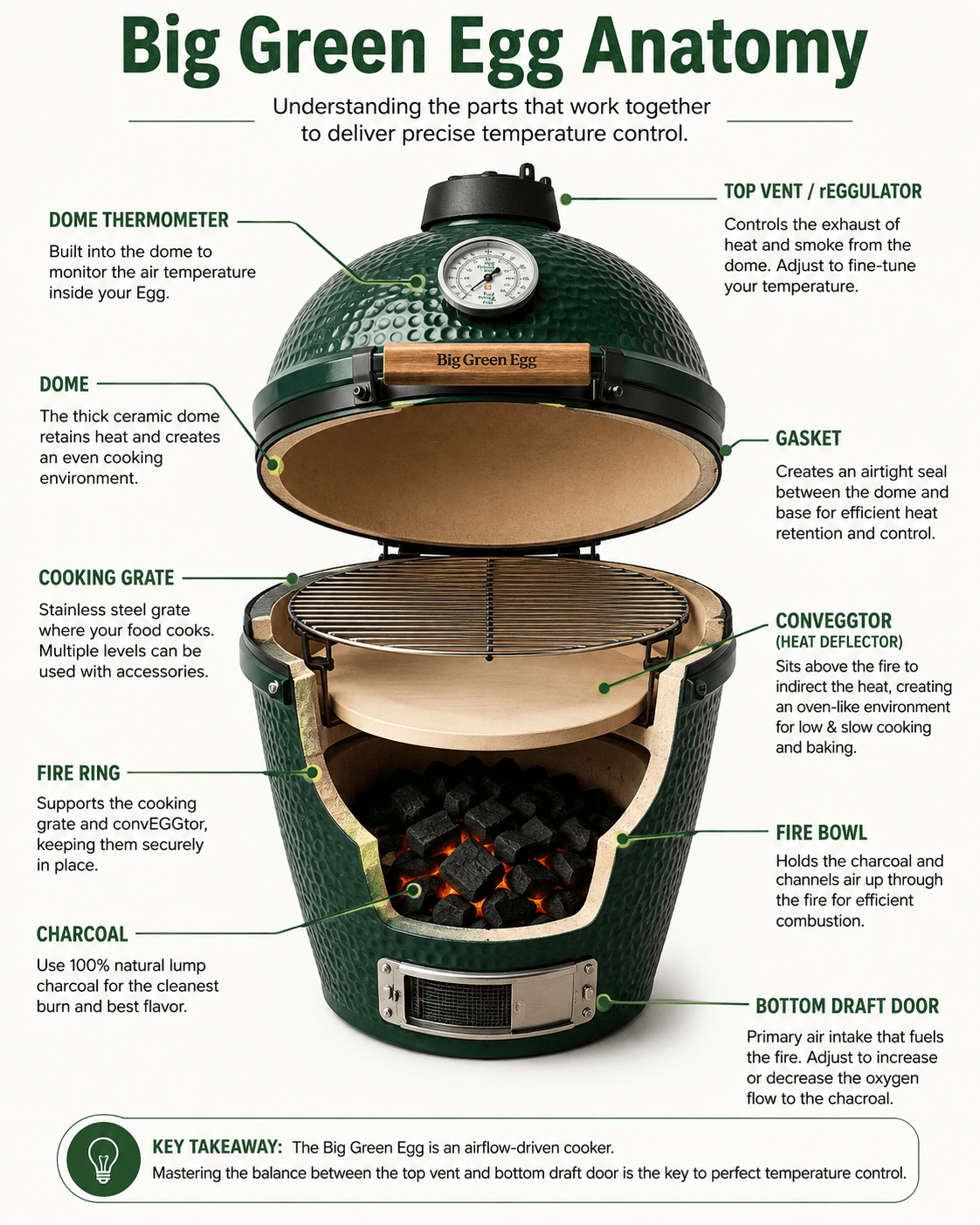
The Big Green Egg is essentially a ceramic, charcoal-fueled convection cooker. Its design is what makes it so versatile and why temperature control behaves differently than other grills.
Ceramic Design
The thick ceramic walls of the Big Green Egg are one of its biggest advantages. That ceramic insulation holds heat incredibly well, even during long cooks or temperature swings when opening the lid. Once the Egg gets up to temperature, it wants to stay there.
This heat retention helps create stable cooking temperatures, reduces fuel consumption, and keeps moisture inside the cooker where it belongs. That is a big reason food cooked on the Big Green Egg stays juicy.
Lump Charcoal Fuel
The Big Green Egg runs on natural lump charcoal, not briquettes. Lump charcoal burns hotter, cleaner, and produces less ash than traditional briquettes. Less ash means better airflow, which is critical for consistent temperature control.
Because the Big Green Egg is so efficient, a full load of lump charcoal can easily power long low-and-slow cooks without needing to refuel. I have done overnight cooks without touching the fuel.
Egg Shape and Airflow
The unique egg shape is not just branding. It serves a real purpose. As heat rises from the burning charcoal, the curved ceramic dome helps circulate hot air around the food, creating a live-fire convection cooking environment. That is why the Big Green Egg can smoke, grill, roast, and even bake surprisingly well.
For best results, the lid should stay closed as much as possible during the cook. Every lid opening dumps heat and disrupts airflow.
The Air-Tight Seal
The gasket between the base and dome creates a near air-tight seal when the lid is closed. That seal helps trap heat, maintain moisture, and most importantly, gives you control over airflow. Without controlled airflow, temperature management becomes a mess.
The convEGGtor Heat Deflector
If you want to smoke or cook indirectly, the convEGGtor is essential. This ceramic heat deflector sits between the burning charcoal and your food, blocking direct radiant heat while allowing hot air to circulate around the cooking chamber. Think of it as what transforms your Big Green Egg from a grill into a smoker or outdoor oven.
Top and Bottom Air Vents
This is where temperature control really happens.
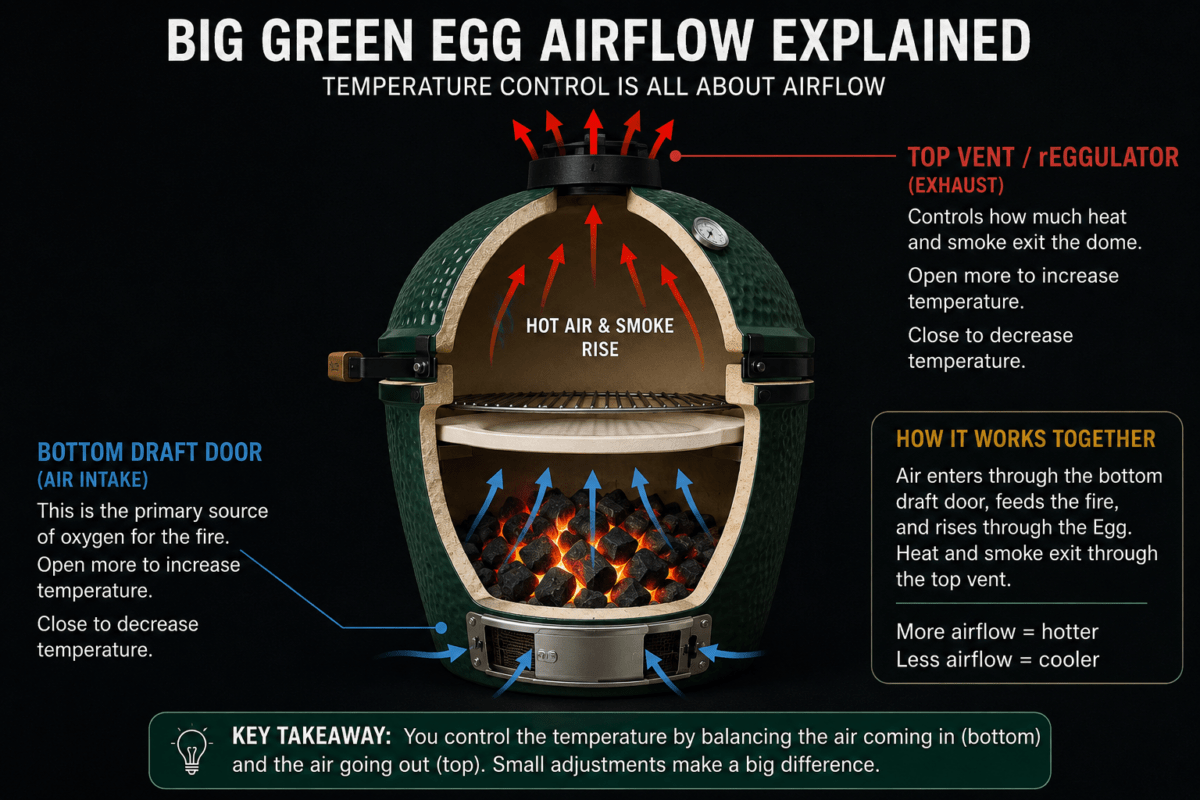
The Big Green Egg regulates temperature through airflow.
- the bottom draft door controls how much oxygen feeds the fire
- the top vent (rEGGulator) controls how quickly heat and smoke escape
More airflow = hotter fire.
Less airflow = cooler fire.
Learning how these two vents work together is the single most important skill for mastering your Big Green Egg. I will break that down below.
Built-In Thermometer vs Digital Probes
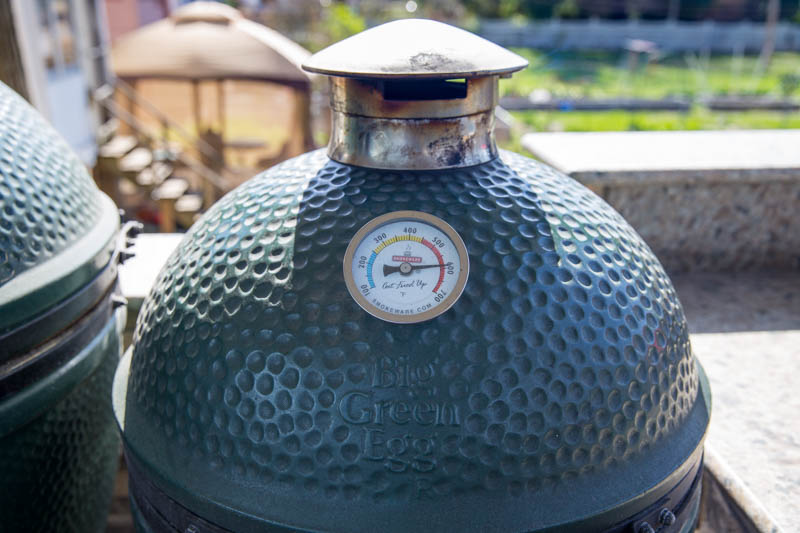
Your Big Green Egg includes a dome thermometer, and it works fine as a general reference. But keep in mind the dome temperature can read differently than the actual temperature at the cooking grate. For more accurate cooks, especially low-and-slow barbecue, a quality digital probe thermometer is a much better tool. I rely on grate-level temperature readings whenever precision matters.
How to Start Your Big Green Egg for Better Temperature Control
One of the biggest factors in temperature control happens before the food ever hits the grill. How you light your Big Green Egg has a direct impact on how quickly the fire builds and how easy it is to manage your target temperature.
For low-and-slow cooks, you want a smaller, controlled fire that gradually builds over time. Lighting one or two small spots in the lump charcoal is usually enough.
For higher heat grilling, you can light multiple areas of the charcoal to help the fire establish more quickly.
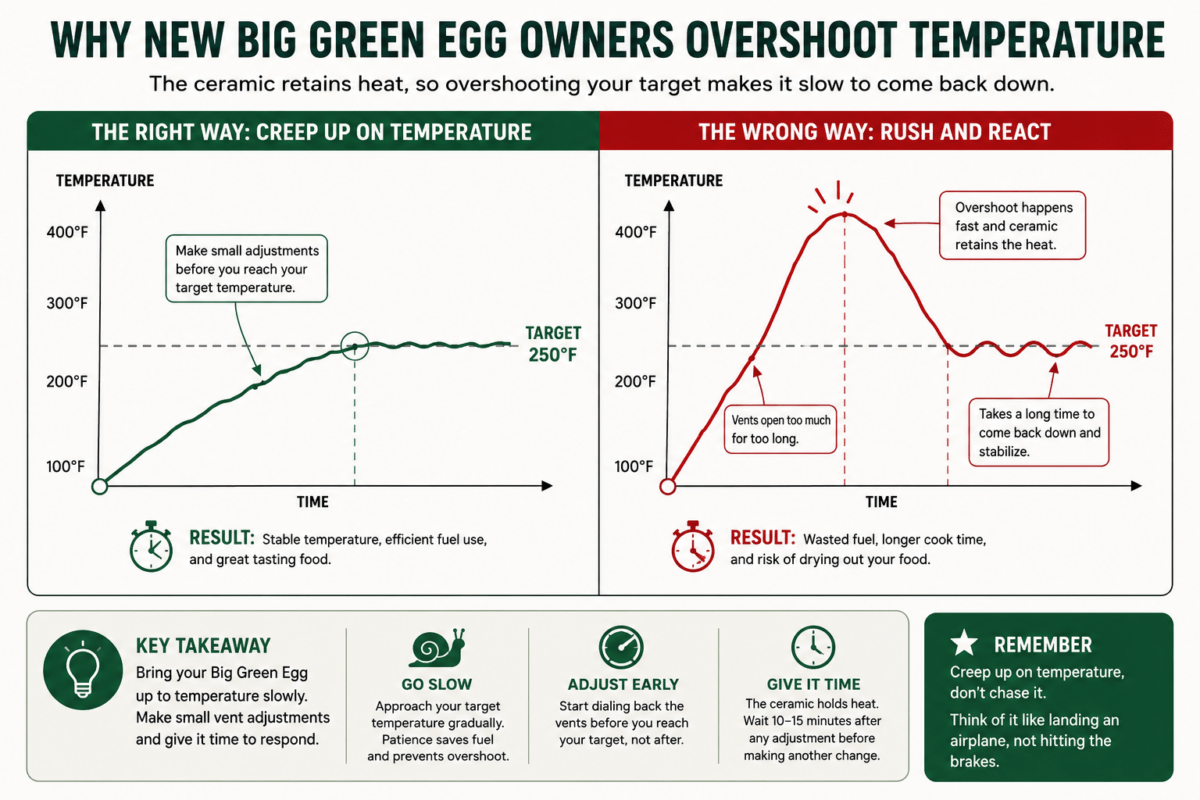
No matter the cooking style, the biggest mistake beginners make is rushing this process. Opening everything wide open and letting the Big Green Egg overshoot your target temperature creates frustration fast. Once all that ceramic absorbs too much heat, cooling things back down takes time.
My general rule is simple: bring the temperature up slowly and make small vent adjustments as you approach your target. It is always easier to build heat than fight too much of it.
Understanding Airflow: The Real Secret to Temperature Control
If you only remember one thing from this guide, make it this: temperature control on the Big Green Egg is all about airflow.
Unlike a gas grill where you simply turn a knob to increase or decrease heat, the Big Green Egg controls temperature by managing how much oxygen reaches the fire. More oxygen feeds the charcoal and makes the fire burn hotter. Less oxygen slows the fire down and lowers the temperature.
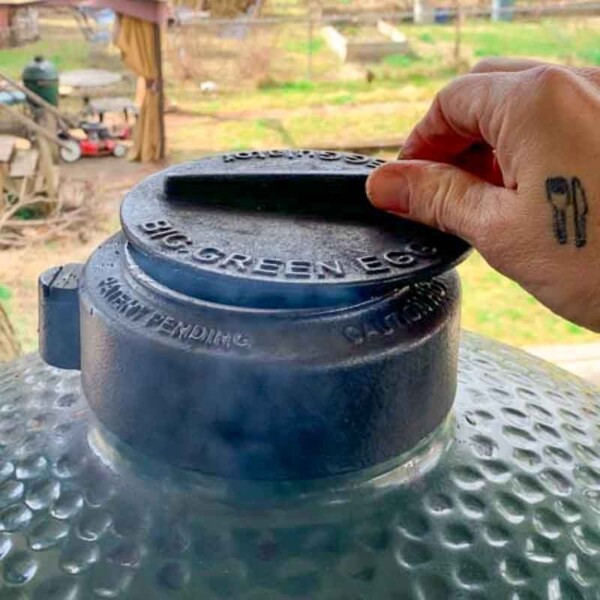
The bottom draft door is your primary air intake. This is where fresh oxygen enters the cooker and fuels the fire. The top vent, or rEGGulator, controls how quickly heat and smoke escape from the dome. These two vents work together to create the cooking environment inside your Big Green Egg.
Open both vents wide and the fire will build aggressively. Close them down and the fire settles into lower, more manageable cooking temperatures. This is why even small vent adjustments can make a noticeable difference.
One thing that trips up new Big Green Egg owners is expecting instant feedback. Because the ceramic body absorbs and stores heat so efficiently, changes are not always immediate. Make a vent adjustment, give the cooker time to respond, and resist the urge to keep fiddling.
Master airflow, and you master temperature control.
Why New Big Green Egg Owners Overshoot Temperature
One of the most common mistakes new Big Green Egg owners make is overshooting their target temperature. If you are coming from a gas grill or traditional smoker, this can be frustrating at first because the Big Green Egg behaves very differently.
The biggest reason is the ceramic construction. Once the thick ceramic walls absorb heat, they hold onto it extremely well. That is one of the Big Green Egg’s greatest strengths, but it can also work against you if you let the cooker get too hot too quickly.
A common beginner mistake is opening both vents too aggressively and waiting too long to start making adjustments. By the time the dome thermometer reaches your target temperature, the fire may already be much hotter than you realize, and the ceramic body has started storing that excess heat.
This is why patience matters. The best approach is to bring the Big Green Egg up to temperature slowly. Start dialing back the vents before you reach your target temperature, not after.
Think of temperature control like landing an airplane. You do not wait until the last second and slam on the brakes. Once a Big Green Egg overshoots, cooling it back down takes time. The fire can be restricted, but the stored ceramic heat still has to dissipate. This is why experienced Egg owners learn to creep up on temperature instead of chasing it.
Temperature Control for Low and Slow Cooking
Low-and-slow barbecue is where temperature control matters most, and fortunately, this is where the Big Green Egg really shines. Thanks to the ceramic design and efficient airflow system, the Big Green Egg can hold steady temperatures for hours once properly dialed in. For traditional barbecue cooks like brisket, pork butt, ribs, and beef ribs, most cooks happen in the 200°F to 275°F range.
The biggest mistake new Big Green Egg owners make is trying to rush the startup process. Because the ceramic body holds heat so efficiently, overshooting your target temperature creates frustration fast. Once the Egg gets too hot, it takes much longer to cool down than a traditional metal grill.
For low-and-slow cooks, the goal is to bring the Big Green Egg up to temperature gradually. Make small vent adjustments, give the cooker time to respond, and resist the urge to chase every minor fluctuation. Patience is the skill.
Once stable, the Big Green Egg becomes one of the easiest cookers you will ever use for long barbecue sessions.
If you want the full step-by-step setup for low-and-slow barbecue, check out my dedicated guide here.
Temperature Control for High-Heat Grilling
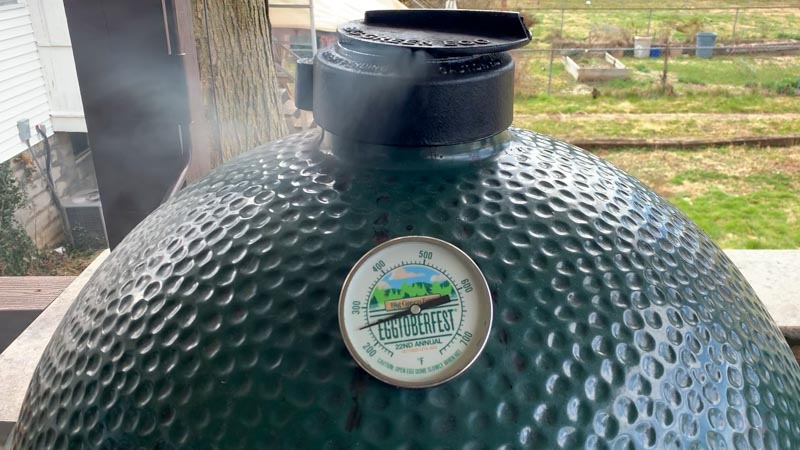
Grilling on the Big Green Egg is a completely different temperature management experience than low-and-slow barbecue. At grilling temperatures, the Big Green Egg heats quickly and responds much faster because of increased airflow.
For cooks like burgers, chicken thighs, steaks, seafood, and vegetables, you will typically be cooking anywhere from 350°F to 700°F+, depending on the setup.
The biggest mistake beginners make is treating high-heat grilling like low-and-slow barbecue. At these temperatures, vent adjustments happen faster, heat builds aggressively, and opening the lid introduces oxygen that can cause flare-ups.
If you are aiming for high heat, let the fire establish cleanly with both vents open, then begin dialing back airflow as you approach your target temperature. The key is still patience. It is always easier to slow a rising fire early than recover from a Big Green Egg that has become nuclear.
Temperature setting guide
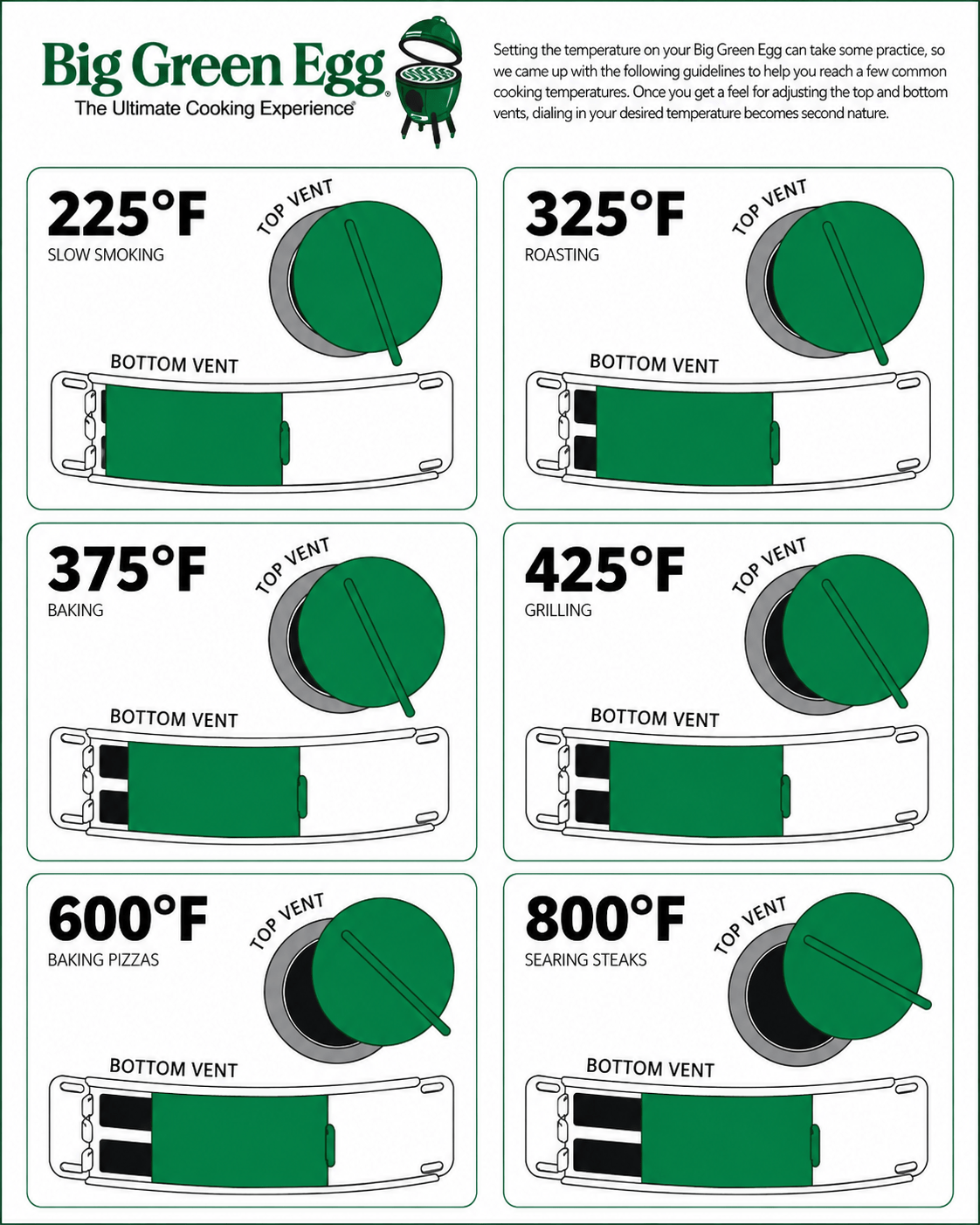
Here is a quick chart showing you the various top and bottom vent settings to dial in the correct temperature on your Big Green Egg:
Troubleshooting Common Temperature Problems
Why won’t my Big Green Egg get hot enough?
If your Big Green Egg struggles to reach temperature, airflow is usually the problem. Start by checking for ash buildup blocking airflow through the fire grate or draft door. Restricted airflow starves the fire of oxygen and makes it difficult for the charcoal to burn efficiently. Poor-quality lump charcoal or too many small leftover charcoal pieces can also limit airflow and reduce heat output. Make sure both the top and bottom vents are open enough to support the fire, especially during startup.
Why won’t my Big Green Egg cool down?
This usually happens because the cooker overshot your target temperature and the ceramic body absorbed too much heat. Once the Big Green Egg gets too hot, simply closing the vents will not create an instant fix. The fire may begin slowing down, but the stored ceramic heat still has to dissipate. This is exactly why creeping up on temperature is so important. Patience is your friend here.
Why does my temperature keep swinging?
Temperature swings usually happen because of over-adjustment. New owners often make vent changes too quickly, then keep adjusting before the cooker has time to respond. Wind, opening the dome too often, inconsistent fuel, or unstable startup conditions can also create temperature fluctuations. Small movement is normal. Constant chasing is the problem.
Why does my temperature spike when I open the lid?
Opening the lid introduces a rush of oxygen to the fire. That sudden airflow can cause the charcoal to flare and temporarily increase the fire’s intensity. This is especially noticeable during hotter cooks. Open the lid only when necessary and avoid leaving it open longer than needed.
Recommended Tools for Better Temperature Control
You do not need a pile of gadgets to master the Big Green Egg, but a few tools make temperature control much easier.
Instant Read Thermometer
A quality instant read thermometer is non-negotiable. I use the Thermapen from ThermoWorks, and it has been one of the best grilling investments I have made.
Digital Probe Thermometer
The built-in dome thermometer is helpful, but grate-level monitoring gives you a much more accurate picture of actual cooking temperatures.
A digital probe thermometer helps eliminate guesswork during longer cooks.
Flame Boss or EGG Genius
If you want next-level control, a temperature controller is a fantastic upgrade. These systems use a fan and digital probes to automate airflow and help maintain extremely stable cooking temperatures. Not required, but very nice.
Kick Ash Basket or Fire Bowl
Anything that improves airflow and makes ash cleanup easier helps with temperature control. Clean airflow equals better fire management.
Frequently Asked Questions
What temperature should I smoke on the Big Green Egg?
Most low-and-slow barbecue cooks happen between 225°F and 275°F depending on the protein and cooking method.
Is dome temperature the same as grill grate temperature?
No.
The dome thermometer measures air higher in the cooker, while your food sits lower at grate level.
This difference can matter, especially during long cooks.
How long does it take for a Big Green Egg to stabilize?
It depends on your target temperature, but patience matters.
Low-and-slow cooks may take 30 to 45 minutes to stabilize properly. Hotter cooks happen faster.
Should I leave the lid open when lighting the Big Green Egg?
Yes, briefly.
Leaving the dome open during the initial fire startup helps establish combustion, but once the fire is going, close the lid and begin controlling airflow with the vents.
Why does my Big Green Egg use less charcoal than other grills?
The ceramic design retains heat extremely well, making the cooker incredibly efficient compared to traditional metal grills and smokers.
What is the biggest beginner mistake with Big Green Egg temperature control?
Rushing.
Most temperature problems happen because people overshoot their target temperature and then spend the rest of the cook trying to recover.
Final Thoughts
Learning temperature control on the Big Green Egg can feel frustrating at first, especially if you are used to cooking on gas grills or traditional smokers.
The good news is that once you understand how airflow, fuel, and ceramic heat retention work together, everything starts to make sense.
Temperature control is not about constant adjustments or chasing every little fluctuation. It is about patience, small changes, and letting the cooker do what it was designed to do.
Master this skill, and the Big Green Egg becomes one of the most versatile and enjoyable cookers you will ever own.
Whether you are smoking brisket, grilling steaks, or roasting a whole chicken, confidence with temperature control changes everything.





I’ve had an egg for 15 years and this called this was very informative. Thank you.
Hi Chris,
Many thanks for the excellent directions on this website. I followed the directions (not easy for me 🙂 And it is much easier to control the Temp. I almost feel confident 🙂 Great Job. Thanks Terry
What a great note. Thanks for the kind words 🙏