
This post contains affiliate links. Please see our disclosure policy.
Learning How to Make Mediterranean Stuffed Pork Tenderloin on the Big Green Egg is a fantastic way to elevate a lean and affordable cut of meat into a centerpiece for entertaining. While pork tenderloin is often prone to drying out on a high-heat grill, the addition of a savory stuffing provides an internal moisture barrier that ensures a juicy result. You should view the combination of goat cheese, prosciutto, and kalamata olives as a flavor profile that perfectly complements the subtle smoke of the Big Green Egg. This process provides a way for you to practice your knife skills while delivering a restaurant-quality meal to your guests. You will find that the contrast between the salty prosciutto and the creamy cheese creates a sophisticated bite that traditional pork rubs cannot achieve alone.
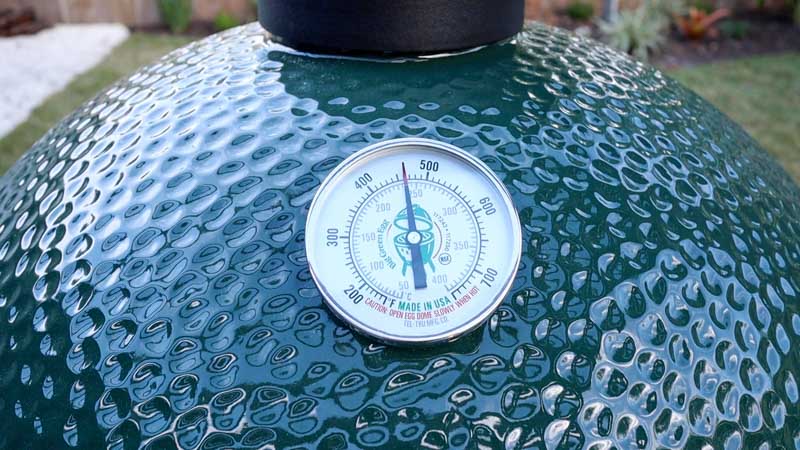
The secret to a successful stuffed tenderloin lies in the preparation of the meat and the management of your grill temperature. You should focus on a clean butterfly cut to create a uniform surface area for your ingredients before rolling the tenderloin into a tight cylinder. Because the Big Green Egg excels at maintaining a steady 450°F, a raised direct setup allows the exterior to develop a beautiful crust while the stuffing reaches its safe temperature. This technique ensures that your pork remains tender and flavorful without the need for a complicated brine. Prepare to sharpen your knives and follow our definitive guide to mastering this Mediterranean classic.
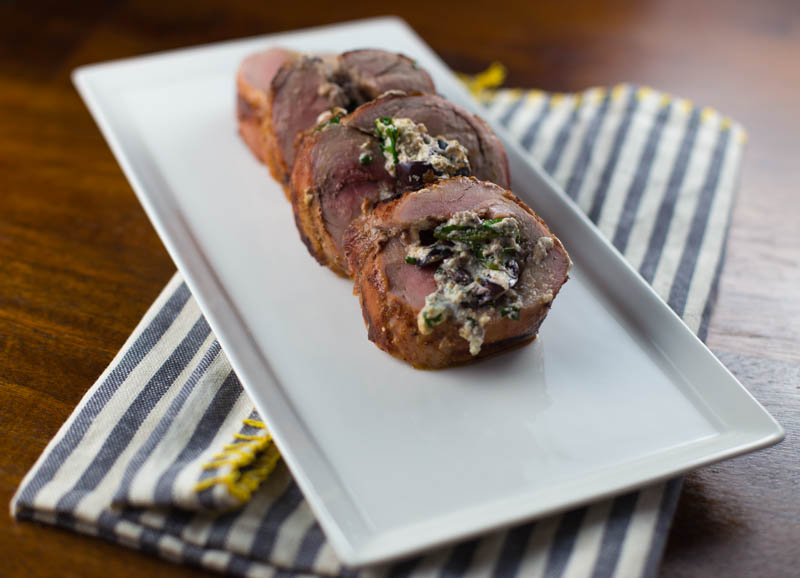
Table of Contents
- Step 1: Gathering and Prepping the Mediterranean Filling
- Step 2: Slicing the Olives and Softening the Cheese
- Step 3: Trimming and Butterflying the Pork Tenderloin
- Step 4: Layering the Prosciutto and Seasoning the Interior
- Step 5: Spreading the Filling and Securing the Roast
- Step 6: The Raised Direct Cook at 450°F
- Step 7: The Final Rest, Slicing, and Serving
- How to Make Mediterranean Stuffed Pork Tenderloin on the Big Green Egg Recipe
Get My NEW Book
The Ultimate Big Green Egg Cookbook
Step 1: Gathering and Prepping the Mediterranean Filling
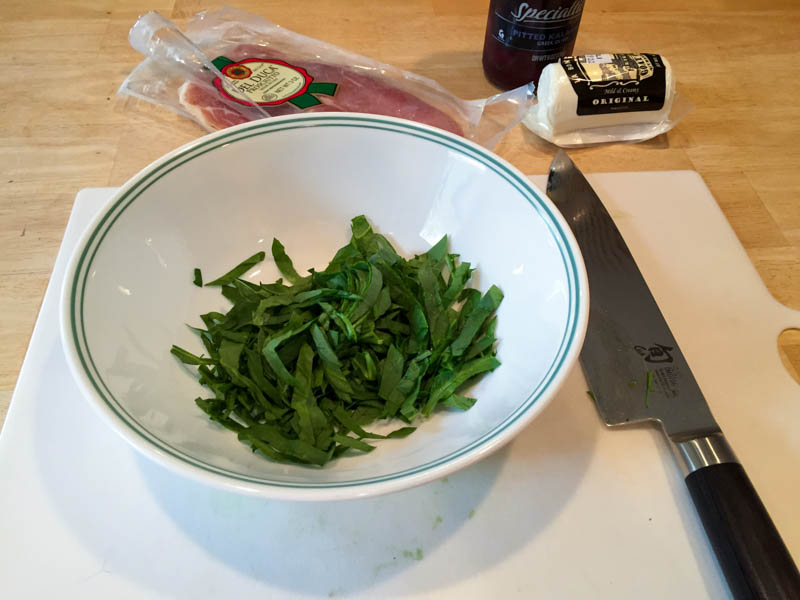
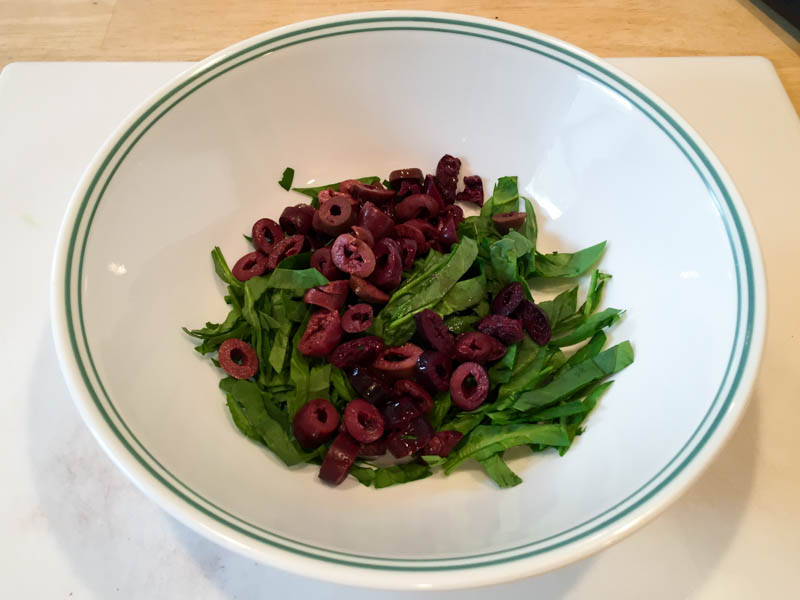
Mastering a professional-grade stuffed roast starts with the careful preparation of your interior flavor profile. You should begin by gathering fresh spinach, briny kalamata olives, and a high-quality log of goat cheese to create a vibrant Mediterranean base. This process provides a way for you to balance the earthy notes of the greens with the sharp and creamy textures of the cheese. You will find that chopping one cup of fresh spinach into a fine chiffonade ensures that the stuffing integrates perfectly into the pork without creating large pockets of moisture. Because the spinach wilts during the cook, a smaller cut allows it to distribute evenly throughout the center of the tenderloin.
To achieve the best results, you must place your prepped greens into a large mixing bowl before moving on to the more assertive ingredients. You should aim for a uniform consistency to ensure that every slice of the finished roast delivers a balanced bite. This technique ensures that your Stuffed Pork Tenderloin on the Big Green Egg features a sophisticated internal look that matches its bold flavor. Because you are working with fresh ingredients, the vibrant green of the spinach will provide a beautiful visual contrast to the white goat cheese. This process allows the initial prep to move quickly so you can focus on the knife work required for the pork. Once your spinach is in the bowl, you should prepare to add the salty elements of the Mediterranean mixture.
Step 2: Slicing the Olives and Softening the Cheese
Mastering a professional-grade stuffing requires you to balance the sharp saltiness of the Mediterranean with the creamy texture of the goat cheese. You should start by slicing one half cup of Kalamata olives into thin rounds before adding them to your bowl of chopped spinach. This process provides a way for the briny flavor to distribute evenly so that no single bite becomes overwhelming. You will find that using pitted olives is the most effective method for maintaining a safe and enjoyable dining experience for your guests. Because the olives are naturally oily, they help provide the necessary moisture to the lean pork tenderloin during the high-heat cook.
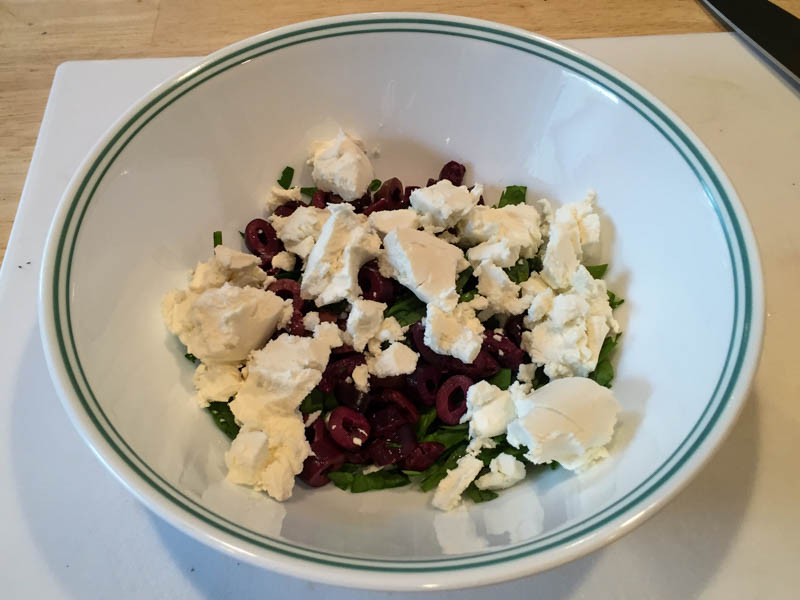
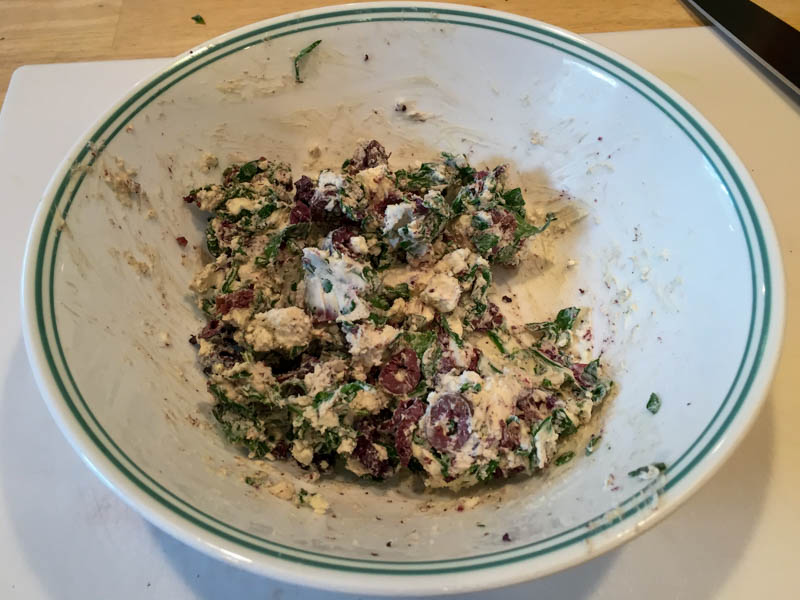
To achieve the best results, you must break up a small package of goat cheese directly into the bowl with the spinach and olives. You should use a sturdy spoon or spatula to combine all the ingredients together until the mixture is thoroughly integrated. This technique ensures that the cheese softens just enough to act as a binding agent for the greens and the fruit. Because goat cheese has a lower melting point than many other varieties, it will become incredibly creamy once it hits the heat of the Big Green Egg. This process allows the flavors to meld perfectly before you spread the mixture onto the butterflied pork. Once the stuffing reaches a uniform consistency, you should set it aside and prepare the meat.
Step 3: Trimming and Butterflying the Pork Tenderloin
Mastering a professional-grade stuffed roast requires you to transform a tapered, uneven muscle into a flat and uniform canvas for your filling. You should start by trimming any silver skin or excess fat from the exterior of the pork tenderloin using a sharp boning knife. This process provides a way for the heat to penetrate the meat evenly without hitting tough connective tissue. You will find that removing the silver skin is the most effective method for preventing the tenderloin from curling or deforming during the high-heat cook on the Big Green Egg. Because this cut is naturally lean, a clean exterior ensures that your favorite BBQ rub adheres perfectly to the surface.
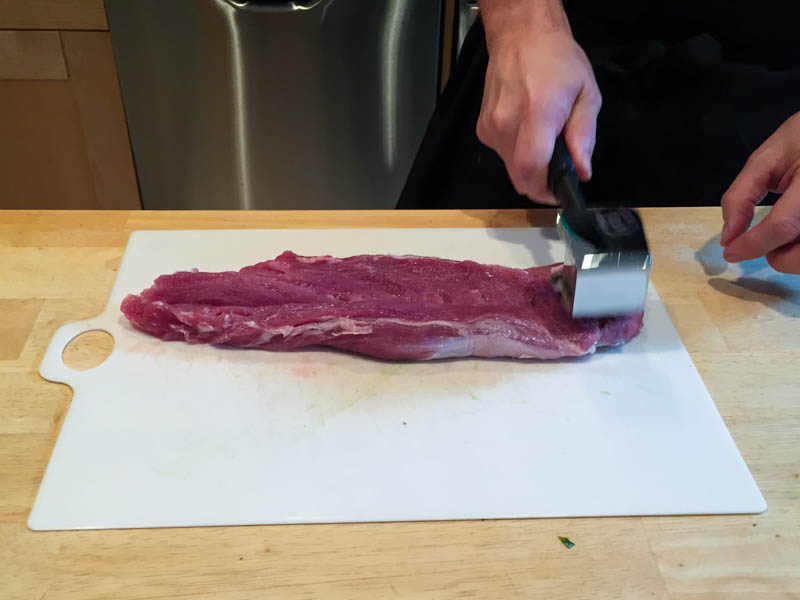
To achieve the best results, you must perform a precise butterfly cut to open the meat without slicing through the bottom. You should place your non-cutting hand flat on top of the tenderloin and make a long, horizontal cut down the center of the length. This technique ensures that the meat opens like a book while maintaining a sturdy “spine” that holds the two halves together. Because the thickness of the tenderloin can vary, you should use a meat mallet to gently pound the butterflied pork between two sheets of plastic wrap. This process allows you to reach a consistent half-inch thickness from edge to edge. Once the pork is flattened and uniform, you should prepare to layer your Mediterranean ingredients.
Step 4: Layering the Prosciutto and Seasoning the Interior
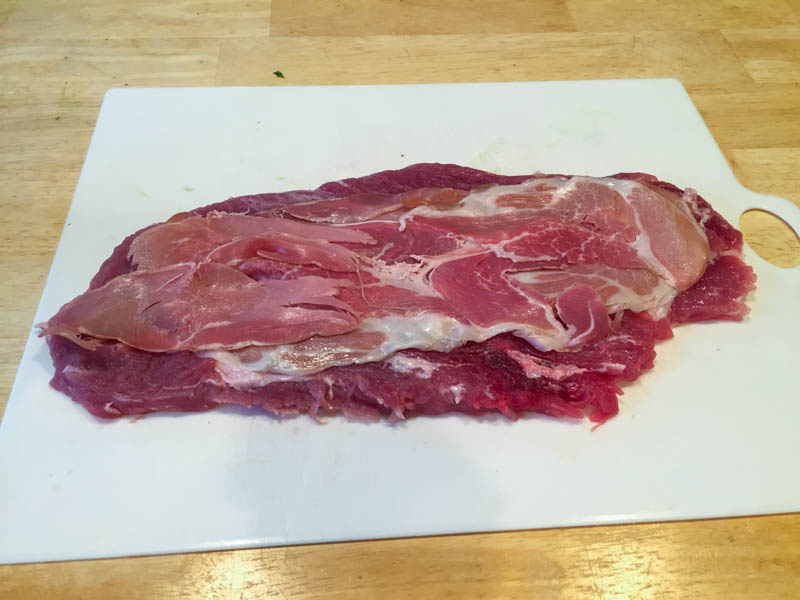
Mastering a professional-grade stuffed roast requires you to build layers of flavor that protect the lean meat from the heat. You should start by laying four thin slices of prosciutto directly onto the flattened surface of the butterflied pork tenderloin. This process provides a way for the salty, cured ham to act as a secondary barrier that traps the moisture of the goat cheese. You will find that the prosciutto adds a sophisticated depth of flavor that complements the Mediterranean ingredients perfectly. Because the pork tenderloin is a mild protein, this savory foundation ensures that every bite is rich and well-balanced.
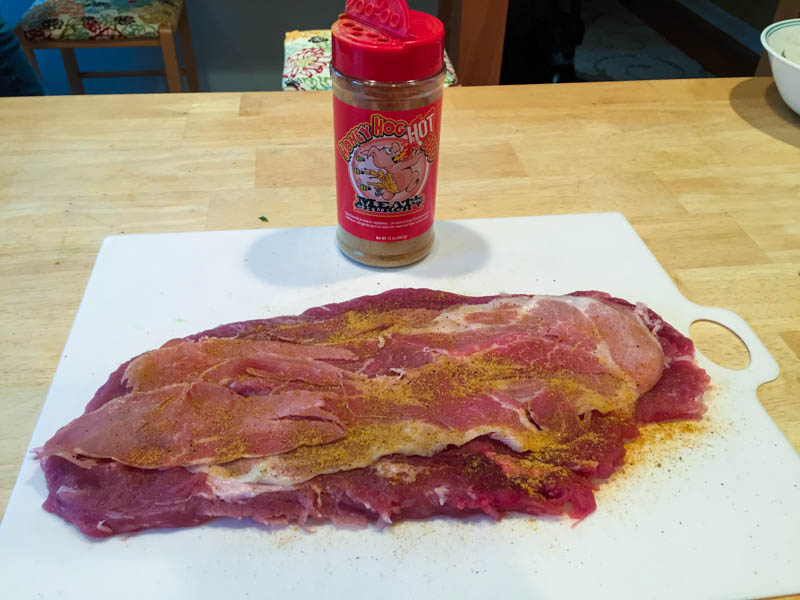
To achieve the best results, you must season the interior of the roast before adding your creamy filling. You should sprinkle a generous layer of your favorite BBQ rub such as Meat Church’s Honey Hog Hot directly onto the prosciutto. This technique ensures that the sweet and spicy notes of the rub meld with the saltiness of the ham as the pork cooks on the Big Green Egg. Because the honey and chili flakes in the rub provide a subtle kick, they offer a perfect counterpoint to the tangy goat cheese. This process allows the seasoning to penetrate the meat from the inside out while the exterior develops its own crust. Once the prosciutto is seasoned and in place, you should prepare to spread the Mediterranean mixture.
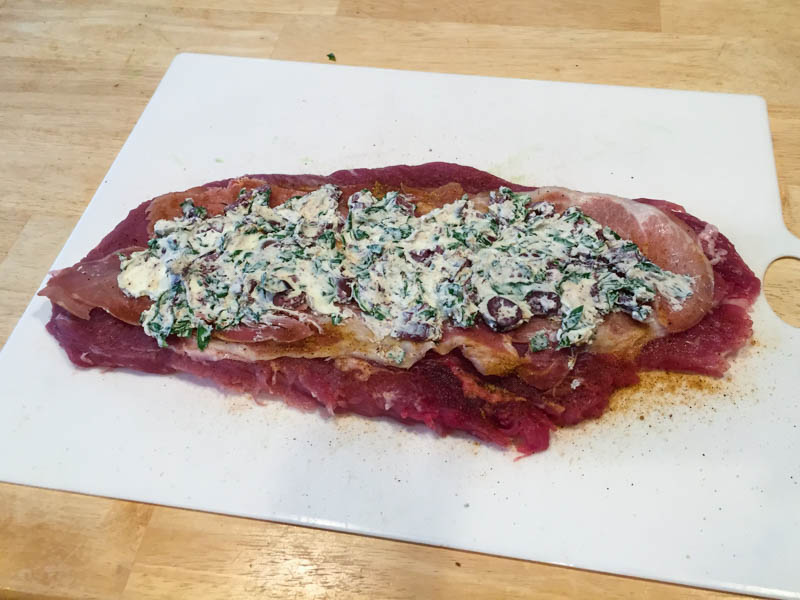
Now spread the softened Goat Cheese mixture across the prosciutto.
Step 5: Spreading the Filling and Securing the Roast
Mastering a professional-grade stuffed roast requires you to seal your ingredients tightly to prevent them from leaking onto the coals. You should start by spreading the softened goat cheese mixture evenly across the layer of seasoned prosciutto. This process provides a way for the spinach and olives to stay suspended in the creamy cheese as the pork cooks on the Big Green Egg. You will find that leaving a small half-inch border at the edges is the most effective method for keeping the stuffing contained. Because the cheese will expand slightly as it reaches temperature, a clean margin ensures that your roll remains neat and professional.
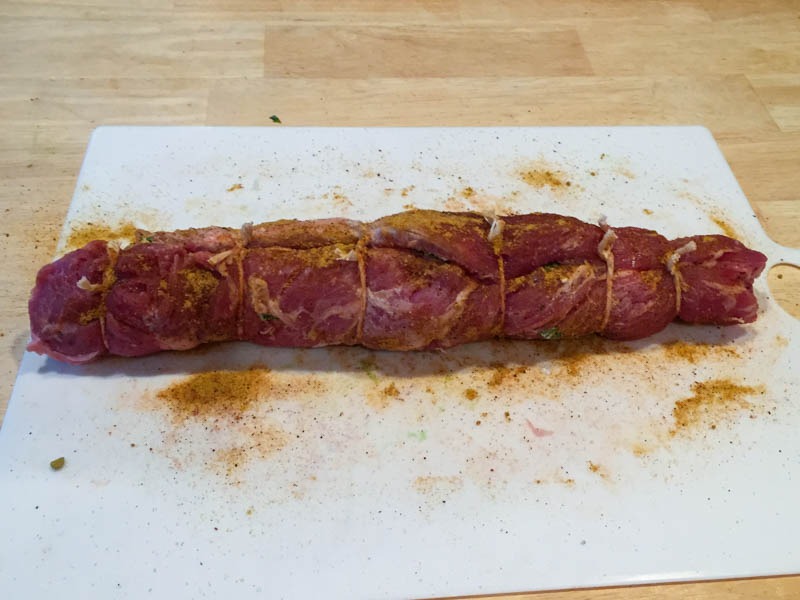
To achieve the best results, you must roll the tenderloin into a tight cylinder starting from one of the long edges. You should tuck the meat firmly over the filling to create a compact shape that will cook uniformly from the outside in. This technique ensures that your Stuffed Pork Tenderloin maintains its structure throughout the entire grilling process. Because the meat is naturally soft, you should use butcher’s twine to secure the roast every two inches along its length. This process allows the tenderloin to hold its shape while rotating on the grate for an even sear. Once the roll is tied and secure, you should apply a final coating of your favorite BBQ rub to the exterior of the pork.
Pitmaster’s Guide: How to Tie a Stuffed Roast
Achieving a uniform cook requires you to master the basic butcher’s knot to keep your stuffed pork under tension. You should start by sliding a long piece of kitchen twine under one end of the roast and tying a simple double knot to anchor the string. This process provides a way for you to pull the twine down the length of the meat to create a series of loops. You will find that looping the string under itself and pulling it tight creates a “cinch” that keeps the stuffing from escaping. Because an even diameter is the key to a perfect 140°F internal temperature, you should space your ties about two inches apart. This technique ensures that the tenderloin looks as good on the platter as it tastes on the fork.
Step 6: The Raised Direct Cook at 450°F
Mastering a professional-grade stuffed roast requires you to balance the high-heat searing of the exterior with the delicate melting point of the goat cheese. You should start by preheating your Big Green Egg to 450°F and stabilizing the airflow through the top and bottom vents. This process provides a way for the ceramic walls to radiate heat evenly while the lump charcoal creates a clean and smoky environment. You will find that using a raised grid is the most effective method for protecting the lean pork from the intense direct flames below. Because the meat is elevated, the heat circulates around the entire circumference of the tenderloin for a uniform finish.
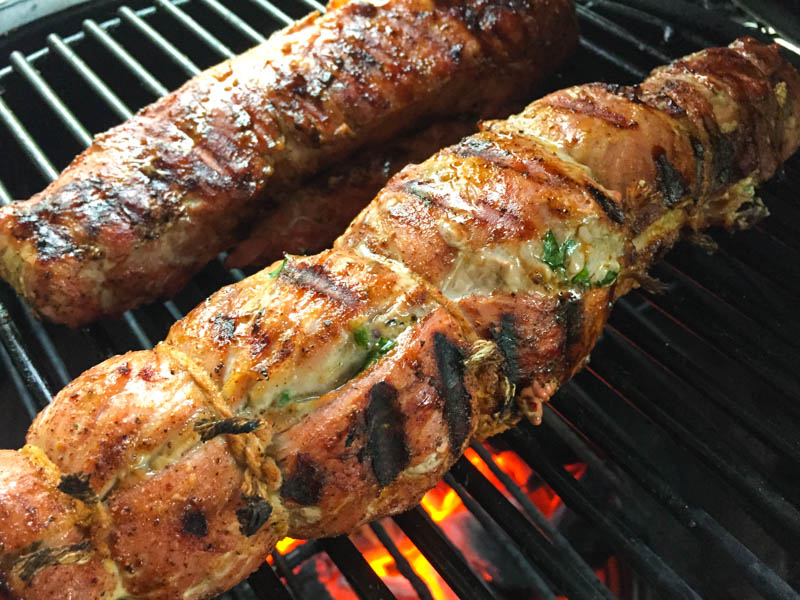
To achieve the best results, you must place the stuffed tenderloin directly onto the raised rack once the grill reaches its target temperature. You should cook the roast for approximately 30 minutes while carefully monitoring the internal temperature with an instant-read thermometer. This technique ensures that your Mediterranean Stuffed Pork Tenderloin stays succulent without the risk of overcooking the thin outer layer of meat. Because you want a perfectly even crust, you should rotate the tenderloin 120 degrees every 10 minutes. This process allows the exterior to develop a deep golden-brown color while the internal stuffing reaches a safe and creamy consistency. Once the internal temperature reads 140°F, you should immediately remove the pork from the heat.
Pitmaster’s Note: The 140°F Target for Pork
Achieving a juicy and tender result requires you to pull the pork before it reaches the traditional and often overcooked 160°F mark. You should rely on your digital thermometer to catch the meat at 140°F to account for carryover cooking. This process provides a way for the internal juices to settle while the temperature naturally climbs to a perfect 145°F during the rest. You will find that this five-degree window is the difference between a dry roast and a world-class meal. Because the Big Green Egg retains heat so efficiently, the resting period is just as critical as the time spent over the coals. This technique ensures that your Stuffed Pork remains the star of the plate.
Step 7: The Final Rest, Slicing, and Serving
Mastering a professional-grade roast requires you to resist the temptation to slice the meat immediately after removing it from the heat. You should pull the Stuffed Pork Tenderloin off the Big Green Egg once it reaches an internal temperature of 140°F. This process provides a way for the meat fibers to relax and reabsorb the flavorful juices that were pushed toward the center during the cook. You will find that a patient 10-minute rest on a clean carving board is the most effective method for ensuring a succulent and tender result. Because the goat cheese is molten and the prosciutto is hot, this resting period allows the filling to set slightly for a cleaner slice.
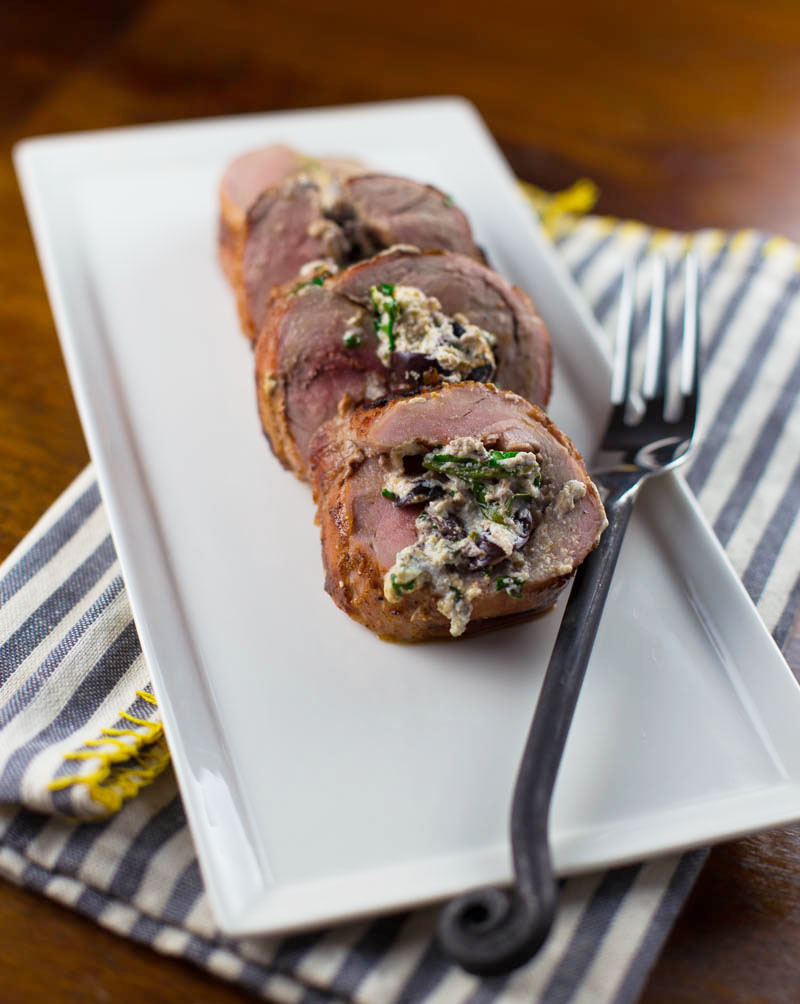
To achieve the best results, you must use a very sharp carving knife to cut through the butcher’s twine and the pork. You should slice the tenderloin into thick medallions to showcase the beautiful spiral of goat cheese, spinach, and prosciutto inside. This technique ensures that your Mediterranean Stuffed Pork Tenderloin presents a professional and appetizing look on the serving platter. Because you spent the time to butterfly and tie the roast properly, each slice will hold its shape and contain a perfect ratio of filling to meat. This process allows the smoky aroma of the Big Green Egg to mingle with the tangy notes of the Kalamata olives for a world-class dining experience. Once the pork is sliced and the twine is discarded, you should serve it immediately with a glass of Pinot Noir.
Final Thoughts: The Mediterranean Stuffed Pork Experience
Mastering How to Make Mediterranean Stuffed Pork Tenderloin on the Big Green Egg elevates a simple weeknight dinner into a gourmet event. You should view the butterfly and stuffing technique as a fundamental skill that you can apply to many other cuts of meat. This process provides a way for you to experiment with different cheeses and greens while maintaining the high standards of the Grilling by Feel philosophy. You will find that the raised direct method at 450°F is the most reliable way to achieve a crispy exterior and a juicy interior. Because the Big Green Egg offers such precise temperature control, you can produce restaurant-quality results every time you fire up the grill.
People Also Ask (PAA)
- How do I prevent the goat cheese from leaking out of the pork? You should leave a small border around the edges of the meat when spreading your filling to create a natural seal. This technique ensures that when you roll and tie the tenderloin, the cheese stays trapped inside the prosciutto barrier. You will find that tying the butcher’s twine every two inches provides the necessary tension to keep the roast secure.
- Can I use a different type of cheese for this stuffed pork recipe? You can substitute the goat cheese with feta or Boursin if you prefer a different flavor profile for your Mediterranean roast. This process provides a way for you to customize the tanginess and saltiness of the interior to suit your personal taste. Because these cheeses have different melting points, you should still monitor the internal temperature of the pork carefully.
- Is it safe to eat pork tenderloin at 145°F? You must pull the pork at 140°F and let it rest to reach the USDA-recommended finish of 145°F through carryover cooking. This process ensures that the meat is safe to eat while remaining incredibly juicy and slightly pink in the center. You will find that overcooking pork tenderloin to 160°F or higher often results in a dry and tough texture.
How to Make Mediterranean Stuffed Pork Tenderloin on the Big Green Egg
Equipment
- Butcher's Twine
Ingredients
- 1 Pork Tenderloin
- 1 Cup of Spinach, chopped
- ½ Cup of Kalamata Olives, sliced
- 1 small package of Goat Cheese
- 4 Slices of Prosciutto
- 3 tbsp BBQ Rub
Instructions
- First we chopped a cup of spinach and placed it in a bowl.
- Next we sliced a half of a cup of Kalamata Olives and added them to the Spinach.
- Next, we took a small package of Goat Cheese and broke that up in to the bowl with the Spinach and Olives.
- Mix all the ingredients together until they are mixed through and the cheese has softened a bit.
- Next butterfly and flatten the Pork Tenderloin.
- Lay the 4 slices of prosciutto on the flattened Pork Tenderloin.
- Now sprinkle your favorite rub on the prosciutto – here we used Meat Church’s Honey Hog Hot.
- Now spread the softened Goat Cheese mixture across the prosciutto.
- Roll the Pork Tenderloin sealing the mixture inside. Tie this up with butcher’s string and rub with your favorite BBQ rub.
- Preheat your Big Green Egg to 450° and place a raised grid inside.
- When ready put the stuffed Pork Tenderloin on the raised grid and cook for 30 minutes (or until the instant read thermometer reads 140°) turning every 10 minutes.
- Pull the Pork Tenderloin off the grill and let rest for 10 minutes.
- Then slice and serve
Nutrition information is automatically calculated, so should only be used as an approximation.





That grill picture just looks massively delicious!
Allie thank you for the compliment. And yes this was off the hook good!