

This post contains affiliate links. Please see our disclosure policy.
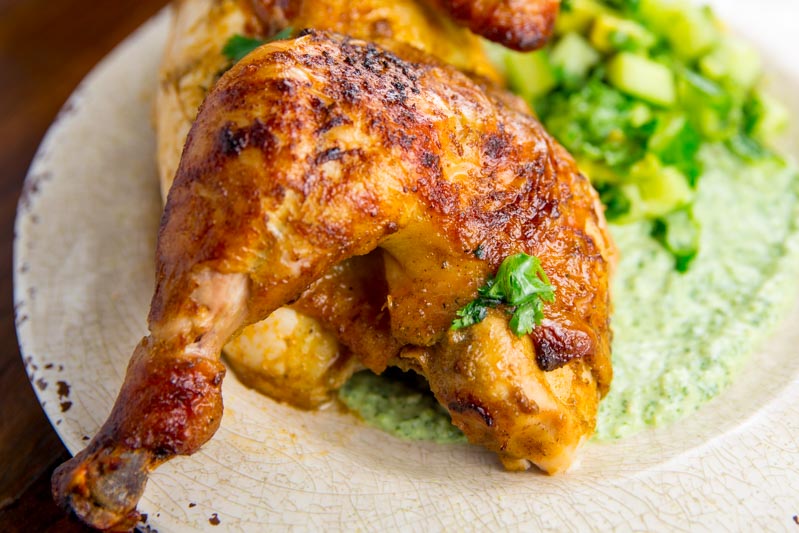
There is a reason why Peruvian Rotisserie Chicken, or Pollo a la Brasa, is revered worldwide. It is a masterful combination of a deeply flavorful, aromatic marinade and the unmatched technique of slow-roasting over an open fire. The result is a bird with impossibly crispy, bronze skin and succulent, juicy meat that practically falls off the bone.
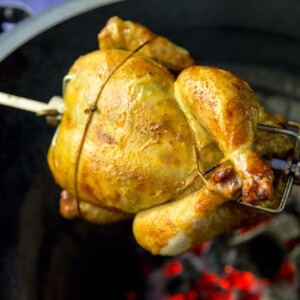
Achieving this level of perfection requires two things: a robust marinade packed with fresh citrus, earthy cumin, and savory spices, and a rotisserie setup on the Big Green Egg. Utilizing the rotisserie allows the chicken to self-baste in its own juices while the ceramic environment of the Egg ensures even heat distribution, creating a succulent result you simply cannot get in a conventional oven.
Paired with a creamy, vibrant Aji-style green sauce, this is a backyard feast that will transform your cooking game. Now sit back, grab an ice-cold Pilsen Callao, and enjoy this post for Rotisserie Peruvian Chicken on the Big Green Egg.
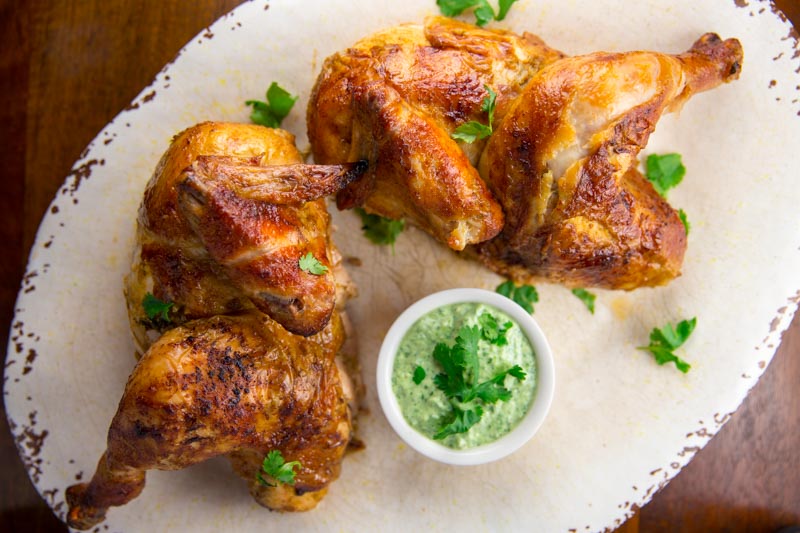
Table of Contents
- Step 1: The Flavor Foundation (The Marinade)
- Step 2: Marinating and Preparing the Bird
- Step 3: BGE Setup and Rotisserie Configuration
- Step 4: Monitoring the Cook and Doneness
- Step 5: The Essential “Aji” Green Sauce
- Step 6: Serving and Traditional Pairings
- Rotisserie Peruvian Chicken on the Big Green Egg Recipe
Get My NEW Book
The Ultimate Big Green Egg Cookbook
Step 1: The Flavor Foundation (The Marinade)
To get that authentic, robust flavor profile, you need a marinade that penetrates the meat while balancing brightness with deep, earthy notes.
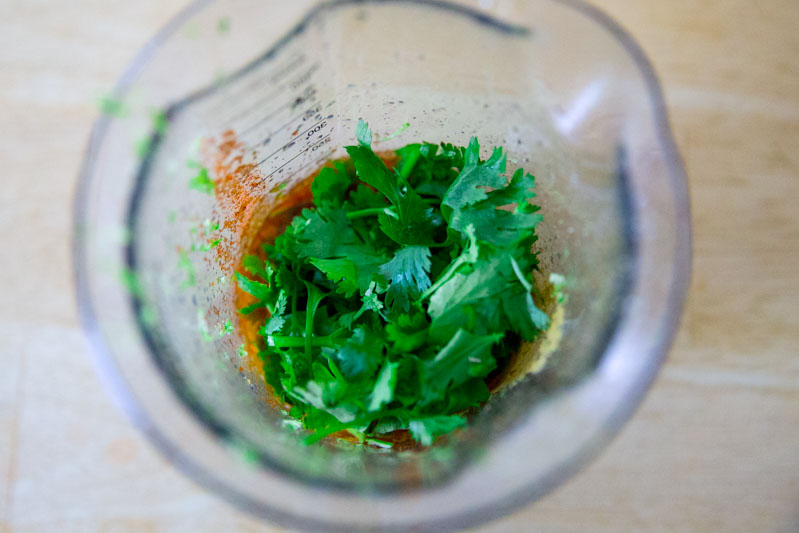
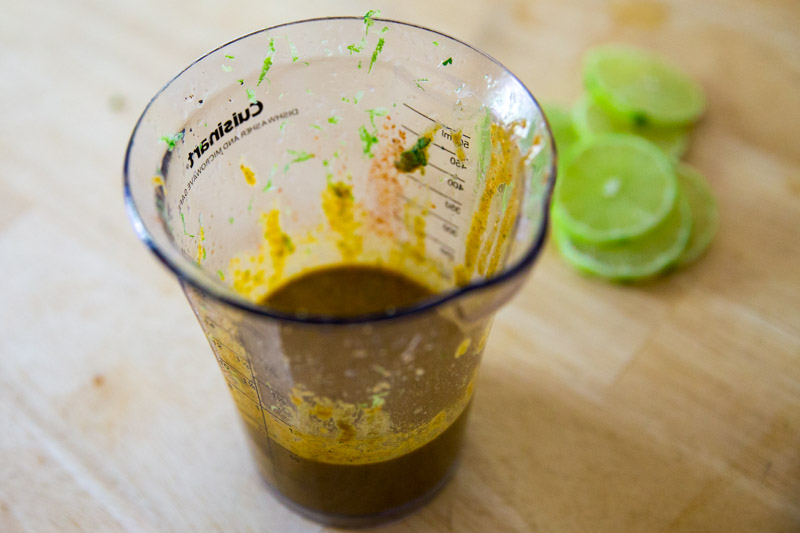
Start by creating a vibrant mixture of fresh garlic, lime juice, and cilantro. Next, incorporate cumin, paprika, oregano, salt, and pepper to give the chicken that distinct Peruvian flavor.
- The Power of Citrus and Garlic: The lime juice acts as a tenderizer, while the fresh garlic provides the aromatic backbone that roasts beautifully into the skin.
- Balancing the Spices: Don’t skimp on the cumin and paprika. The paprika brings essential color for that final golden-brown look, while the cumin provides the characteristic earthy taste of Pollo a la Brasa.
Step 2: Marinating and Preparing the Bird
With the marinade blended, it’s time to let the chicken absorb those flavors. The longer this sits, the deeper the flavor will penetrate the meat.
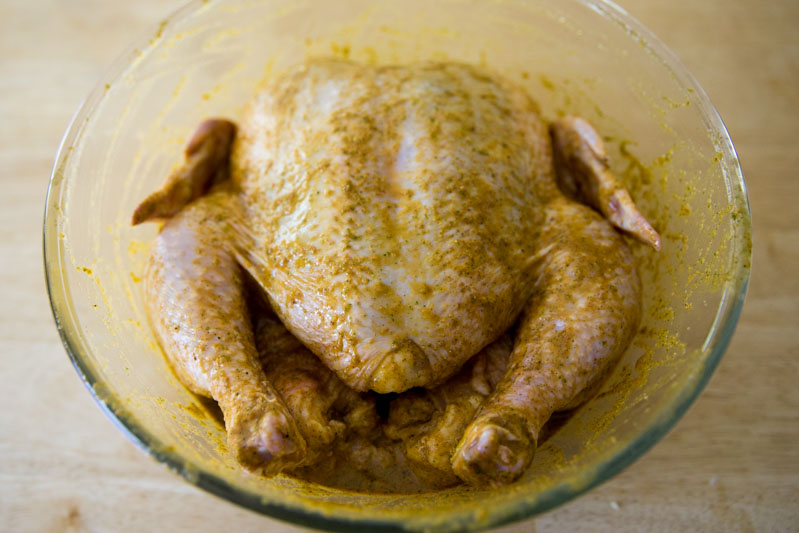
Liberally coat your whole chicken with the marinade, ensuring you get underneath the skin of the breast and thighs. Place the chicken in a large Ziploc bag or covered container and refrigerate for at least 4 hours, or ideally overnight.
- The Skin Technique: To get maximum crispiness and flavor, gently separate the skin from the meat on the breast and thighs, and rub some marinade directly onto the flesh. This ensures the flavor isn’t just sitting on top of the skin.
- Why Time Matters: While you can get away with a few hours, a full 24-hour marinade allows the lime juice and salt to thoroughly penetrate the meat, creating a tender, juicy chicken that holds flavor to the bone.
Step 3: BGE Setup and Rotisserie Configuration
For a successful rotisserie cook, heat management is everything. You want a lower overall temperature inside the dome to allow the chicken to cook slowly without burning, but high enough to crisp the skin.
The trick to getting the bird to cook evenly is to use less charcoal and pile it to one side, creating an indirect cooking zone. Once the lump was grey, I pushed the coals to the back of the firebox and placed the rotisserie spit onto my Joetisserie.
- Charcoal Placement for Even Cooking: By keeping the charcoal to the back (or off to the sides), you prevent direct flare-ups from dripping fat, which can cause soot and ruin the flavor. This setup creates convective heat that circulates around the bird, resulting in an even, golden brown finish.
- Rotisserie Options: I used the Joetisserie for this cook, which is a fantastic tool that fits the Large EGG perfectly. At the time this post was originally written, the official Big Green Egg Rotisserie was not yet available, but it is another great option now on the market. Both allow the chicken to self-baste as it turns.
- Target Temperature: Aim for a dome temperature between 350°F and 375°F for this cook.
Trussing and Skewering
To ensure the chicken cooks evenly and rotates smoothly without hitting the Big Green Egg’s dome or firebox, you must secure it properly.
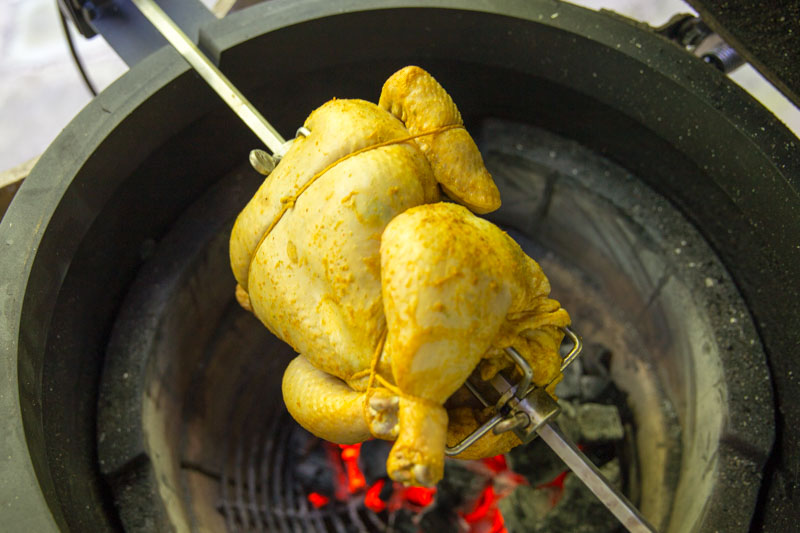
First, truss the chicken by tying the wings and legs tightly against the body using butcher’s twine. Next, insert the rotisserie spit through the cavity, starting from the tail end and exiting through the neck area.
- Why Trussing Matters: Loose wings or legs will burn before the breast meat is cooked, and they can drag on the heat deflector or firebox. Trussing ensures a compact bird that roasts uniformly.
- Balancing the Weight: Center the bird on the spit rod and secure it firmly with the fork tines. Give the rod a spin in your hands before putting it on the Egg to ensure it is balanced. A heavy, unbalanced bird puts unnecessary strain on the rotisserie motor.
Step 4: Monitoring the Cook and Doneness
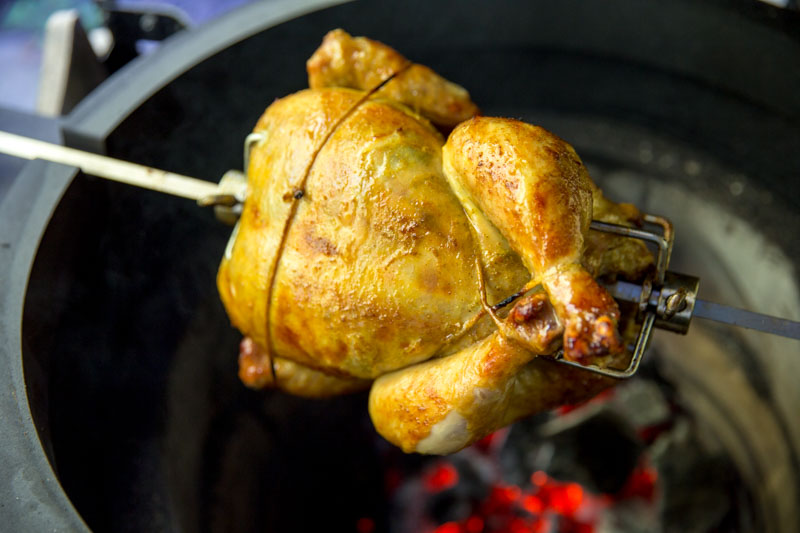
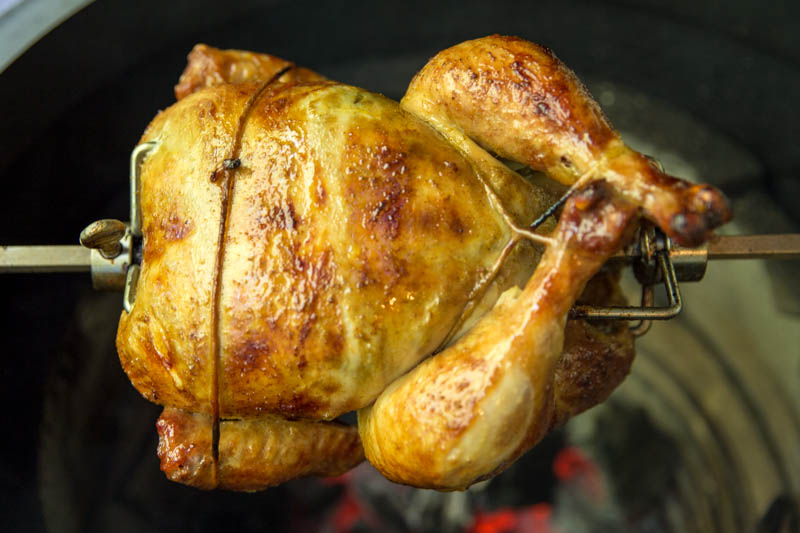
While the rotisserie does most of the work for you, it is important to monitor the progress to ensure perfect results. You are looking for a beautiful, mahogany-colored skin and an internal temperature that guarantees safety without drying out the meat.
I checked the chicken every 20 minutes to ensure it was cooking evenly and rotating properly. The bird took approximately 90 minutes to cook, reaching an internal temperature of 165°F in the thickest part of the breast when checked with an instant-read thermometer.
- Monitoring the Cook: Checking periodically allows you to make sure the rotisserie spit hasn’t loosened and that the chicken is balanced. It also gives you a chance to see the color develop.
- The Importance of an Instant-Read Thermometer: Do not rely on time alone. Using an instant-read thermometer is the only way to ensure the chicken is cooked safely to 165°F without overcooking it.
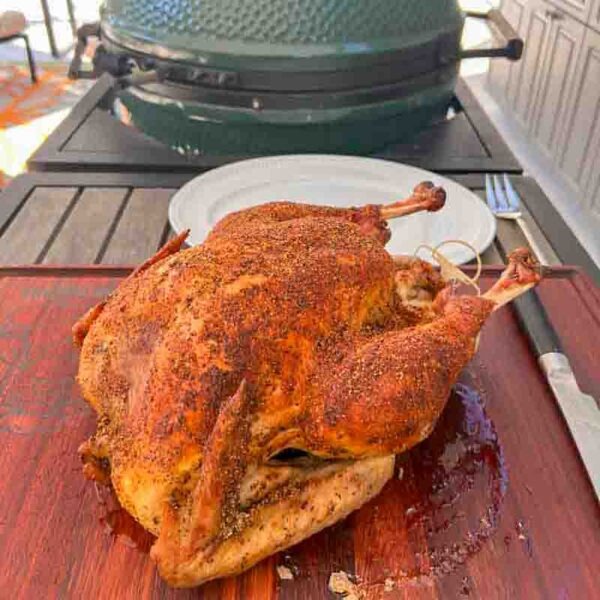
- Resting is Key: Once you remove the chicken from the spit, let it rest on a cutting board for 10 to 15 minutes before carving. This allows the juices to redistribute throughout the meat, ensuring every bite is succulent.
Step 5: The Essential “Aji” Green Sauce
You cannot have Peruvian chicken without the accompanying green sauce, or Aji Verde. It is tangy, creamy, spicy, and cuts through the richness of the chicken perfectly.
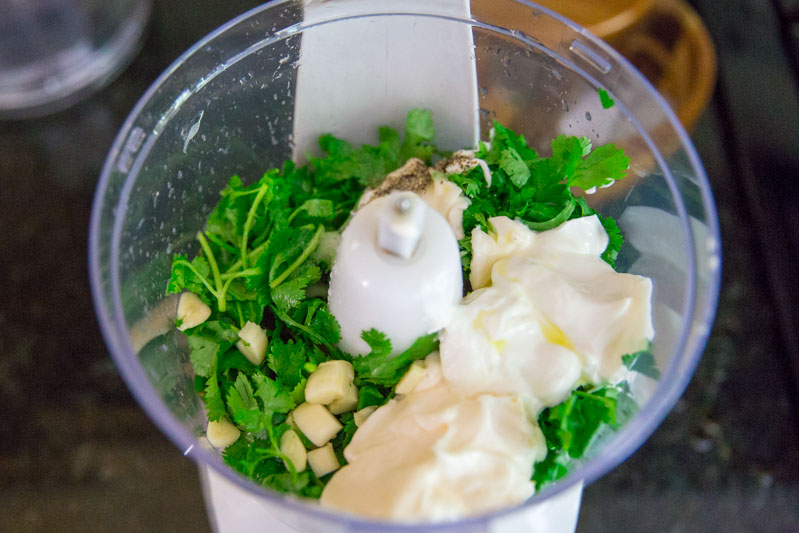
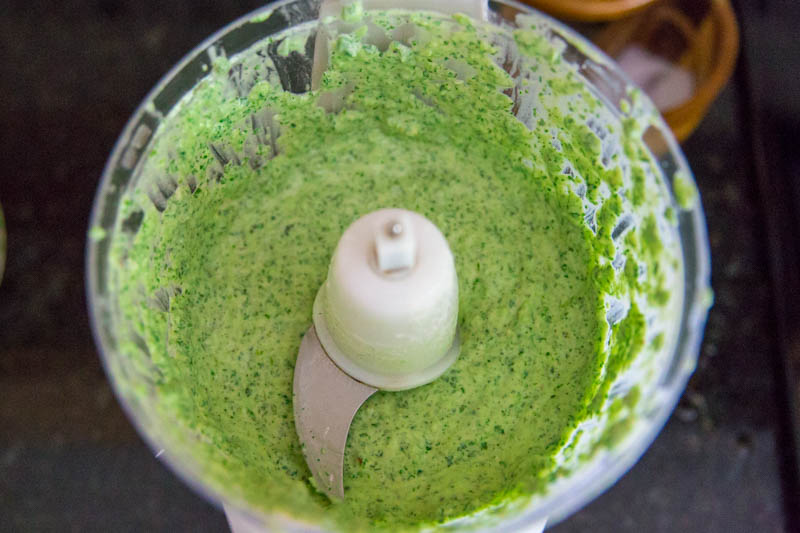
To make the sauce, blend fresh garlic, cilantro, lime juice, mayonnaise, sour cream, and fresh jalapenos together. I recommend leaving some of the seeds in the jalapenos if you prefer a bit more heat.
- The Secret to Perfect Sauce: Make this sauce at least a few hours in advance, or even the day before. Letting it sit in the refrigerator allows the flavors of the garlic, cilantro, and pepper to meld and intensify, resulting in a much more balanced sauce.
- Customizing Your Heat: This sauce is meant to have a kick. Start with one jalapeno, taste it, and add more if you want to dial up the heat. The mayonnaise and sour cream base will mellow it out, making it tangy rather than intensely fiery.
Step 6: Serving and Traditional Pairings
To truly experience Pollo a la Brasa like you would in Lima, the sides need to complement the smoky, citrusy flavor of the chicken.
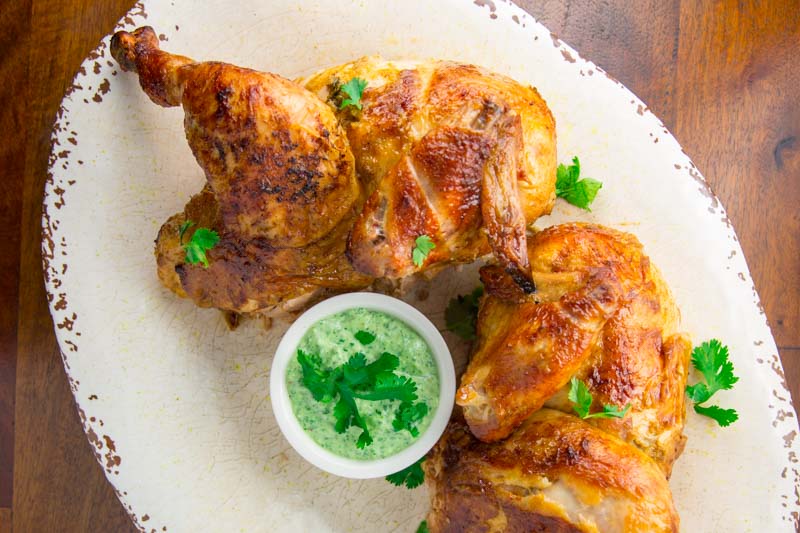
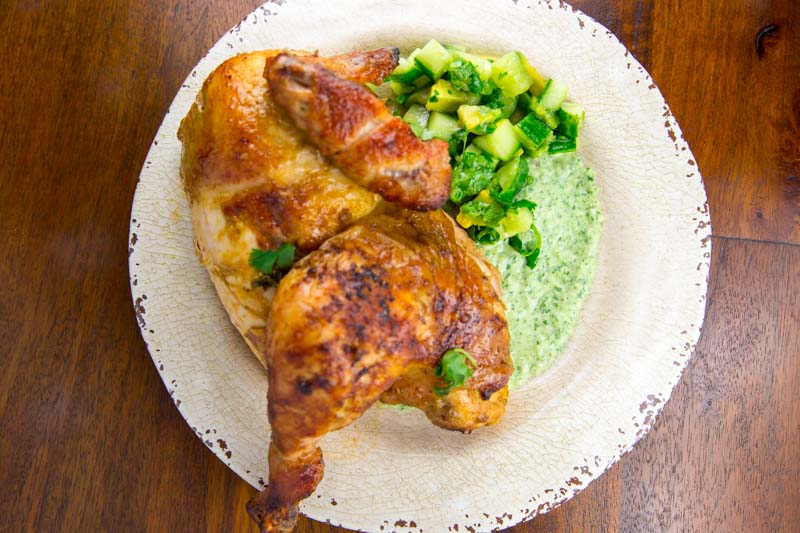
To serve, carve the chicken into quarters, ensuring every piece gets some of that crispy skin. Pair it with a generous dollop of your homemade green sauce and traditional sides for a complete meal.
- Classic Pairings: The most authentic sides for this dish are crispy French fries (often mixed right in with the chicken) and a fresh mixed green salad with a simple vinaigrette to cut through the richness.
- Alternative Traditional Sides: You can also pair this with arroz chaufa (Peruvian fried rice) or seasoned black beans for a heavier, more comforting meal.
Rotisserie Peruvian Chicken on the Big Green Egg
Equipment
- 1 Rotisserie Kit for BGE
Ingredients
For the Marinade & Chicken:
- 4 pound whole chicken
- 3 tbsp extra virgin olive oil
- ¼ cup lime juice, from 2 limes
- Zest from 1 lime
- 4 large garlic cloves, roughly chopped
- 1/4 cup cilantro, chopped
- 1 tbsp kosher salt
- 2 tsp paprika
- 1 tsp black pepper
- 1 tbsp cumin
- 1 tsp dried oregano
- 2 tsp sugar
For the "Aji" Green Sauce:
- 3 jalapeno peppers , seeded and chopped
- 1 cup fresh cilantro leaves
- 2 cloves garlic, chopped
- 1/2 cup mayonnaise
- 1/4 cup sour cream
- 1 lime, juiced
- 1/2 tsp salt
- 1/8 tsp black pepper
- 2 tbsp olive oil
Instructions
- Prepare the Marinade: Combine olive oil, lime juice, lime zest, garlic cloves, cilantro, salt, paprika, black pepper, cumin, oregano, and sugar in a blender and blend until completely smooth.
- Marinate the Chicken: Clean the chicken and pat dry with paper towels. Using your fingers, gently pull the skin from the flesh over the breasts and legs without tearing it. Spread most of the marinade underneath the skin directly onto the flesh, and rub the remaining marinade over the skin. Place in a Ziploc bag and refrigerate for at least 6 hours, or preferably overnight.
- BGE Setup: Set the Big Green Egg up for rotisserie cooking using your rotisserie kit. Preheat to 350°F, pushing a small pile of lump charcoal to the back of the firebox to create an indirect zone.
- Load the Rotisserie: Truss the chicken and secure it onto the rotisserie spit.
- Cook: Cook for 1 to 1.5 hours or until the bird measures 165°F with a Thermapen in the breast meat.
- Make the Sauce: While the chicken cooks, mix all green sauce ingredients in a food processor until smooth. Place in the refrigerator to allow flavors to meld.
- Serve: Carve the chicken and serve with the green sauce.
Nutrition information is automatically calculated, so should only be used as an approximation.





Hi, we are making this recipe today. I’ve noticed you mentioned adding cilantro to chicken marinade in your post. When I was reading the ingredients below in a recipe section, cilantro was only mentioned in a “green sauce” ingredients.
Could you please clarify how much cilantro needs to be added to chicken marinade? Thank you!
Good catch thank you 🙏 1/4 cup chopped cilantro is the answer.
So I’ve keep making this chicken, and since I have a memory of a fish, I keep forgetting to add cilantro to the chicken marinade. Is there a way you could update the recipe to include it? Thank you!
Big fan!
I will 100% fix this today! Thank you 🙏
Thanks, you’re the best!! 😊