
This post contains affiliate links. Please see our disclosure policy.
There is nothing quite like the flavor of Grilled Pork Chops on the Big Green Egg, especially when they are paired with a sweet and savory glaze. This recipe actually started as a way to solve a common kitchen problem: the “half-used jar” syndrome. If you love a good charcuterie board, you likely have a jar or two of fig jam tucked away in your refrigerator.
Instead of letting that jam go to waste, I decided to use it as the star ingredient for a premium cook. These Kurobuta Pork Chops from Snake River Farms are incredibly marbled and succulent, making them the perfect canvas for a rich Fig Jam Glaze. The sweetness of the figs combined with the smoky char from the kamado grill creates a gourmet meal that comes together in minutes.
Whether you are cleaning out the pantry or planning a high-end weekend dinner, these Fig Glazed Pork Chops are as delicious as it gets.
Now sit back, pour a glass of your favorite Pinot Noir, and enjoy this recipe for Grilled Kurobuta Pork Chops with a Fig Jam Glaze.
Table of Contents
Get My NEW Book
The Ultimate Big Green Egg Cookbook

Step 1: Temper, Slather, and Rub
The key to a perfectly juicy pork chop starts before it even hits the grill. For premium Kurobuta Pork Chops, you want to ensure the meat is prepped to take on maximum flavor while maintaining its internal moisture.
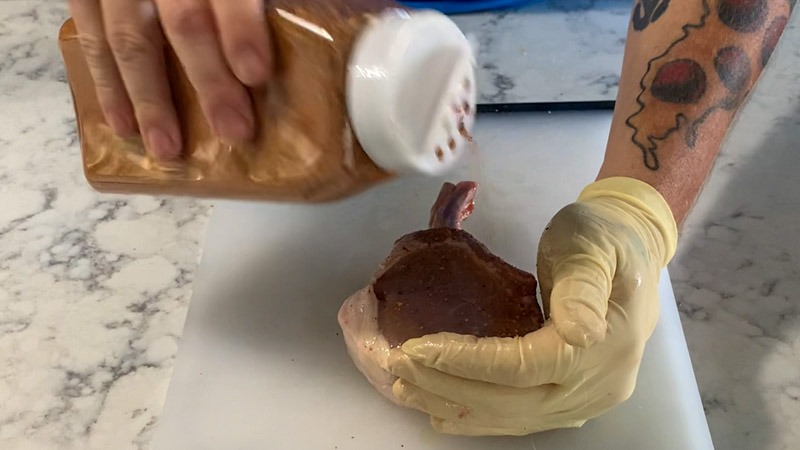
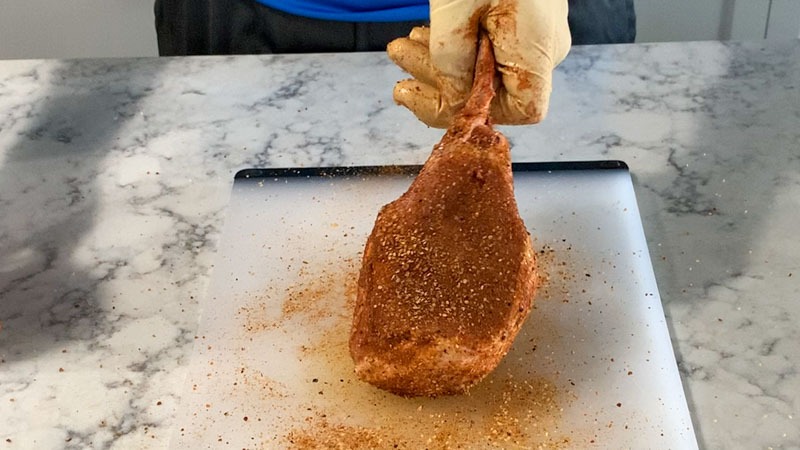
Start by tempering your pork chops: take them out of the refrigerator for about 30 minutes to bring them closer to room temperature. Once ready, apply a light slather of olive oil as a binder, then liberally apply your favorite dry rub.
- The Featured Choice: I used Dizzy Pig Raging River, a maple-based rub that pairs beautifully with pork and fruit-forward glazes.
- Popular Store-Bought Alternatives: If you can’t find Dizzy Pig, these fan-favorite rubs from top BBQ brands work exceptionally well with the fig glaze:
- Meat Church Honey Hog: A sweet, honey-forward rub that caramelizes beautifully.
- Killer Hogs The BBQ Rub: A balanced competition-style rub that provides a great mahogany color.
- Plowboys Yardbird: A savory, slightly sweet rub that is a staple for many competition teams.
- Heath Riles Competition BBQ Rub: A complex blend of sweet, savory, and pecan notes.
- The DIY Route: If you want to make your own at home, try this simple Savory Sweet Rub:
- 2 parts brown sugar
- 1 part smoked paprika
- 1 part kosher salt
- 1/2 part black pepper
- 1/4 part garlic powder and 1/4 part onion powder
Pro-Tip: While I love the incredible marbling of Snake River Farms Kurobuta, this fig glaze is just as delicious on thick-cut bone-in or center-cut pork chops from your local grocery store.
Step 2: Preparing the Fig Jam Glaze
While your pork chops are tempering, it is time to build the flavor profile that makes this dish stand out. This glaze is the perfect balance of sweetness from the figs, tang from the vinegar, and a subtle kick of heat.
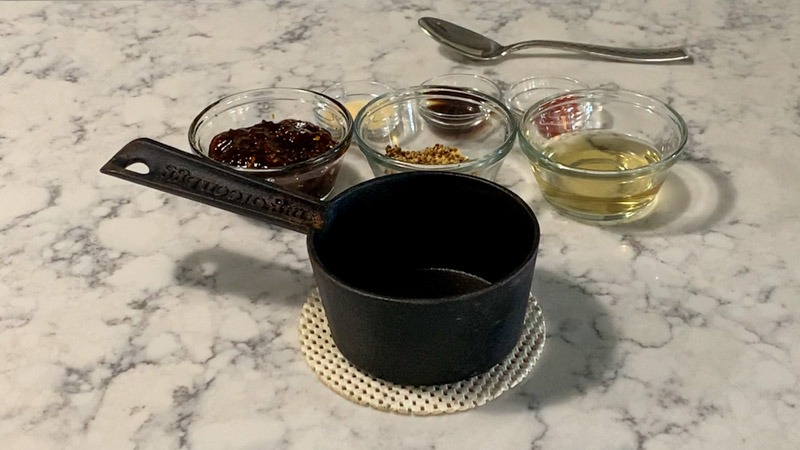
In a small cast iron saucepan, combine 1 cup fig preserves, ¼ cup apple cider vinegar, 1 tbsp stone ground mustard, 2 tsp Worcestershire sauce, 1 tsp sriracha sauce, ½ tsp garlic powder, and ½ tsp onion powder. Add salt and pepper to taste.
- Whisk to Combine: Mix the ingredients thoroughly before placing the pan on the grill. The cast iron is ideal here because it holds steady heat and can go directly onto your Big Green Egg alongside the chops.
- The Flavor Profile: The apple cider vinegar and mustard cut through the sugar in the preserves, while the sriracha adds a background warmth that doesn’t overpower the delicate flavor of the pork.
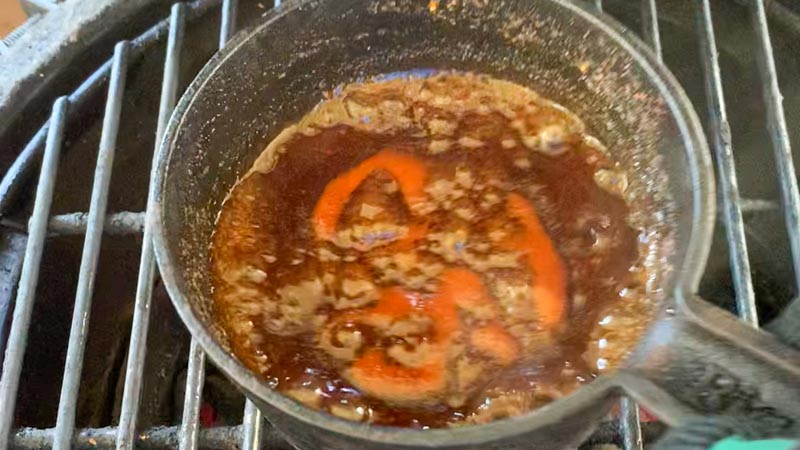
- Simmering: You want to heat this until the preserves melt and the sauce thickens slightly into a tacky, pourable glaze.
Step 3: BGE Setup and Cooking the Glaze
With your pork chops prepped and the glaze mixed, it is time to fire up the grill. For this cook, we are using a direct heat setup to get a beautiful sear on the meat while simmering the glaze to perfection.
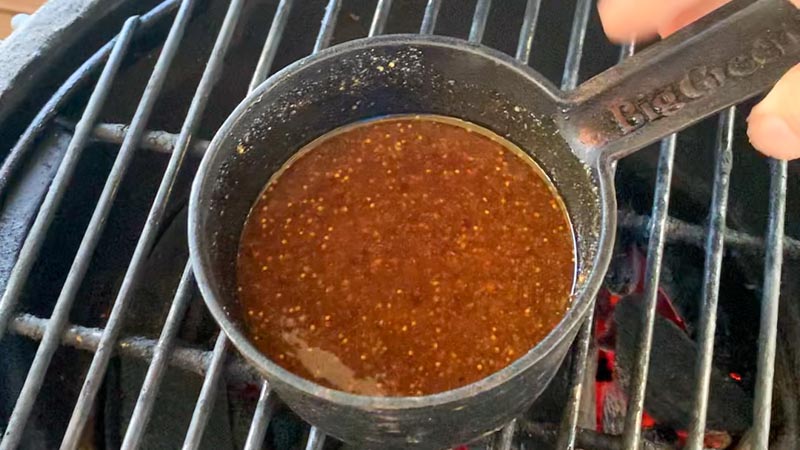
Set up your Big Green Egg for direct grilling and preheat it to 350°F. Once the grill is stabilized, place the cast iron pan with the glaze directly on the cooking grid. Let the glaze cook for about 10 minutes, or until it reaches a low boil.
- Temperature Control: Keeping the Egg at 350°F allows the glaze to reduce and the flavors to concentrate without scorching the sugars in the fig jam.
- The Cooling Process: Remove the saucepan from the grill once it bubbles and let it sit to the side. The glaze will naturally thicken as it cools, creating the perfect consistency to cling to the pork chops during the final stages of the cook.
- Lump Charcoal Advantage: Using high-quality lump charcoal ensures a clean, smoky flavor that complements the sweetness of the fig and the richness of the Kurobuta pork.
Step 4: Grilling the Pork Chops
Now that your glaze is thickened and the grill is stabilized at 350°F, it is time to get those chops on the heat. Because Kurobuta pork has such high fat content, the direct heat will create a spectacular crust.
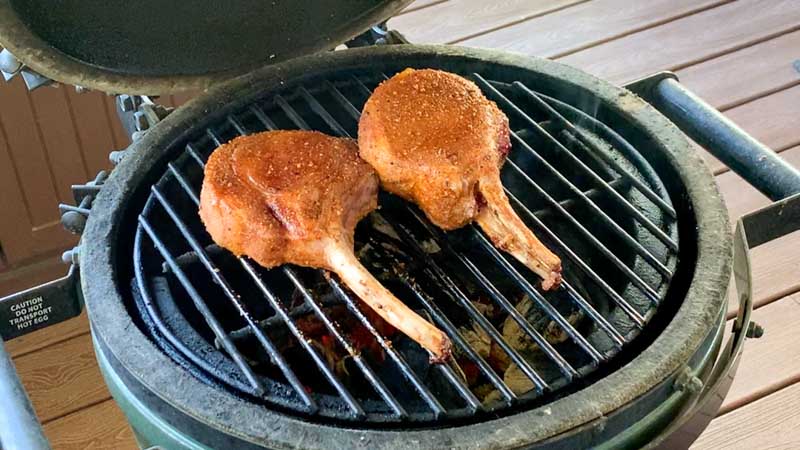
Carefully rub the Big Green Egg grilling grate with a little oil to prevent sticking, then place the pork chops directly over the coals. Close the dome and let them cook for 4-5 minutes before flipping.
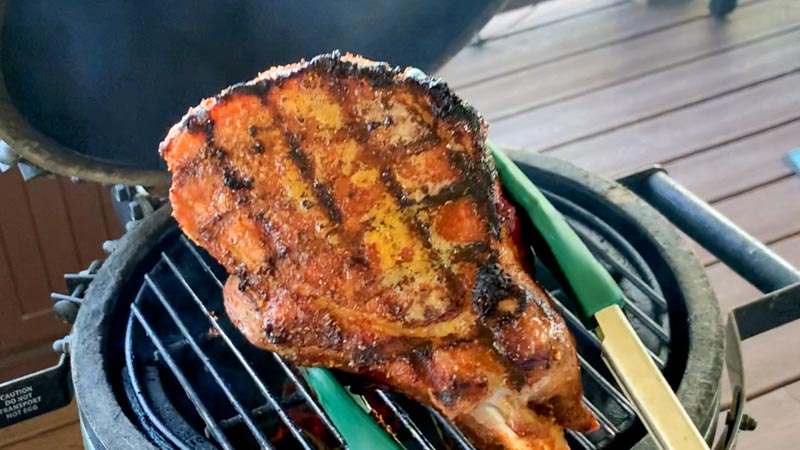
- The First Sear: This initial 4-5 minute stretch is where you develop those iconic grill marks and start the Maillard reaction. Resist the urge to peek; keeping the dome closed maintains a consistent convective heat environment.
- Managing Flare-ups: Since these chops are well-marbled, you might see some dripping fat. If a flare-up occurs, simply move the chops to the outer edge of the grate for a moment until the flame subsides.
- The Flip: Use long-handled tongs to flip the chops. You are looking for a deep, golden-brown sear that is ready to accept the fig glaze.
Step 5: The Final Glaze and Finish
After the initial flip, it is time to set the glaze and bring the pork to the perfect temperature. Closing the vents helps control the heat so the sugars in the fig jam caramelize without burning.
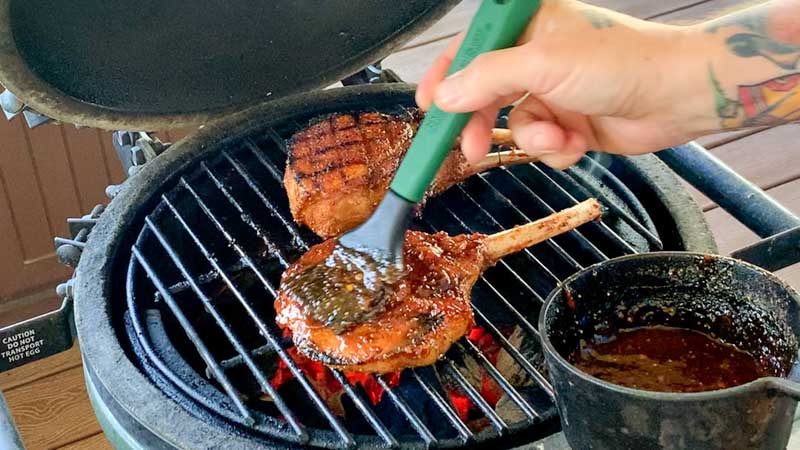
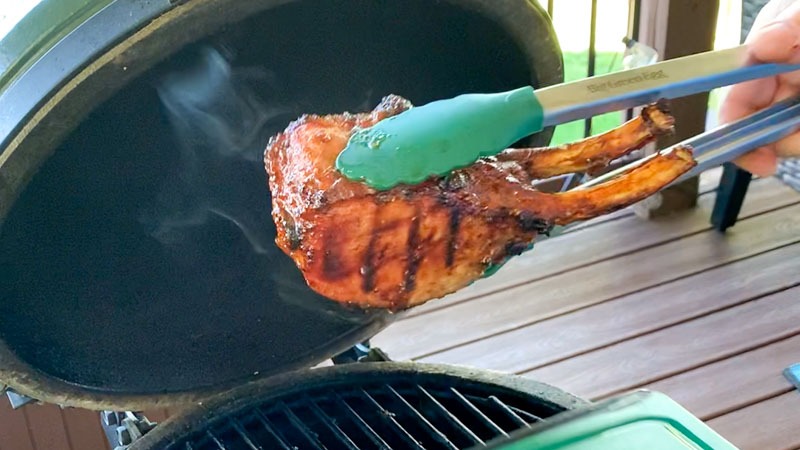
Cook the chops for another 4-5 minutes on the second side, then completely shut down the top and bottom vents of your Big Green Egg. Liberally apply the fig jam glaze to both sides of the chops and let them dwell until the internal temperature reaches 140°F.
- The Dwell: By shutting the vents, you are harnessing the residual heat of the ceramic Egg. This creates a “stoving” effect that bakes the glaze onto the meat, creating a tacky, delicious finish.
- Target Temperature: I recommend pulling the pork chops at 140°F. This allows for carryover cooking while the meat rests, which will bring the final temperature up to a perfect, juicy 145°F.
- Precision Matters: Use a high-quality instant-read thermometer to check the thickest part of the chop. With premium pork, pulling at this stage ensures the center remains slightly blush and incredibly tender.
Step 6: The Rest and Serve
Just as important as the cook itself is the rest. This final step allows the meat to relax and the juices to redistribute throughout the pork chop, guaranteeing maximum tenderness in every bite.
Remove the pork chops from the Big Green Egg and let them rest on a cutting board or warm platter for at least 10 minutes before serving.
- Why Rest? When the meat is cooking, the muscle fibers contract and push the juices toward the center. Resting allows those fibers to relax and reabsorb the juices, preventing them from running out onto the cutting board when you slice into it.
- The Final Temperature: During this 10-minute rest, the internal temperature will rise by roughly 5°F due to carryover cooking, landing you right at a perfect, juicy 145°F.
Final Thoughts and Serving Suggestions
These Fig-Glazed Grilled Pork Chops truly represent the best of backyard cooking. The combination of smoky flavor from the Big Green Egg, the rich, savory char of the Kurobuta pork, and the sweet tang of the fig jam glaze creates a gourmet experience that is surprisingly easy to execute.
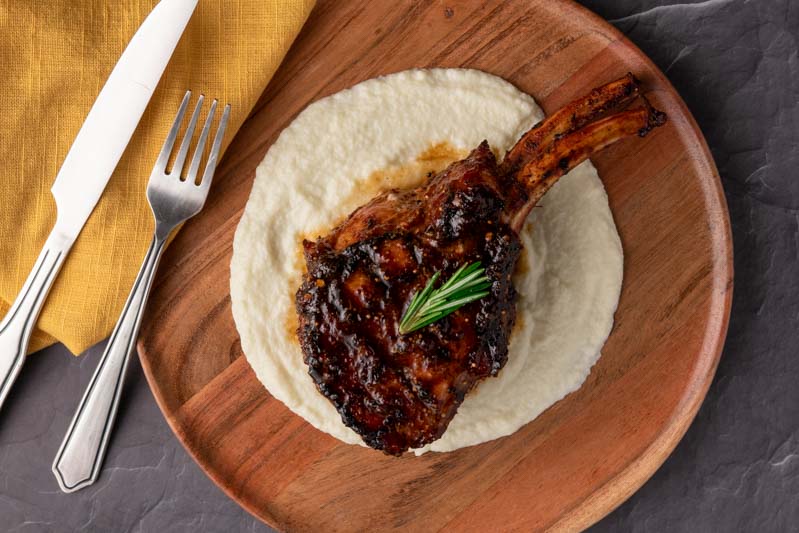
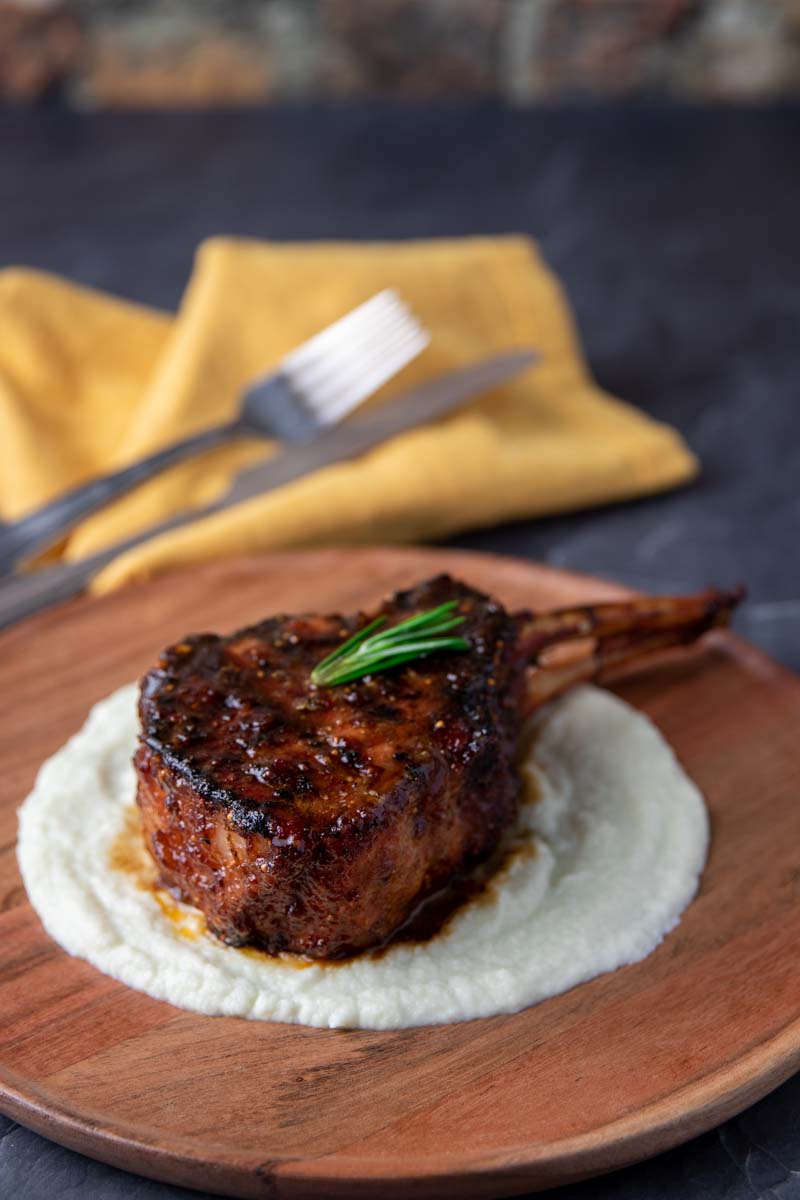
To elevate this meal, I served the pork chops over a creamy cauliflower puree. The smooth texture and mild flavor of the cauliflower were the perfect compliment to the smoky sweetness of the chops.
Here are a few other pairing ideas to complete your meal:
- Roasted Root Vegetables: Glazed carrots or roasted parsnips pair wonderfully with the sweet notes of the pork.
- Crispy Brussels Sprouts: The char and bitterness of Brussels sprouts balance the sweetness of the glaze.
- Simple Green Salad: A light vinaigrette salad helps cut through the richness of the pork.
Grilled Pork Chops with Fig Jam Glaze (Big Green Egg Recipe)
Ingredients
For the Pork Chops:
- 2 bone-in Kurobuta Pork Chops
- 2 tbsp Olive oil
- 3 tbsp Dizzy Pig Raging River Rub, or other pork rub
For the Fig Jam Glaze:
- 1 cup fig preserve
- ¼ cup apple cider vinegar
- 1 tbsp stone ground mustard
- 2 tsp Worcestershire sauce
- 1 tsp sriracha sauce
- ½ tsp garlic powder
- ½ tsp onion powder
- Salt and pepper, to taste
Instructions
- Prep & Temper: Remove pork chops from the refrigerator 30 minutes before cooking to bring to room temperature.
- Slather & Rub: Apply a light coating of olive oil to the chops, then liberally season with your chosen dry rub on all sides.
- Make the Glaze: In a cast iron saucepan, combine fig preserves, apple cider vinegar, stone ground mustard, Worcestershire sauce, sriracha, garlic powder, onion powder, salt, and pepper.
- BGE Setup: Preheat your Big Green Egg to 350°F set up for direct grilling.
- Cook Glaze: Place the cast iron saucepan with the glaze on the grid. Cook for 10 minutes, or until it reaches a low boil. Remove from the grill and set aside to cool and thicken.
- Sear Chops: Oil the grilling grate. Place chops directly over the coals. Cook for 5 minutes.
- Flip & Glaze: Flip the chops. Cook for another 5 minutes, then shut down the BGE vents. Brush the glaze liberally on both sides of the chops.
- Finish & Pull: Continue cooking (dwell) for another 5 minutes, or until the internal temperature reaches 140°F.
- Rest & Serve: Remove chops from the grill and let them rest for 10 minutes before serving. The temperature will rise to the target 145°F while resting.
Nutrition information is automatically calculated, so should only be used as an approximation.