
This post contains affiliate links. Please see our disclosure policy.
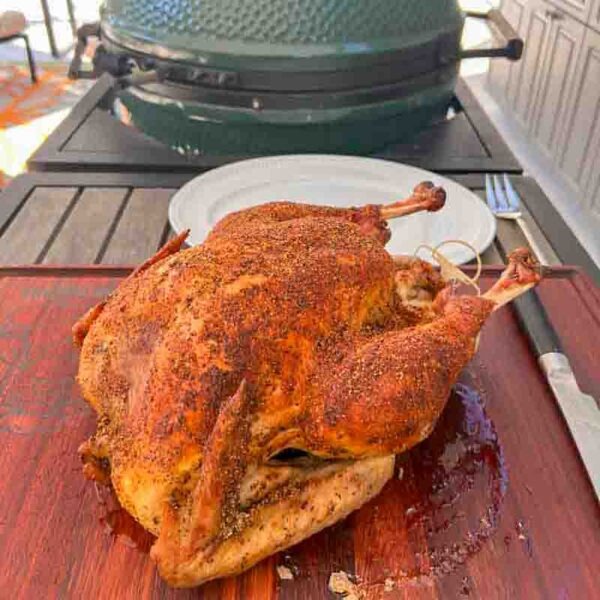
This Big Green Egg Thanksgiving Turkey recipe will help you cook a juicy, flavorful bird with beautiful golden-brown skin. Cooking the Thanksgiving turkey can feel intimidating. It is often the centerpiece of the entire holiday meal. Everyone wants moist meat, great flavor, and a turkey that looks as good as it tastes.
Many people smoke their turkey. Others roast it in the oven or fry it outdoors. My preferred method uses the Big Green Egg as an outdoor convection oven. A small amount of hickory wood adds flavor without overpowering the turkey.
The ceramic design of the Big Green Egg helps maintain steady temperatures throughout the cook. This creates juicy meat, crisp skin, and consistent results. It is one of the easiest ways to cook a holiday turkey.
Whether this is your first Thanksgiving turkey or your tenth, this recipe will guide you through the process. Fire up your Big Green Egg and let’s get started.
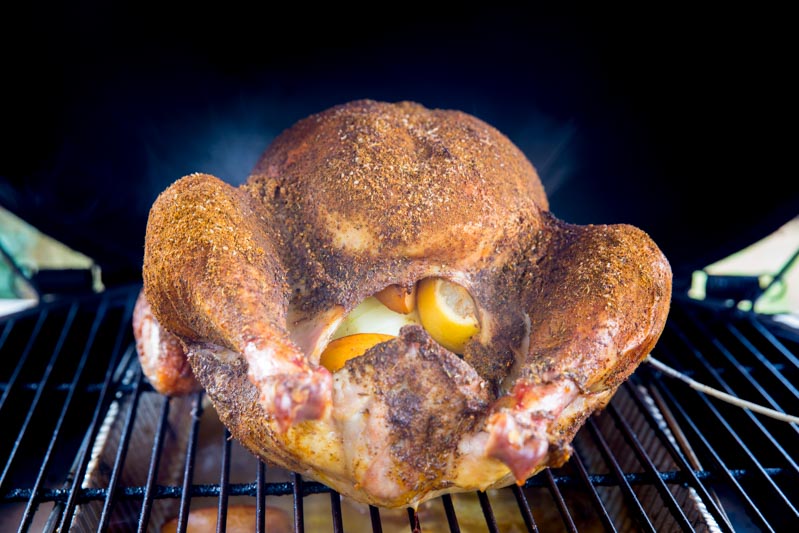
Table of Contents
- Brining Your Thanksgiving Turkey
- Air Dry the Turkey
- Prep the Turkey for the Cook
- Setting Up the Big Green Egg
- Seasoning the Thanksgiving Turkey
- Cooking the Thanksgiving Turkey on the Big Green Egg
- The Finish and How to Carve the Turkey
- How to Make Turkey Gravy from the Drippings
- Big Green Egg Thanksgiving Turkey Recipe
Get My NEW Book
The Ultimate Big Green Egg Cookbook
Brining Your Thanksgiving Turkey
When it comes to Thanksgiving turkey on the Big Green Egg, the conversation always starts with one word: Brining. If you want a bird that is actually juicy not just “passable with enough gravy” you have to brine. Here is the breakdown of why it matters and why I chose Lane’s for this specific cook.
The Brining Breakdown: Wet vs. Dry
There are two main ways to tackle a turkey, and both have their loyalists:
- Wet Brining: This is the traditional method of submerging the bird in a saltwater bath infused with aromatics.
- Pros: It’s like an insurance policy for moisture. The salt breaks down the muscle fibers, allowing the turkey to literally soak up extra water. It’s much harder to “dry out” a wet-brined bird.
- Cons: It’s a logistical puzzle. You need a massive food-grade bucket or bag, plenty of fridge space, and it can be a bit messy to handle a slippery, wet turkey.
- Dry Brining: This involves rubbing the bird down with salt and spices and letting it sit uncovered in the fridge for 24–48 hours.
- Pros: It’s way cleaner and takes up less space. More importantly, it results in the absolute best, shatters-like-glass crispy skin because the air in the fridge dries out the exterior.
- Cons: It doesn’t actually add moisture to the bird; it just helps the turkey retain the juices it already has.
Why I Choose Lane’s BBQ Signature Brine
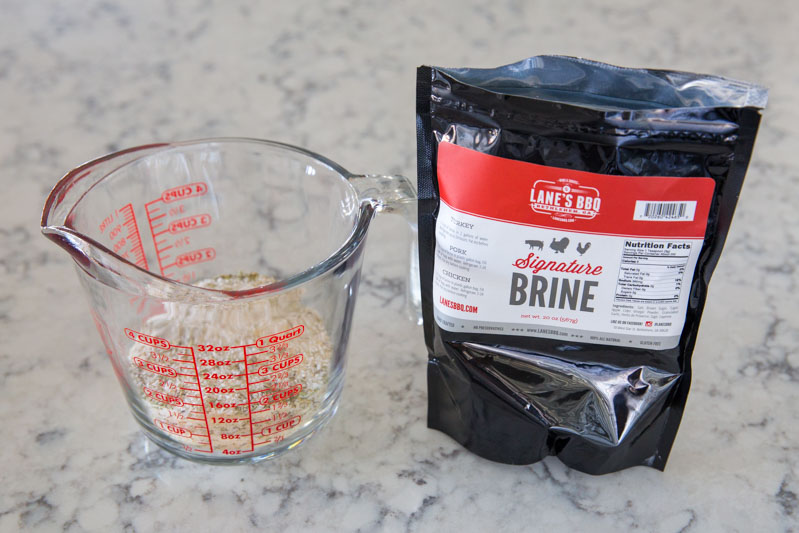
For this Thanksgiving cook, I used Lane’s BBQ Signature Brine. While I appreciate the science behind dry brining, I prefer a wet brine for turkey. The added moisture provides a larger margin of error during the cook.
What sets Lane’s apart is the flavor profile. Most homemade brines contain only salt and sugar. Lane’s also includes apple cider vinegar powder, which adds a subtle tang. That tang helps balance the rich flavors of the turkey and smoke.
The blend also contains sage and Herbes de Provence. These herbs add classic Thanksgiving flavor throughout the meat. It’s called Signature Brine for a reason. It simplifies the process and delivers flavor that goes far beyond a basic saltwater soak.
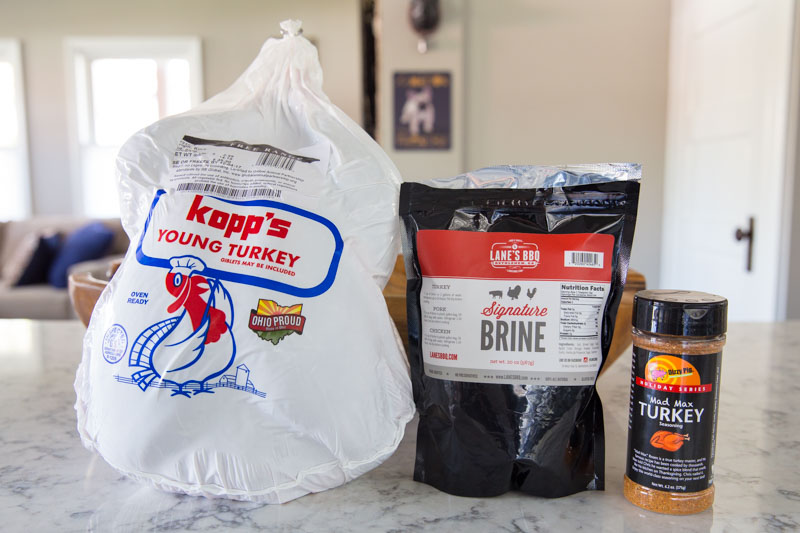
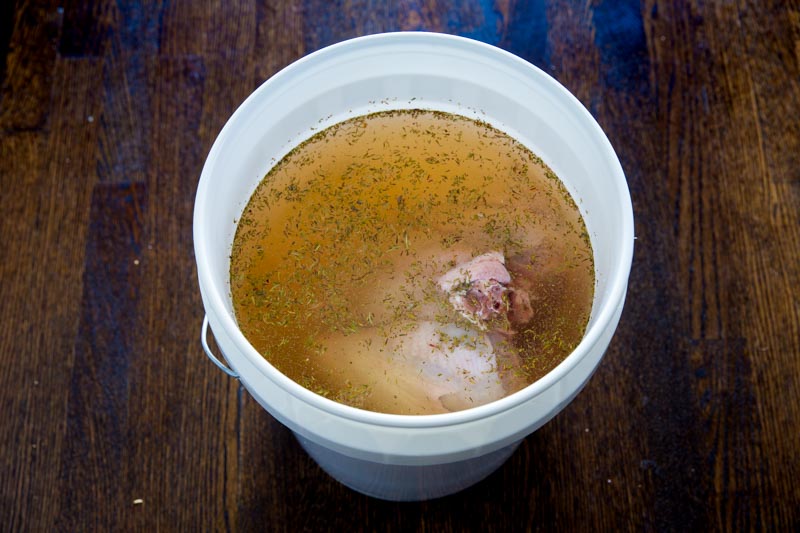
Making the brine couldn’t be easier with Ryan Lane’s Signature Brine. There is no need to measure salt or sugar. Simply mix 3 cups of brine with 2.5 gallons of water.
I like to use a large food-grade bucket for brining. Once the mixture is dissolved, submerge the turkey completely. Make sure there are no air pockets inside the cavity. If the bird floats, place a heavy plate on top.
Allow the turkey to soak for 12 to 24 hours. This gives the salt, herbs, and seasonings time to penetrate the meat. The result is a turkey that stays moist and flavorful throughout the cook.
Best of all, it removes much of the guesswork from Thanksgiving. That leaves you more time to focus on the side dishes and enjoy the day.
Air Dry the Turkey
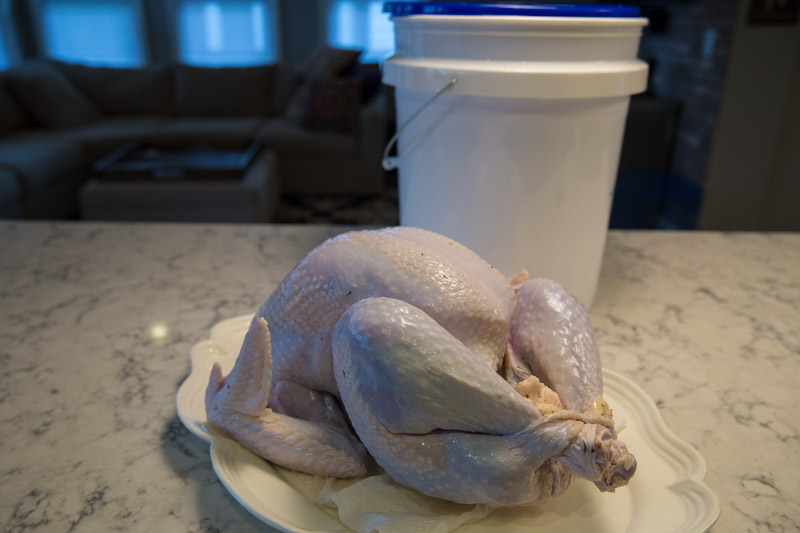
After the brining period is complete, it’s time to prepare the turkey for the cook. Remove the turkey from the bucket and rinse it thoroughly under cold water. Be sure to rinse the skin and the cavity well. This removes excess salt from the surface. Skipping this step can result in overly salty drippings and gravy. Once rinsed, pat the turkey completely dry with paper towels. Place it on a roasting rack set over a sheet pan.
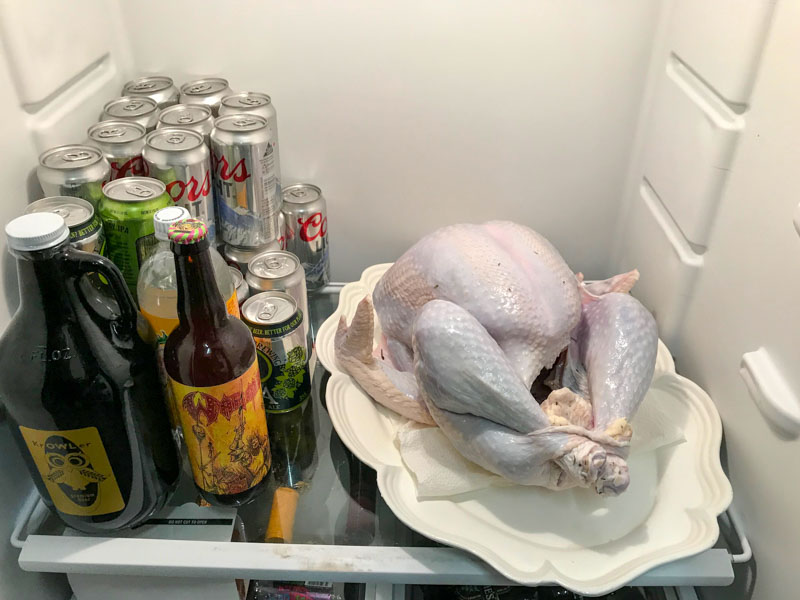
For the best results, place the turkey back into the refrigerator uncovered. Let it air dry for 4 to 12 hours, or overnight if possible. This step helps dry the surface of the skin. As the skin dries, it becomes easier to achieve a beautiful golden-brown finish on the Big Green Egg. By cook time, the skin should feel dry to the touch. That’s exactly what you’re looking for.
Prep the Turkey for the Cook
After air-drying the turkey, remove it from the refrigerator while you prepare the Big Green Egg. To help the breasts and thighs finish cooking at the same time, place a Ziploc bag filled with ice over the breasts. Leave it in place for 20 to 30 minutes before putting the turkey on the grill. This simple step lowers the temperature of the breast meat. As a result, the breasts cook more slowly and stay juicy. Meanwhile, the thighs and legs have time to reach their ideal finishing temperature.
I know this sounds a little crazy, but trust me on this one. Breast meat is much leaner than dark meat and cooks faster. By chilling the breasts before the cook, you give the thighs and legs a head start. This helps the dark meat reach its ideal finishing temperature before the breasts dry out. Think of it as cheap insurance for a more evenly cooked turkey. The result is juicy breast meat and properly cooked thighs and legs. While the ice is doing its job, lightly coat the turkey with oil or melted butter. This will help the rub adhere to the skin during the cook.

Setting Up the Big Green Egg
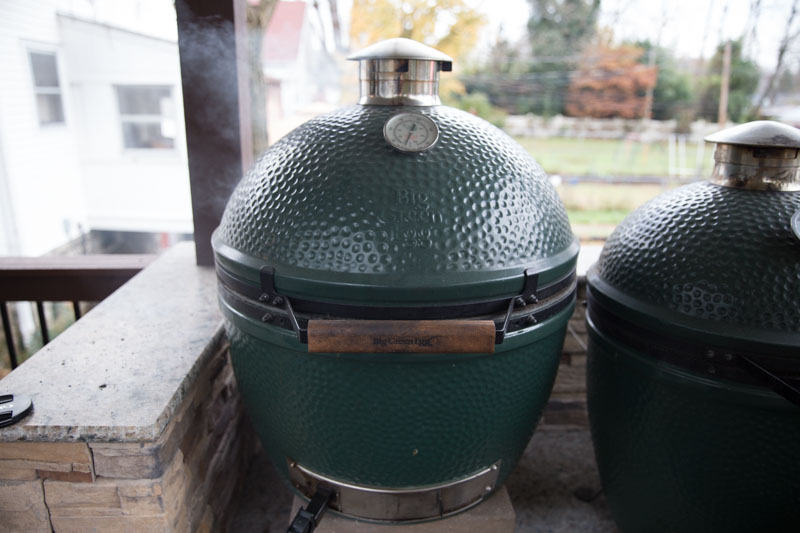
To get that perfect wood-fired flavor, you need to set up your Big Green Egg for indirect cooking. I use the ConvEGGtor (platesetter) with the legs facing up, which creates a heat shield that turns your Egg into a high-end outdoor convection oven. This is crucial because it protects the bird from direct flames, allowing it to roast evenly without burning the bottom.
When it comes to the fire, I like to mix 2-3 chunks of hickory wood in with the lump charcoal. For a turkey, you aren’t looking for a heavy, “Texas-brisket” level of smoke; you just want a clean, steady hint of it. Hickory provides that classic, savory BBQ aroma that pairs beautifully with the herbs in the brine.
The Drip Pan Setup
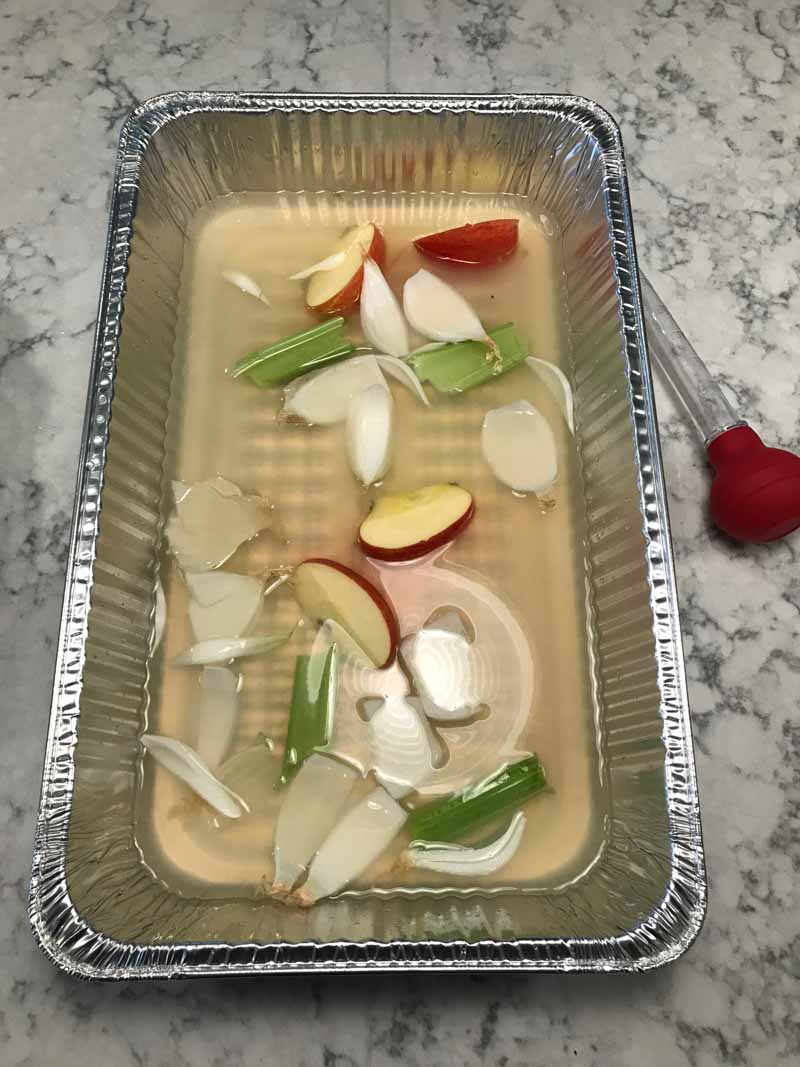
Before placing the cooking grate in the Egg, set a sturdy drip pan on top of the ConvEGGtor. Fill the pan about halfway with chicken stock and a crisp white wine. Add sliced apples, celery, and onion. The apples add a subtle sweetness that complements the hickory smoke. The celery and onion provide a classic savory foundation.
As the turkey cooks, the pan catches flavorful drippings from the bird. Those drippings combine with the stock, wine, and vegetables to create an incredible base for homemade gravy. This serves two purposes:
- It adds a bit of moisture to the cooking environment.
- It catches all those “liquid gold” turkey drippings while keeping them from burning against the hot ceramic. You’ll thank me later when it’s time to make the gravy.
Once the Egg is holding steady at 325°F and the smoke has turned from thick white to a thin, translucent blue, you’re ready to get that bird on the grate.
Seasoning the Thanksgiving Turkey
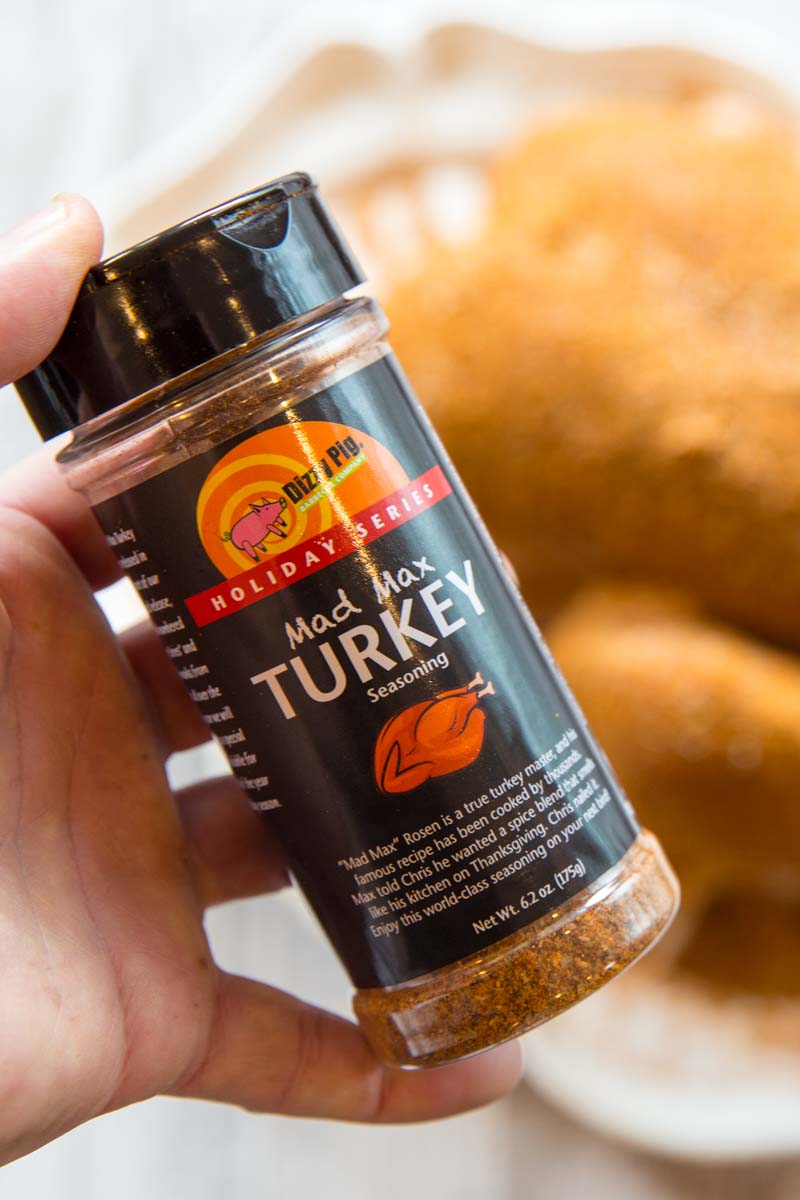
Once the bird has been air-dried and the breasts are chilled, it’s time to bring the flavor. While the brine has seasoned the meat from the inside out, the rub is what’s going to make that skin legendary. I recommend picking a BBQ rub specifically designed to complement poultry my absolute favorite for this is Mad Max from Dizzy Pig.
The flavor profile is practically built for the Thanksgiving table. It features a perfect balance of garlic, salt, and a touch of sugar, but it’s the lemon peel that really sets it apart. That citrus note cuts through the richness of the turkey and the smoke of the Big Green Egg, giving the skin a bright, savory finish that isn’t too heavy.
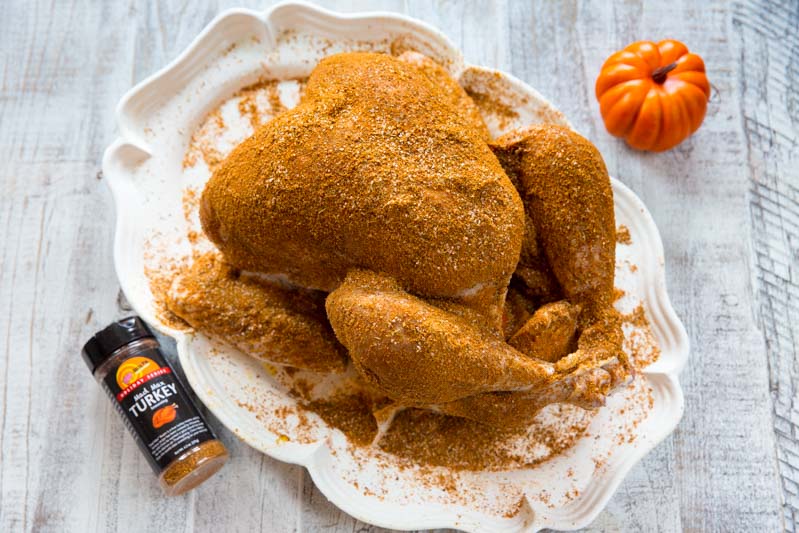
When applying the rub, be thorough but mindful. You want an even coat over the entire exterior, including the legs and wings. Since we took the time to air-dry the skin in the fridge, the rub should adhere beautifully to the tacky surface. If you really want to go the extra mile, you can even gently loosen the skin over the breasts and work a little bit of the rub (or even some compound butter) directly onto the meat for an extra layer of flavor.
To round out the flavor profile and ensure the turkey is seasoned from the inside out, we are going to pack the cavity with aromatics. This isn’t a traditional bread stuffing—this is an aromatic infusion that steams inside the bird while it cooks, keeping the breast meat moist and perfuming the entire turkey.
Stuffing the Cavity for Maximum Flavor
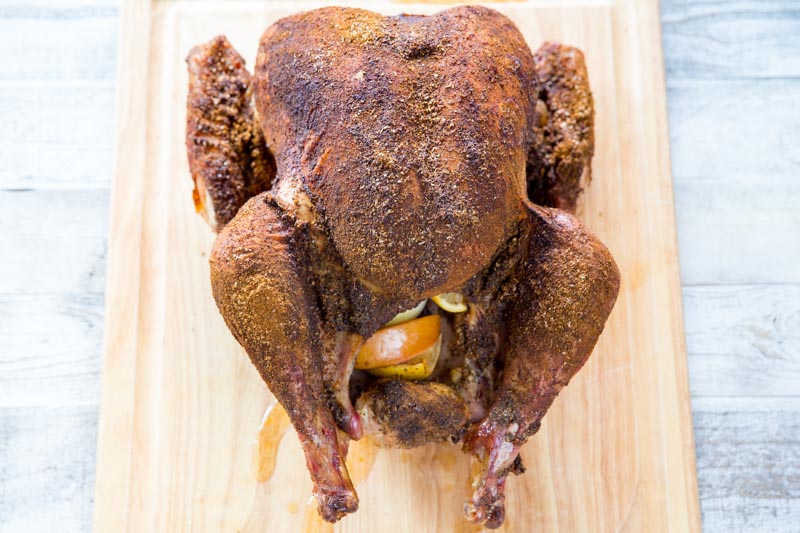
Just before the turkey goes onto the Big Green Egg, grab your sliced apple, lemon, and onion. Stuff them loosely into the main cavity of the bird.
- The Apple: Provides a hit of moisture and a subtle sweetness that balances the smoke.
- The Lemon: The acidity helps brighten the heavy, savory flavors of the turkey.
- The Onion: The ultimate savory aromatic that builds the foundation of the bird’s flavor.
Don’t pack it too tightly; you want some hot air to still be able to circulate in there so the turkey cooks safely and evenly. Once stuffed, you can tie the legs together with kitchen twine (trussing) to hold everything in place and give the bird a nice, uniform shape on the grate.
Cooking the Thanksgiving Turkey on the Big Green Egg
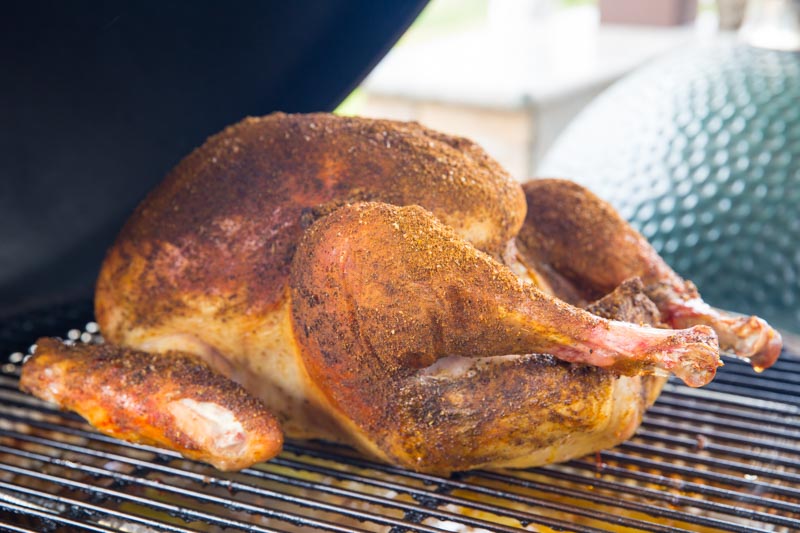
When the Big Green Egg is holding a rock-steady 325°F and the smoke has cleared to a beautiful thin blue, you’re officially ready for the main event. Open the dome and carefully center the turkey on the grilling grate, directly over your aromatic-filled drip pan.
Roasting at 325°F is the “sweet spot” for turkey on the Egg. It’s hot enough to render the fat and crisp up that skin we spent so much time air-drying, but gentle enough that the hickory smoke has time to really penetrate the meat. By positioning the bird directly above the drip pan, you’re creating a perfect convection environment where the heat circulates around the turkey while the liquid below keeps the atmosphere inside the dome perfectly humid.
Once the bird is settled, close the lid and resist the urge to peek. Every time you open the dome, you lose that carefully managed heat and moisture, which can lead to rubbery skin and longer cook times. Let the Big Green Egg do its job. I usually don’t even think about checking the internal temperature until about the 2-hour mark, depending on the size of the bird. You’re looking for a beautiful, mahogany-gold color and an internal temperature of 160°F in the thickest part of the breast (it’ll carry over to 165°F while resting).
The Finish and How to Carve the Turkey
Once the breast reaches 160°F and the thigh reaches 175°F, remove the turkey from the Big Green Egg. Then let it rest for 30 to 45 minutes before carving. This step is critical. Resting allows the juices to redistribute throughout the meat. If you slice too soon, those juices will end up on the cutting board instead of in the turkey. The wait is worth it. A properly rested turkey will stay hot for well over an hour and remain incredibly moist when served.
The Master Carver Overview
When it’s time to eat, don’t just hack away at the bird while it’s sitting in the roasting pan. Move it to a large, sturdy cutting board and follow this flow:
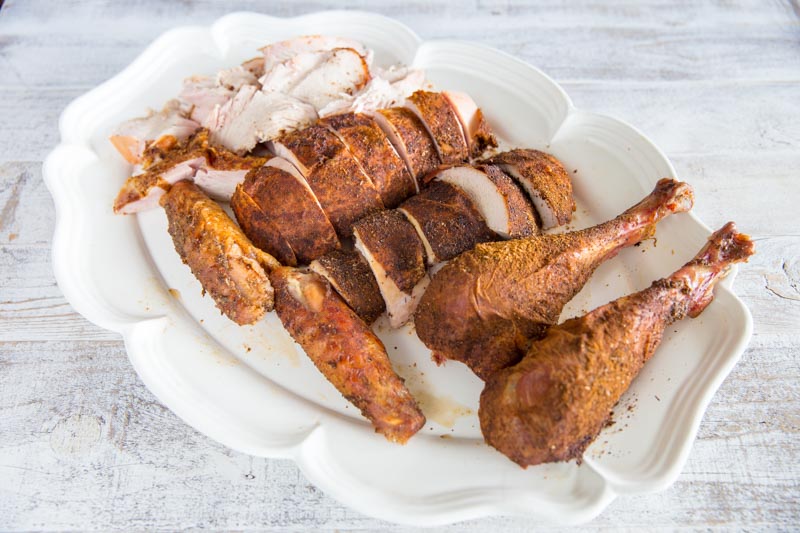
- Remove the Legs and Thighs: Slice through the skin connecting the leg to the breast and pull the leg back until the joint pops. Cut through the joint and set the dark meat aside.
- Take the Breasts Off Whole: Instead of slicing downward into the bird, find the breastbone (the keel bone) and slice down right alongside it. Follow the curve of the ribcage to remove the entire breast in one large piece.
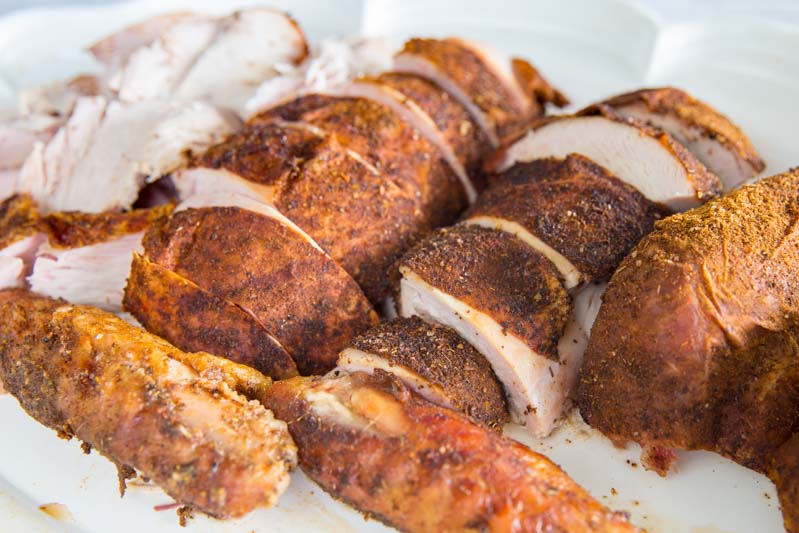
- The Cross-Cut: Now, lay that breast meat flat on your board and slice it across the grain into thick, beautiful medallions. This ensures every slice has a piece of that perfectly seasoned Mad Max skin and stays incredibly tender.
- Separate the Dark Meat: Disconnect the drumstick from the thigh. You can serve the drums whole (the “caveman” style) and slice the thigh meat away from the bone.
Arrange everything on a warm platter, grab that “liquid gold” gravy you made from the drip pan, and get ready for the best Thanksgiving compliments you’ve ever received.
How to Make Turkey Gravy from the Drippings
While the turkey is resting, it’s time to transform the drippings into homemade gravy. The combination of turkey drippings, chicken stock, white wine, and aromatics creates a rich flavor base that store-bought gravy simply can’t match.
Step 1: Strain the Drippings
Carefully remove the drip pan from the Big Green Egg. Pour the liquid through a fine-mesh strainer into a large bowl or measuring cup.
Discard the vegetables and herbs. Let the liquid rest for a few minutes so the fat rises to the top. Skim off most of the fat, leaving a small amount behind for flavor.
Step 2: Make the Roux
Melt 4 tablespoons of butter in a saucepan over medium heat.
Whisk in 1/4 cup of all-purpose flour. Cook for 2 to 3 minutes until the roux turns light golden brown. This removes the raw flour taste and creates a smoother gravy.
Step 3: Build the Gravy
Slowly whisk the strained drippings into the roux.
If needed, add additional chicken stock until you have 3 to 4 cups of liquid. Continue whisking until the gravy simmers and thickens to your desired consistency.
Step 4: Season and Serve
Taste the gravy before adding any salt. The brine and seasoning rub may provide all the salt you need.
Add freshly cracked black pepper to taste. You can also add a teaspoon of chopped fresh sage for extra flavor. If the gravy tastes too intense, stir in a splash of heavy cream.
Transfer the gravy to a warmed gravy boat and serve immediately.
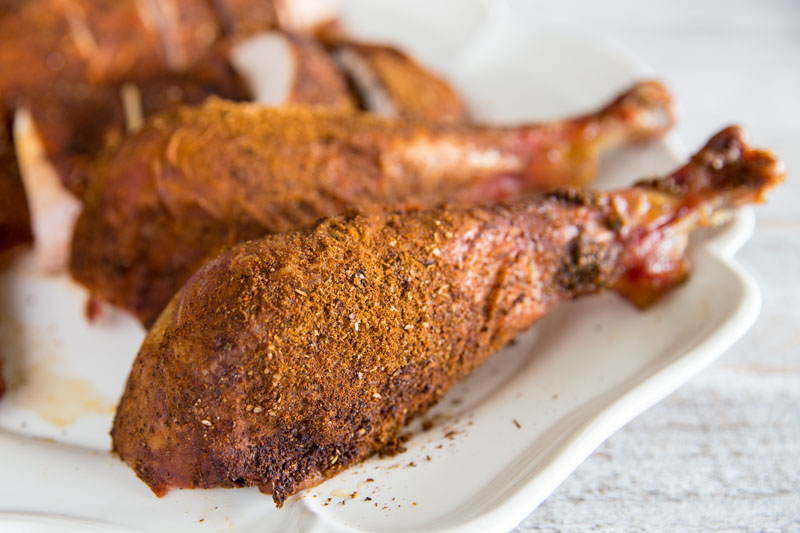
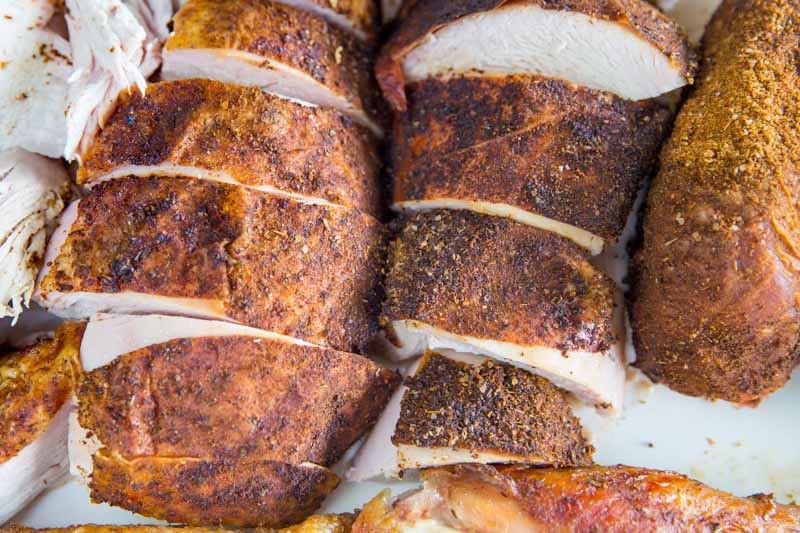
Big Green Egg Thanksgiving Turkey
Ingredients
Turkey Ingredients:
- 12-14 pound turkey
- 3 cups Lane's Signature Brine
- 3/4 cup Your Favorite BBQ Rub
- 1 stick of softened Butter or 1/2 cupOlive Oil, for the slather (to bind the rub)
- 1 Lemon, sliced
- 1 Apple, quartered
- 1 Onion, halved
Drip Pan Ingredients:
- 2 cups Chicken Stock
- 2 cups white wine
- 1 apple (Honeycrisp or Fuji work well), sliced in to wedges
- 2 stalks celery , cut in to 3" pieces
- 1 yellow onion, peeled, cut in to wedges
Gravy Ingrediens:
- 4 tbsp butter
- 1/4 cup all purpose flour
- 3-4 cups strained drippings from the pan, add extra chicken stock as needed
- 1 tsp fresh cracked pepper
Instructions
Turkey Instructions:
- Clean the turkey and keep trimmings, neck, etc. to the side for gravy
- Mix 3 c of Lane’s Signature Brine with 2.5 Gallons of water
- Place the turkey in the brine and let sit for 24 hours in a refrigerator
- After 24 hours pull the turkey from the brine and rinse well
- Pat dry and place the turkey (uncovered) back in the fridge for another 24 hours to let the skin dry
- After 24 hours take the turkey out of the refrigerator and place a Ziploc bag full of ice on the turkey breasts (this will help the breasts cook at the same time as the thighs/legs)
- Prep your Big Green Egg for indirect cooking and set to 325°
- I used a few chunks of hickory wood to add smoke flavor to the turkey
- Place a drip pan half full of chicken stock, white wine, and the aromatics (apple, onion, celery) to catch the drippings
- Remove the ice from the turkey and rub all over with olive oil or softened butter
- Liberally add the BBQ rub to your turkey
- Stuff the turkey's cavity with the apple, lemon, and onion
- Once the BGE is up to temp place the turkey in on the grilling grate over the drip pan
- Check progress every hour waiting for the turkey to come up to 165° measured in the breast and thigh
- When you check on the bird you can use a turkey baster to draw juices from the drip pan and baste the bird inside and out
- I had a 14-pound bird for this cook and it took me 2.5 hours until it was ready
- Pull the turkey when the temp measures 165° and allow it to rest 10 minutes before slicing and serving
Gravy Instructions:
- Carefully remove the drip pan from the Big Green Egg and pour the liquid through a fine-mesh strainer into a large bowl.
- Allow the strained liquid to sit for 1–2 minutes, then skim off the excess fat from the surface.
- In a saucepan over medium heat, melt the 4 tablespoons of butter until bubbling.
- Whisk in the 1/4 cup of flour to create a roux; continue whisking for 2–3 minutes until the mixture turns golden brown and smells nutty.
- Slowly pour in the strained turkey liquid while whisking constantly to prevent lumps from forming.
- Bring the gravy to a gentle simmer and continue to whisk until it reaches your desired thickness.
- Taste the gravy and add the fresh black pepper and sage (the brine and rub usually provide enough salt, so taste before adding more).
- For a creamier finish, whisk in a splash of heavy cream just before serving.
- Transfer to a warmed gravy boat and serve immediately alongside your rested turkey.
Nutrition information is automatically calculated, so should only be used as an approximation.





Do you eat the skin on a cooked bird or is it too tough and salty due to the brining?
Skin is amazing and must eat!
Lanes brine link is am error for me. Is there a recipe I can follow for the brine? This looks amazing and I really want to try it this year.
Hey Chris, avid follower of your recipes! You help make our parties the talk of the neighborhood! Going to smoke a Turkey this weekend for a “Friendsgiving” party. I have the standing turkey roaster from Big Green Egg. Any concerns about using that for this recipe? If recommended, should I fill it with anything (chicken stock, apple cider vinegar, beer, etc…)?
Thanks in advance!
Thanks Jared! The standing toaster will work fine. Definitely fill it with something like wine or stock with some aromatics in there too. Just keep basting the bird from the top to keep it moist as it cooks.
Question.. how long would you guess it might take for a 28# turkey?
5.5 hours estimated
Chris. Can you give me some direction on how to make the gravy? How do I bring together pan drippings with the giblets that are set aside? I assume I put them all together in a pot for a period of time. Can you walk me through it?
The giblets and turkey neck could be used if you are not using the pan drippings. In other words, you can roast neck and giblets then simmer in stock and aromatics to get base for your gravy. If you are using the pan drippings as outlined in this post you don’t need neck or giblets as you are getting the roasted turkey flavor from the actual turkey. Hope that makes sense. As for actually making the gravy… strain the drippings, separate the fat, use the fat with flour to make roux, slowly add in the drippings to the roux to make gravy.
Can you brine and inject?
Yes
Thank you for sharing your recipes and helpful advice.
Thanks for the kind words!
You mention apple cider vinegar when you discuss the brine, but no further mention of this in the directions. Do you add vinegar to the brine or not? I have lanes brine but there’s no mention of vinegar.
Lane’s signature brine has apple cider vinegar powder in it. So, the reference to ACV in the post was to the flavor not to the need to add more. So, all you need is a bag off the brine and water. Hope that makes sense.
Chris – great. I see ACV on the ingredient list. Thanks for your reply.
Look again. Chicken stock and white wine are listed on the ingredient list. ACV should not be listed there.
Chris,
We are a stuffing family. Love the stuff (pardon the pun). What are your thoughts on stuffing the turkey and then using your recipie.
Separate question: I noticed you said that injection of the turkey was OK to pair with your recipie. I was also thinking of a cajun-seasoning based brine. Your thoughts on these ideas are welcome.
Stuffing the bird with this recipe would be fine. The flavors should do well marrying right the stuffing inside the cavity. As for Cajun brine, I love the idea. Share the recipe if you try it!