
This post contains affiliate links. Please see our disclosure policy.
Are you looking for the best meatloaf recipe for your Big Green Egg? Well, you’ve come to the right place. This Cedar Planked Bacon Wrapped Meatloaf on the Big Green Egg is a total game-changer for fans of wood-fired comfort food. While many people associate meatloaf with dry, uninspired kitchen-oven versions, taking it to the Egg transforms it into a smoky, gourmet centerpiece.
This recipe is incredibly easy to follow and packed with amazing flavors that build in layers. By cooking the meatloaf on a soaked cedar plank, we introduce a subtle, aromatic wood smoke that pairs perfectly with the savory bacon wrap. But the real “secret sauce” is the sophisticated red wine glaze we apply at the end. Using a bold Cabernet Sauvignon creates a deep, slightly sweet reduction that cuts through the richness of the beef and bacon beautifully.
Whether you are hosting a Sunday family dinner or looking for a way to level up your weeknight meal prep, this recipe is guaranteed to be a hit. Now sit back, grab a glass of your favorite Cabernet Sauvignon, and enjoy this post for Big Green Egg Bacon Wrapped Meatloaf.
Table of Contents
- Step 1: Prep and Soak Your Cedar Plank
- Step 2: Fire Up the Egg
- Step 3: Crafting the Flavor-Dense Mix
- Step 4: Forming the Loaf
- Step 5: The Bacon Wrap
- Step 6: The Transfer to the Plank
- Step 7: The Initial Cook
- Step 8: Crafting the Red Wine Glaze
- Step 9: The Glaze and the Home Stretch
- Step 10: The Pull and the Patience
- The Final Reveal: Slice and Serve
- Cedar Planked Bacon Wrapped Meatloaf on the Big Green Egg Recipe
Get My NEW Book
The Ultimate Big Green Egg Cookbook

Why the Cedar Plank Matters
Cooking on a cedar plank isn’t just for salmon. For meatloaf, the plank acts as a buffer from the direct heat while providing a steady release of moisture and wood aromatics. This keeps the beef succulent while allowing the bacon to render and crisp up perfectly.
The “Grilling by Feel” Advantage
The Glaze Texture: We wait until the final 15 minutes to apply the Cabernet glaze. This ensures the sugars in the wine and ketchup tack up into a professional, lacquered finish without burning.
The Scent Cue: About 45 minutes into the cook, you’ll start to smell the cedar mixing with the rendering bacon fat. That is your signal that the internal temp is climbing and the flavor is locking in.
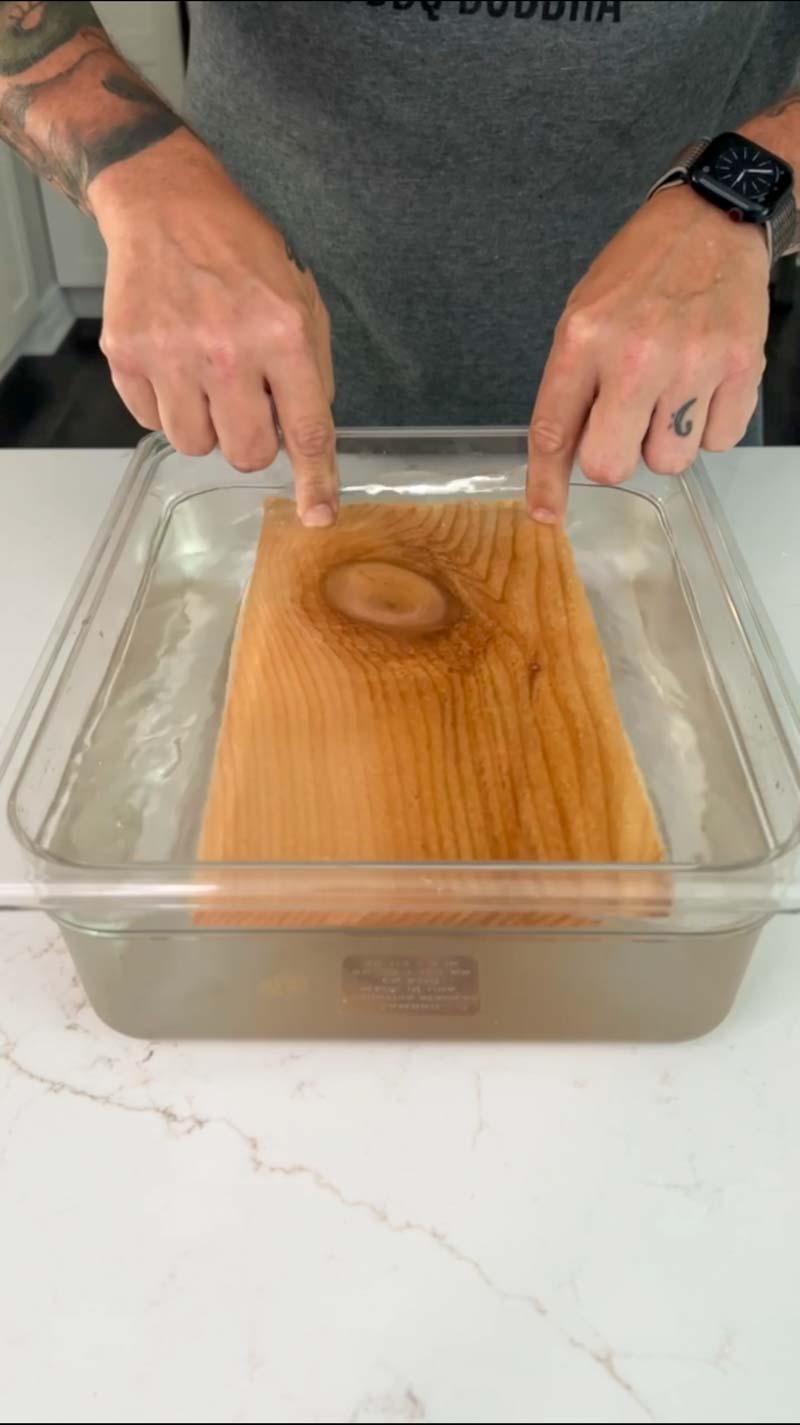
Step 1: Prep and Soak Your Cedar Plank
Before you even think about the meat, you need to prep your cooking surface. Start by soaking a cedar plank in water for at least one hour before you plan to cook your meatloaf. This is a non-negotiable step that ensures your wood provides flavor rather than fuel for a fire.
What is a Wood Plank and Why Cedar?
Plank grilling is a centuries-old technique where food is placed directly on a piece of wood over a heat source. While you can find planks made of hickory, maple, or cherry, Western Red Cedar is the gold standard for meatloaf. It offers a unique “sweet smoke” profile that is aromatic but not overpowering.
The cedar acts as a natural flavor-infusion system. As the wet wood heats up on the Big Green Egg, it releases moisture and essential oils, essentially “steam-smoking” the meatloaf from the bottom up. This prevents the bottom of the loaf from drying out or sticking to the grates.
Where Do You Find Them?
You don’t need to head to the lumber yard for this! In fact, you shouldn’t—construction-grade lumber is often treated with chemicals. Look for “Food Grade” or “Grilling Planks” at:
- Local BBQ Specialty Shops: Your Big Green Egg dealer will almost certainly carry them.
- Grocery Stores: Usually found in the seafood section or the charcoal aisle.
- Online: Large packs are readily available and cost-effective if you plan on making this a regular cook.
Frequently Asked Questions (FAQ)
- Do I have to soak it? Yes. If you put a dry board on a 350°F grill, it will catch fire. Soaking ensures the wood smolders and creates steam instead of flames.
- Can I reuse a cedar plank? Generally, no. After an hour on the Egg, the plank will be charred and have lost most of its essential oils. It’s best to treat them as a single-use “disposable” flavor tool.
- How do I keep it submerged? Cedar is buoyant. Use a heavy bowl or a clean brick to weigh the plank down in your sink or a plastic bin so it stays fully submerged.
Buddha’s Pro-Tip: The Flavor Upgrade
If you want to take things a step further, don’t just soak the plank in plain water. Try adding a splash of that Cabernet Sauvignon or some apple cider vinegar to the soaking liquid. It adds a subtle layer of complexity to the steam that will permeate the beef.
Step 2: Fire Up the Egg
With your plank soaking, it is time to get the Big Green Egg ready. This recipe relies on a steady, medium heat to render the bacon fat and cook the beef through without scorching the exterior.
The Clean Burn: While the Egg is preheating, wait for the smoke to turn thin and blue. You want a clean-burning fire so the delicate cedar aroma from the plank isn’t overwhelmed by heavy, “acrid” charcoal smoke.
The Indirect Setup: Place your convEGGtor (Plate Setter) in the Egg with the legs facing up. This creates an indirect cooking environment, turning your grill into a high-powered convection oven.
The Temperature: Open your vents and stabilize the Egg at 350°F. This is the “sweet spot” for meatloaf: hot enough to crisp the bacon but gentle enough to keep the interior of the loaf tender and juicy.

Step 3: Crafting the Flavor-Dense Mix
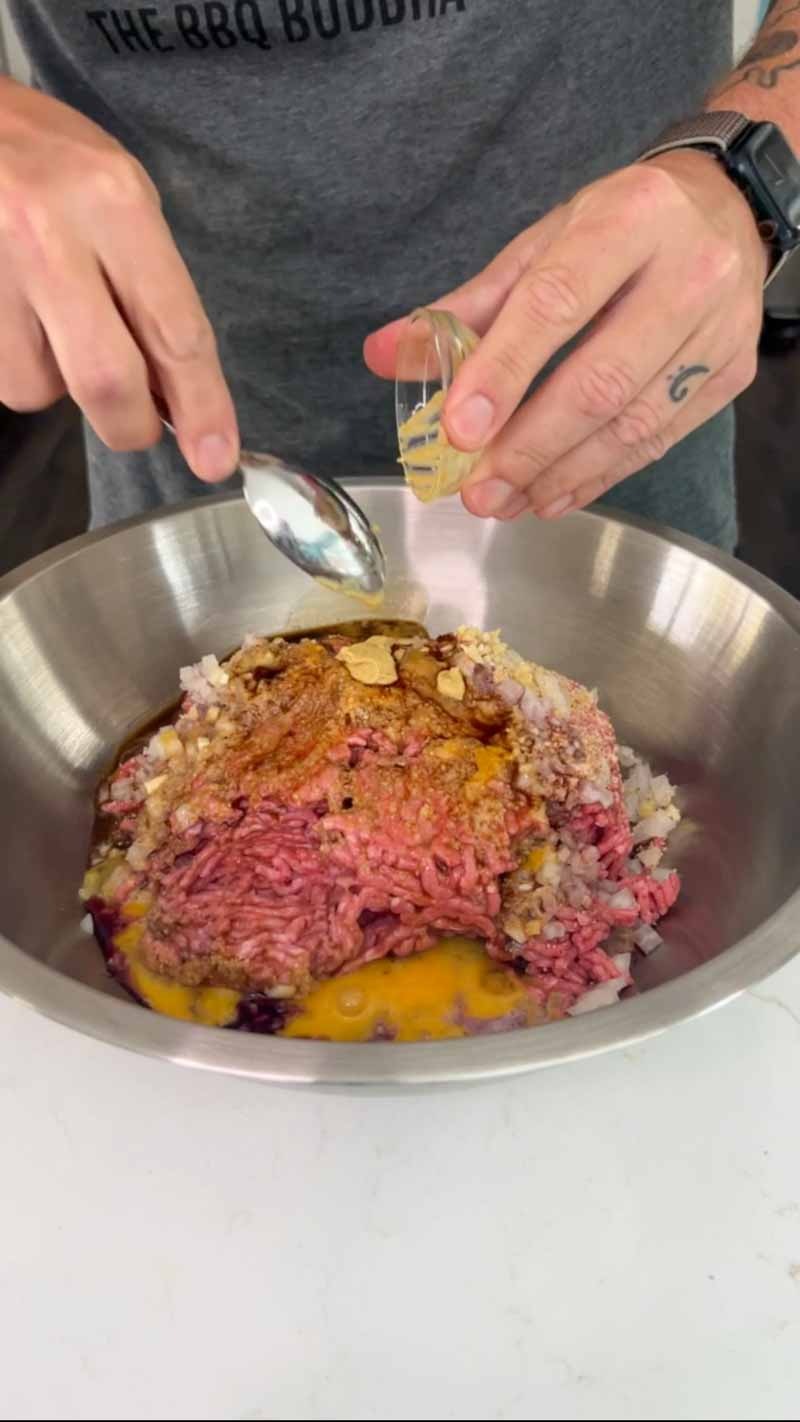
Now that the Big Green Egg is stabilizing, it’s time to bring the ingredients together. This isn’t your standard meatloaf mix. We are introducing a few “chef-inspired” touches, like the red wine and Dijon mustard, that elevate the beef to something much more sophisticated.
In a large mixing bowl, combine:
- The Meat: 2 lbs of ground beef (80/20 is the sweet spot for the Egg).
- The Liquid Gold: A splash of Cabernet Sauvignon and a touch of milk to keep things incredibly tender.
- The Aromatics: Finely chopped onion and minced garlic.
- The Binders: Breadcrumbs and eggs to hold our masterpiece together.
- The Punch: Worcestershire sauce and Dijon mustard for that essential savory, tangy kick.
- The Spices: Salt, black pepper, and a healthy dose of smoked paprika to bridge the gap between the beef and the cedar smoke.
Buddha’s Pro-Tip: The “Gentle Touch”
When mixing, resist the urge to mash the ingredients together. Use your hands to gently fold the spices and liquids into the beef until they are just incorporated. Over-mixing leads to a dense, tough loaf. You want a final product that is light and juicy, allowing the smoke to penetrate the meat rather than bouncing off a solid block of beef.
The “So What?” — Why Red Wine in the Mix?
Adding a bit of the Cabernet directly into the meat mixture does more than just add flavor. The acidity in the wine helps tenderize the beef from the inside out, while the tannins provide a subtle earthiness that complements the cedar plank. It’s a small addition that makes a massive difference in the final “gourmet” profile of the dish.
Step 4: Forming the Loaf
Once your ingredients are prepped, it is time to bring the mixture to life. This is where you transform those individual flavors into a uniform, grill-ready masterpiece.
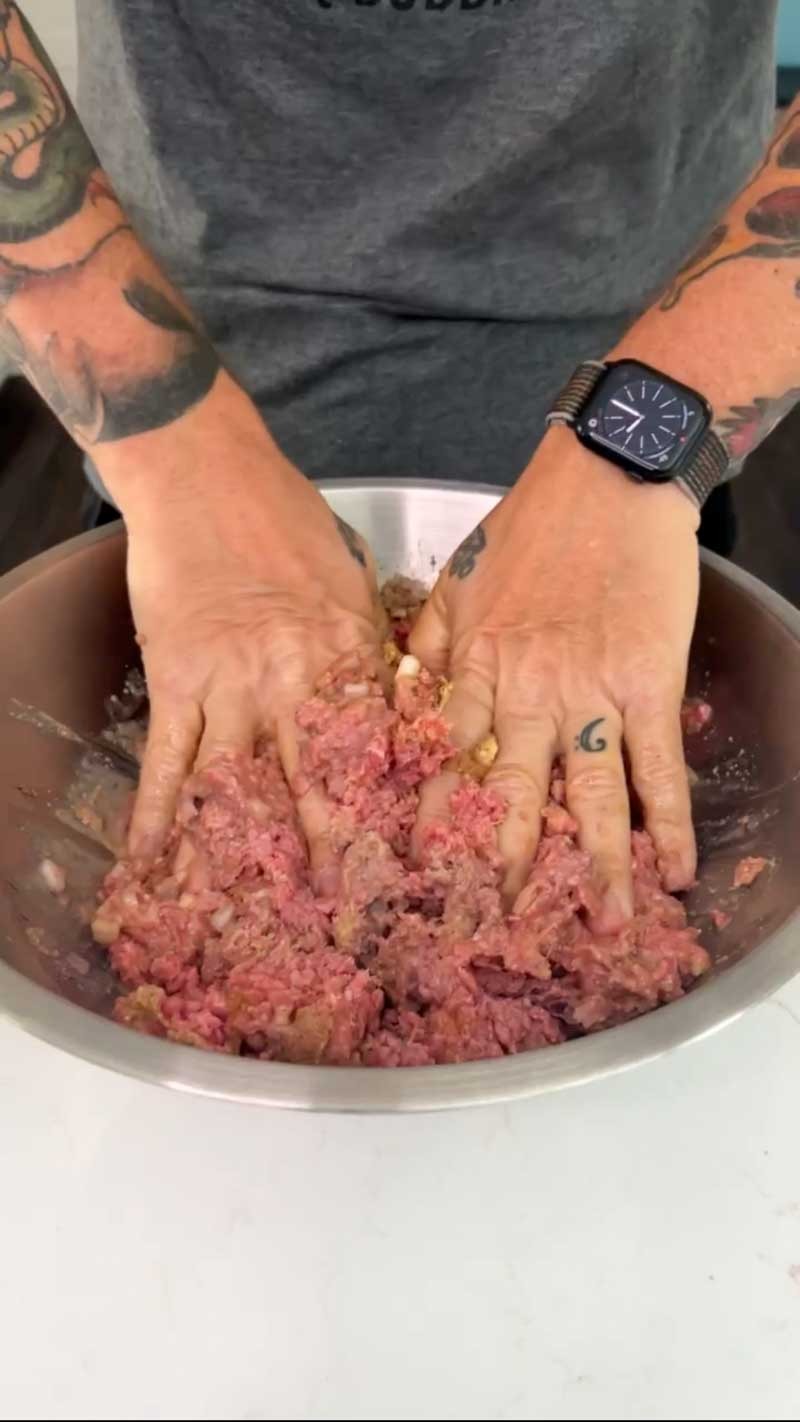
- The Final Mix: Gently work the ingredients together with your hands. Again, the goal is to stop the moment everything is evenly distributed. You are looking for a cohesive texture where the onions, garlic, and spices are visible throughout the beef.
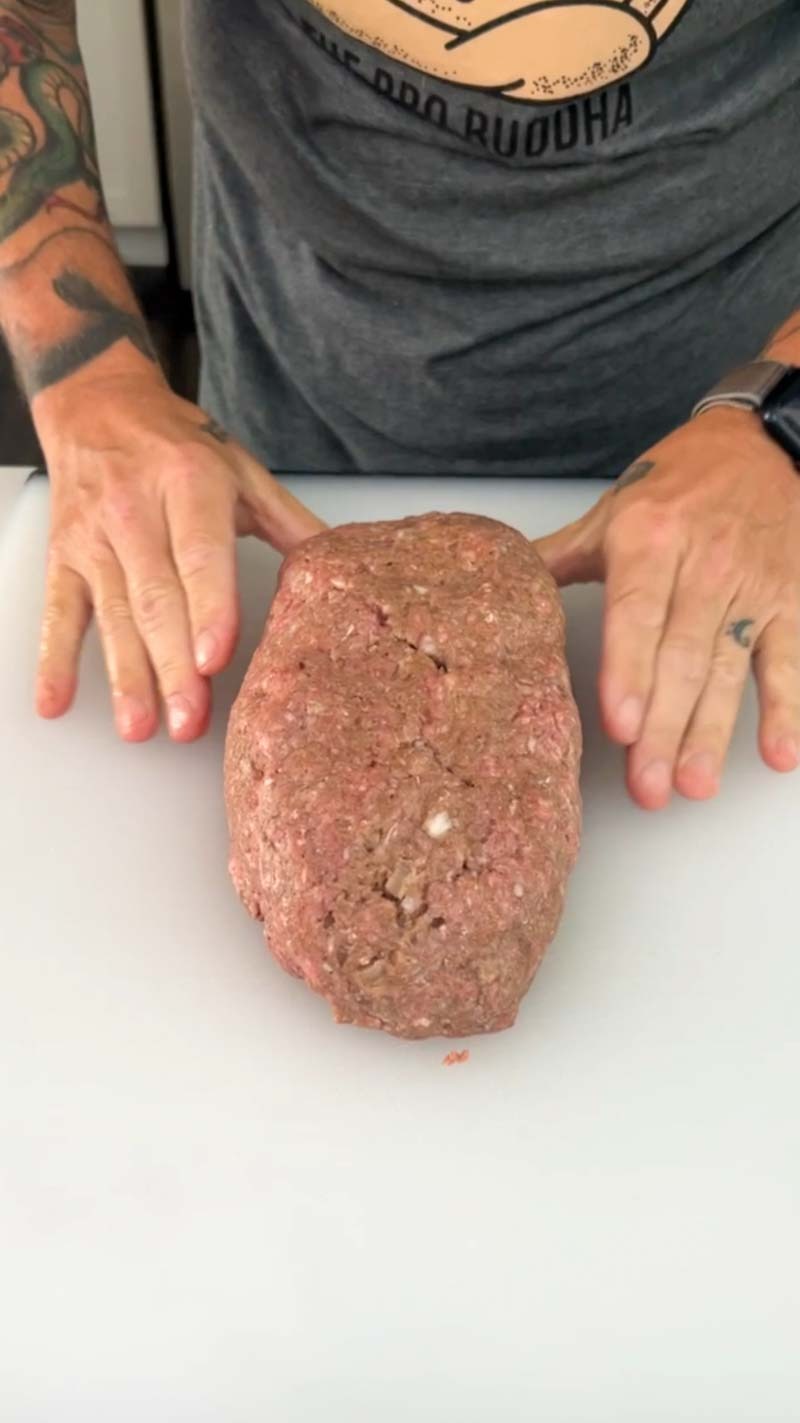
- The Shaping: Transfer the mixture onto a large cutting board. Using your hands, shape the meat into a uniform rectangular loaf.
- The Dimensions: Aim for a loaf that is roughly 4 inches wide and 2 to 3 inches thick. Keeping the thickness consistent is crucial; if one end is significantly tapered, it will finish cooking before the center, leading to dry edges.
- The Plank Check: Before you finalize the shape, grab your soaked cedar plank and do a quick “test fit.” You want the loaf to sit comfortably in the center of the board with at least a half-inch of wood showing on all sides. This ensures the cedar steam can rise up and envelop the meat as it cooks.
Grilling by Feel: The Smooth Finish
As you form the loaf, use a light touch to smooth out any large cracks on the surface. While we are about to wrap this in bacon, a smooth surface ensures the loaf stays structurally sound and doesn’t “blow out” as the juices expand under the heat of the Big Green Egg.
The “So What?” — Why Use a Cutting Board?
Shaping the loaf on a cutting board rather than directly on the wet cedar plank gives you more control. It allows you to get the dimensions perfect and prepare your bacon wrap in a clean workspace before the final assembly. It’s all about setting yourself up for a clean, professional-looking “pull” at the end of the cook.
Step 5: The Bacon Wrap
Now it is time for the layer that takes this recipe from standard to spectacular. Bacon serves two roles here: it acts as a self-basting blanket that keeps the beef moist, and it provides a salty, crispy contrast to the tender interior.
- The Bacon Selection: Use a pack of thinly sliced bacon. While thick-cut bacon is great for breakfast, thin slices are better for this application because they render out more quickly, ensuring you get a crispy finish in the same time it takes to cook the beef through.
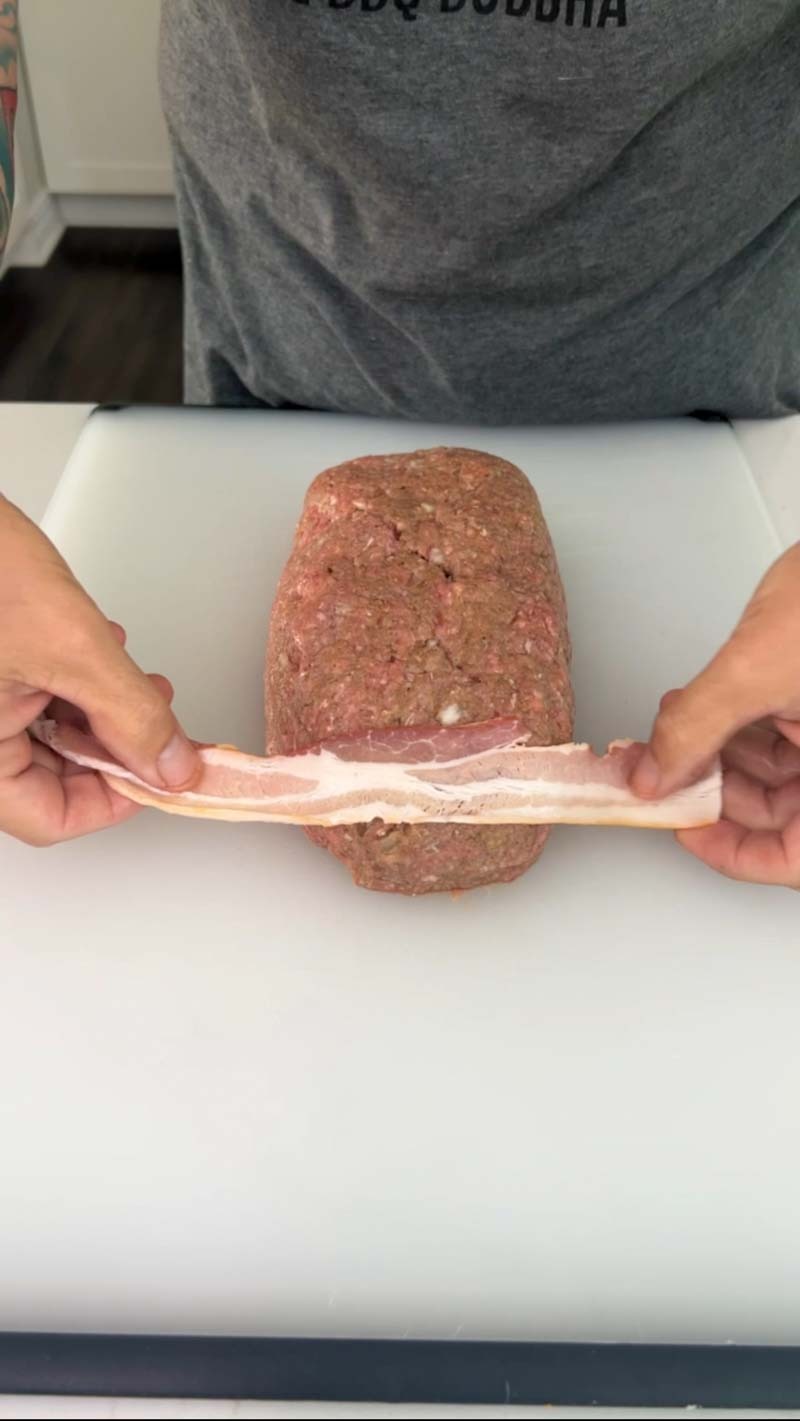
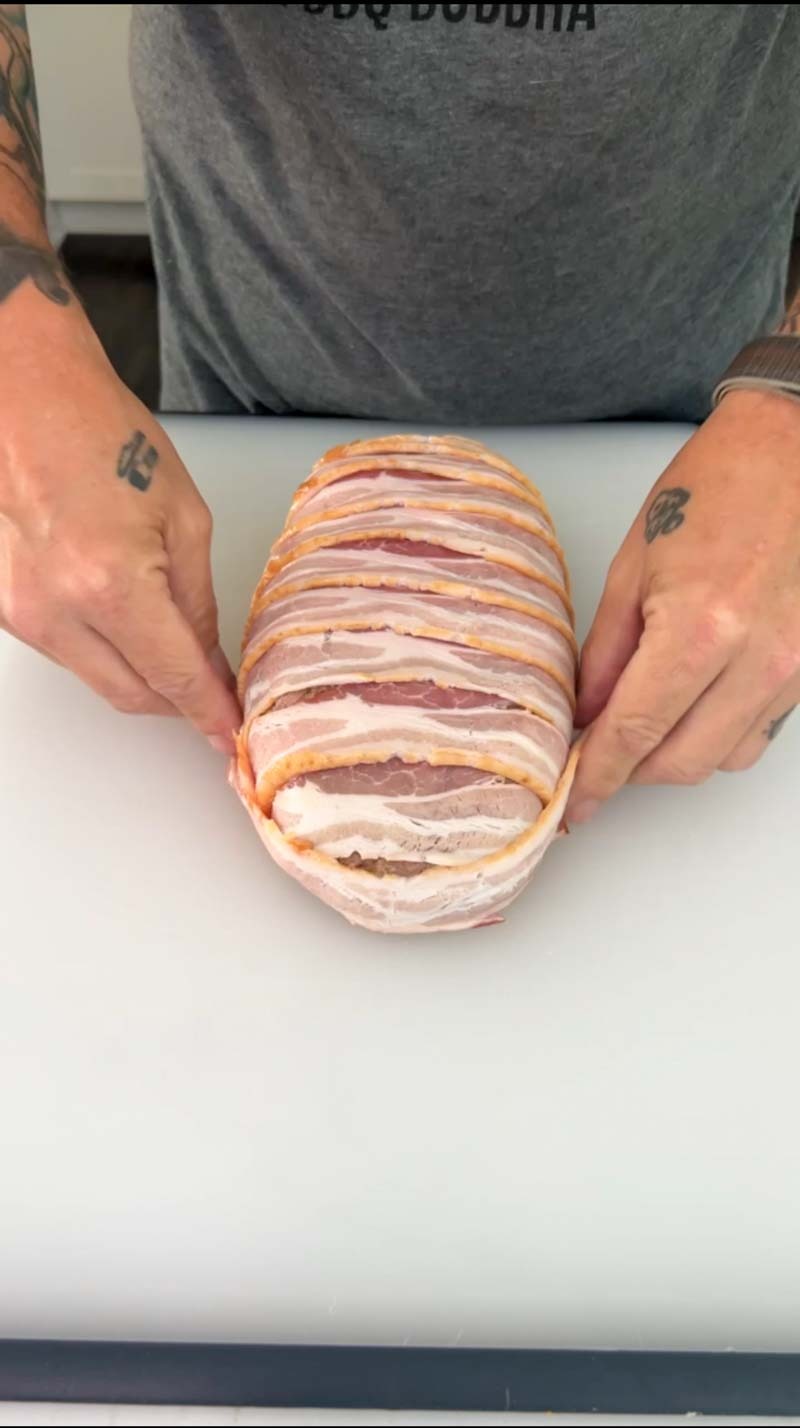
- The Layering: Take your bacon strips and begin layering them across the width of the meatloaf. Start at one end and work your way to the other.
- The Overlap: Make sure you slightly overlap each piece. As bacon cooks, it shrinks. Overlapping ensures that as the fat renders, the meatloaf stays fully covered and “locked in” rather than ending up with gaps in your bacon armor.
- The Tuck: Once the top is covered, gently tuck the ends of the bacon strips underneath the loaf. This creates a neat, professional package that won’t unravel when you move it onto the Big Green Egg.
Grilling by Feel: The Tight Fit
As you wrap, give the bacon a very gentle tug to make sure it is snug against the meat. You don’t want it so tight that it “strangles” the loaf as it expands, but a firm fit ensures the bacon fat flavors the beef directly rather than just dripping off the sides.
The “So What?” — The Shield Effect
By completely covering the surface of the meatloaf, you are creating a protective shield. The indirect heat of the Egg at 350°F will hit the bacon first, rendering the fat so it “confits” the meat underneath. This is why meatloaf on the Egg is so much juicier than the versions made in a standard baking dish.
Step 6: The Transfer to the Plank
With your meatloaf neatly wrapped in its bacon armor, it is time to marry the meat to the wood. This is the moment where the aromatic magic of the cedar begins to play a role in the flavor profile.
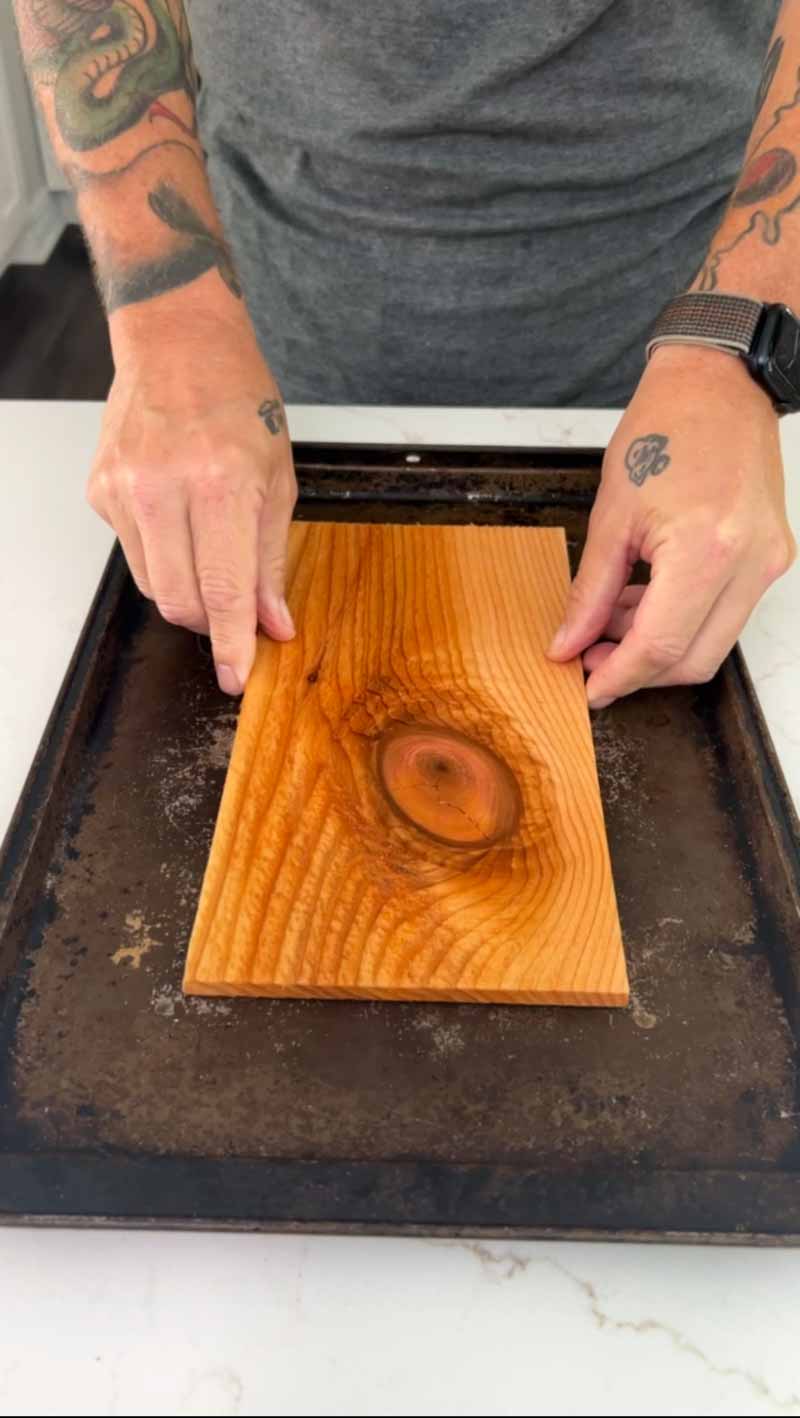
- Prep the Plank: Remove your cedar plank from its water bath. Give it a quick shake to remove any excess dripping water, but don’t dry it off. You want that moisture present to create the steam-smoke effect.
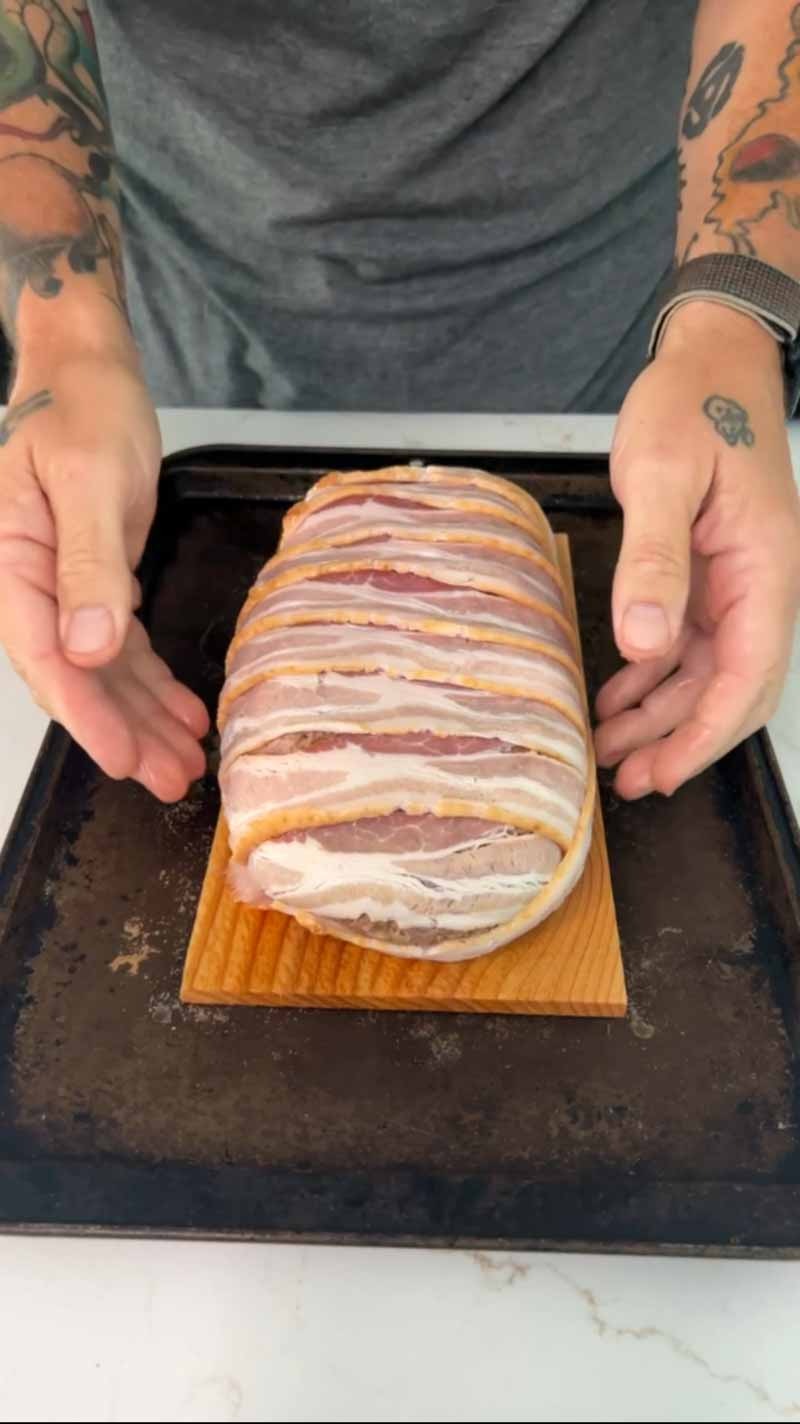
- The Transport: Place the wet plank on top of a baking sheet or a sturdy tray. This makes it infinitely easier (and cleaner) to transport the assembly from your kitchen to the Big Green Egg without dripping water or potentially dropping the loaf.
- The Loading: Carefully lift the bacon-wrapped meatloaf and center it on the plank.
- The Spacing: Ensure there is a bit of breathing room on the edges of the plank. This allows the heat of the Egg to hit the wood directly, triggering the release of those essential cedar oils and creating a “smoke ring” of flavor around the base of your meatloaf.
Buddha’s Pro-Tip: The “Direct-to-Indirect” Move
If you want an extra boost of cedar flavor, you can place the empty, wet plank directly on the grates for 2 minutes before adding the meat. Once the wood starts to lightly crackle and release a sweet aroma, flip it over and place the meatloaf on the charred side. This “toasts” the wood and jumpstarts the infusion process.
The “So What?” — Why the Baking Sheet?
It seems like a small detail, but using a baking sheet for transport is a pro move. It keeps your hands free to open the Egg dome and manage your tools. More importantly, it provides a stable surface to hold the plank as you slide it onto the grates, ensuring your bacon weave stays perfectly in place.
Step 7: The Initial Cook
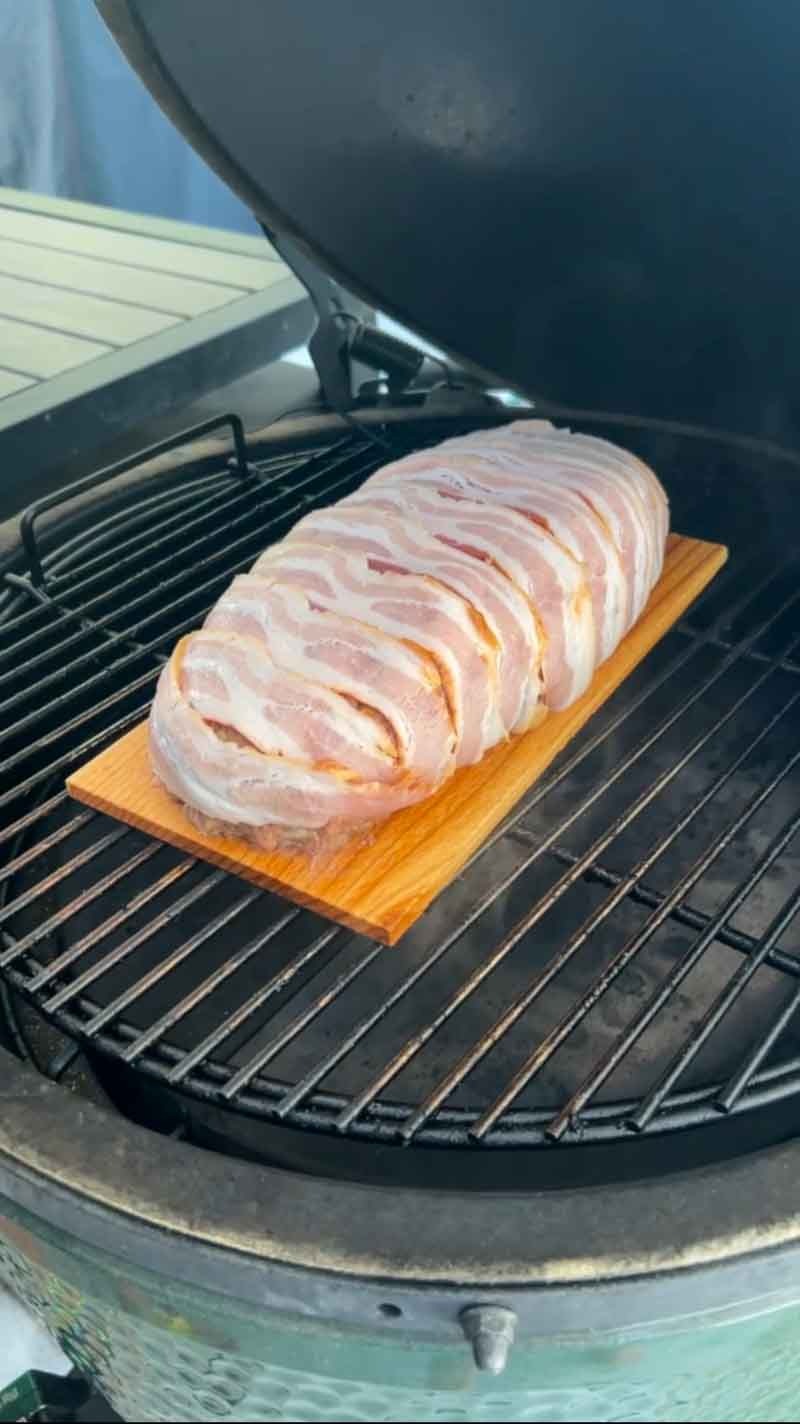
Now that the Big Green Egg is stabilized and your meatloaf is prepped, it is time for the fire to do its work. This stage is all about patience and allowing the indirect heat to render the bacon and gently cook the beef.
- Placement: Open the dome and place the cedar plank (with the meatloaf centered) directly onto the center of the cooking grates.
- The Seal: Close the lid immediately. You want to trap that initial burst of steam from the wet plank so it begins to permeate the meat.
- The Hour of Power: Let the meatloaf cook undisturbed for one hour. This is “set it and forget it” time. Resisting the urge to peek is crucial; every time you open the dome, you lose the convection heat and the delicate cedar smoke that we have worked so hard to build.
Grilling by Feel: What’s Happening Inside?
During this first hour, three things are happening simultaneously:
- Rendering: The thin bacon slices are slowly releasing their fat, which bashes the meatloaf and keeps the exterior from drying out.
- Infusing: The wet cedar plank is heating up, releasing those sweet, woody aromatics into the bottom and sides of the loaf.
- Stabilizing: The internal temperature of the beef is rising steadily toward the finish line, ensuring the middle stays juicy while the edges begin to firm up.
Buddha’s Pro-Tip: The Vent Check
While the meatloaf is cooking undisturbed, keep a casual eye on your temperature gauge. If the Egg starts to creep above 350°F, slightly close the top daisy wheel. You want a steady, consistent heat to ensure the bacon renders perfectly without burning before the beef is done.
Step 8: Crafting the Red Wine Glaze
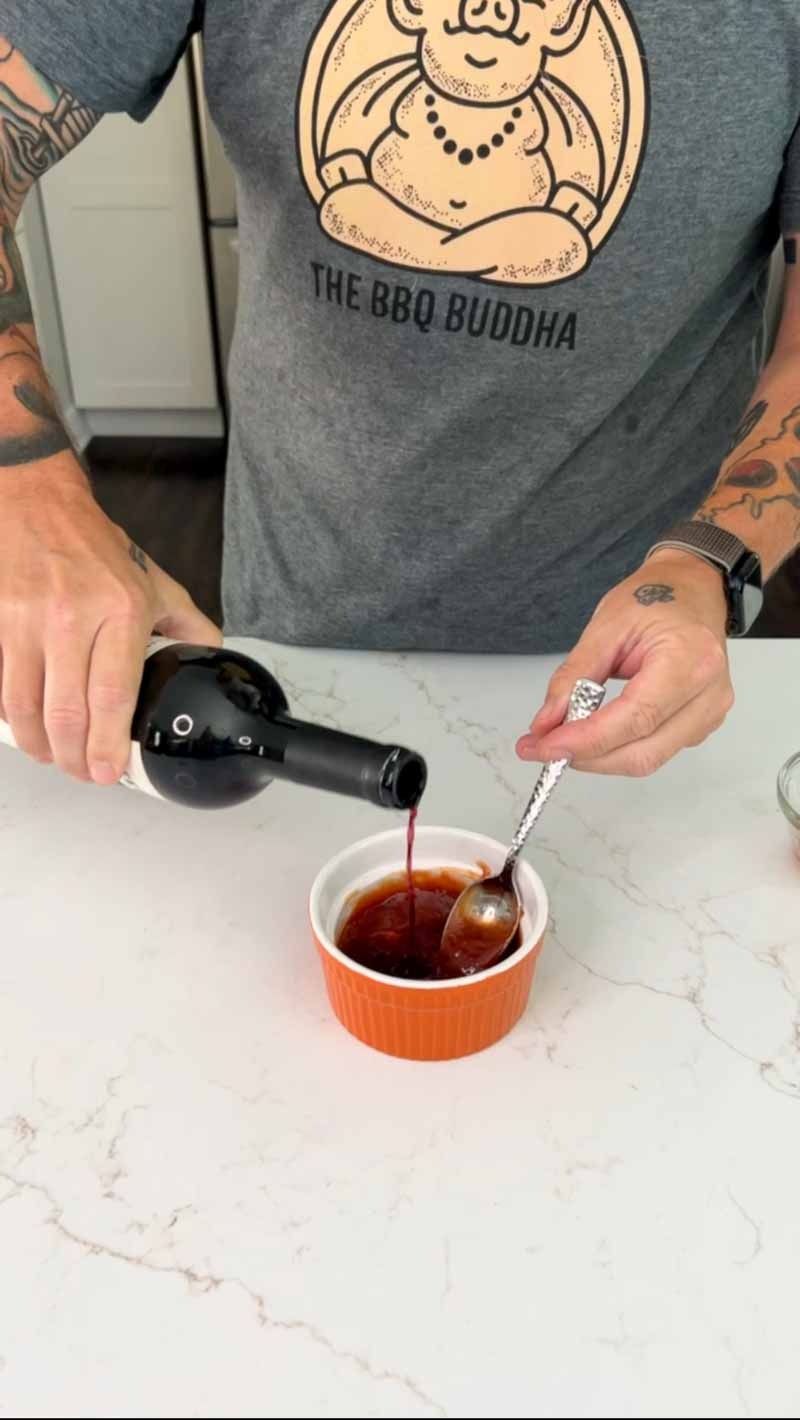
While the meatloaf is absorbing the cedar smoke out on the Egg, it is time to prepare the finishing touch. This isn’t your standard sugary meatloaf topping; the addition of red wine transforms it into a sophisticated, savory glaze that adds a “steakhouse” depth to the dish.
- The Assembly: In a small mixing bowl, combine:
- 1/4 cup Ketchup: This provides the classic base and body for the glaze.
- 2 tbsp Red Wine: Use a bold, dry red like a Cabernet Sauvignon. The tannins in the wine cut through the richness of the bacon.
- 1 tbsp Brown Sugar: This adds just enough sweetness to help the glaze caramelize and “tack up” on the grill.
- The Mix: Whisk the ingredients together until the brown sugar is completely dissolved and the mixture is smooth.
- The Rest: Set the bowl aside. Letting the glaze sit for 30 to 45 minutes while the meatloaf cooks allows the alcohol in the wine to mellow and the flavors to fully integrate.
Grilling by Feel: The Consistency Check
Your glaze should be thick enough to hold its shape on a spoon but thin enough to spread easily with a silicone brush. If your Cabernet is particularly robust and the glaze feels too thin, you can add an extra teaspoon of brown sugar to give it more body.
The “So What?” — Why Red Wine?
By using a dry red wine instead of just more sugar or vinegar, you are adding an “umami” element to the crust of the meatloaf. As this glaze hits the heat of the Big Green Egg in the final stage of the cook, the wine reduces, leaving behind a dark, lacquered finish that tastes as good as it looks.
Step 9: The Glaze and the Home Stretch
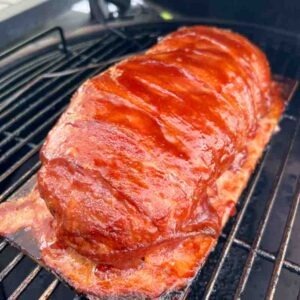
After your meatloaf has enjoyed an hour of undisturbed cedar smoke, it is time to check your progress. Open the dome and take in the view. At this stage, the bacon should be nicely browned and the fat should be well-rendered. You are looking for that perfect transition from raw to a crisp, golden-savory exterior.
- The Visual Check: The bacon should have shrunk slightly to fit the loaf perfectly, and you should see the edges beginning to crisp.
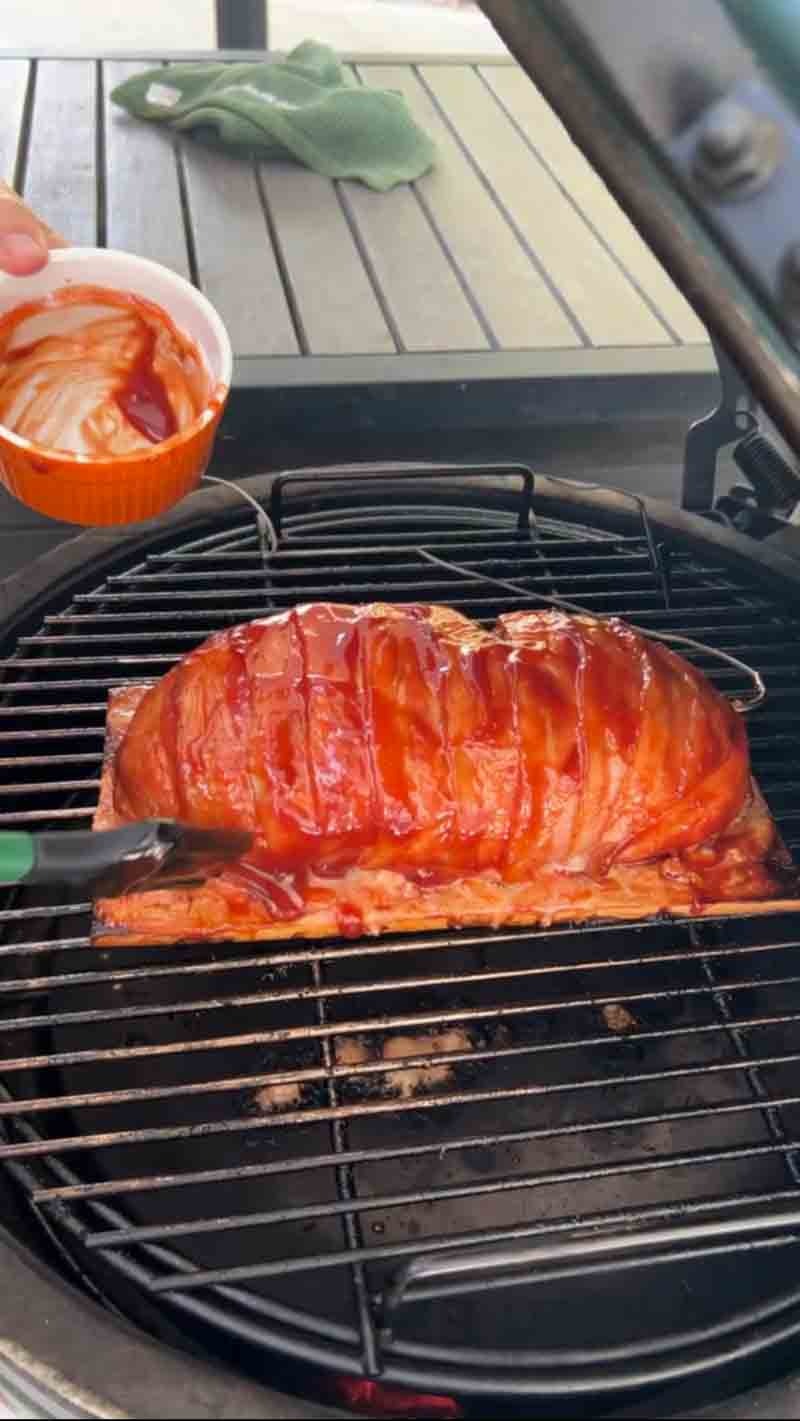
- Apply the Glaze: Using a silicone basting brush, generously apply your Cabernet Red Wine Glaze all over the top and sides of the bacon-wrapped meatloaf. Don’t be afraid to go heavy here; this is what creates that iconic “Gold Standard” crust.
- The Final Set: Close the lid and let the meatloaf cook for another 20 minutes.
Grilling by Feel: The “Tack Up”
This final 20 minutes is where the magic happens. The high heat of the Egg will cause the sugars in the brown sugar and the tannins in the red wine to caramelize. This transforms the liquid glaze into a sticky, lacquered coating that clings to the bacon.
Buddha’s Pro-Tip: If you like an extra-thick crust, you can apply a second thin layer of glaze 10 minutes before you pull it off the Egg. This “double-glazing” technique is a pro move for a truly professional finish.
The “So What?” — Internal Temperature is King
While we are timing this for an hour and 20 minutes total, every cook is a little different depending on the thickness of your loaf and the airflow in your Egg.
The Target: You are looking for an internal temperature of 160°F. Use an instant-read thermometer and probe the very center of the loaf. Once you hit that number, it is time to pull it off.
Step 10: The Pull and the Patience
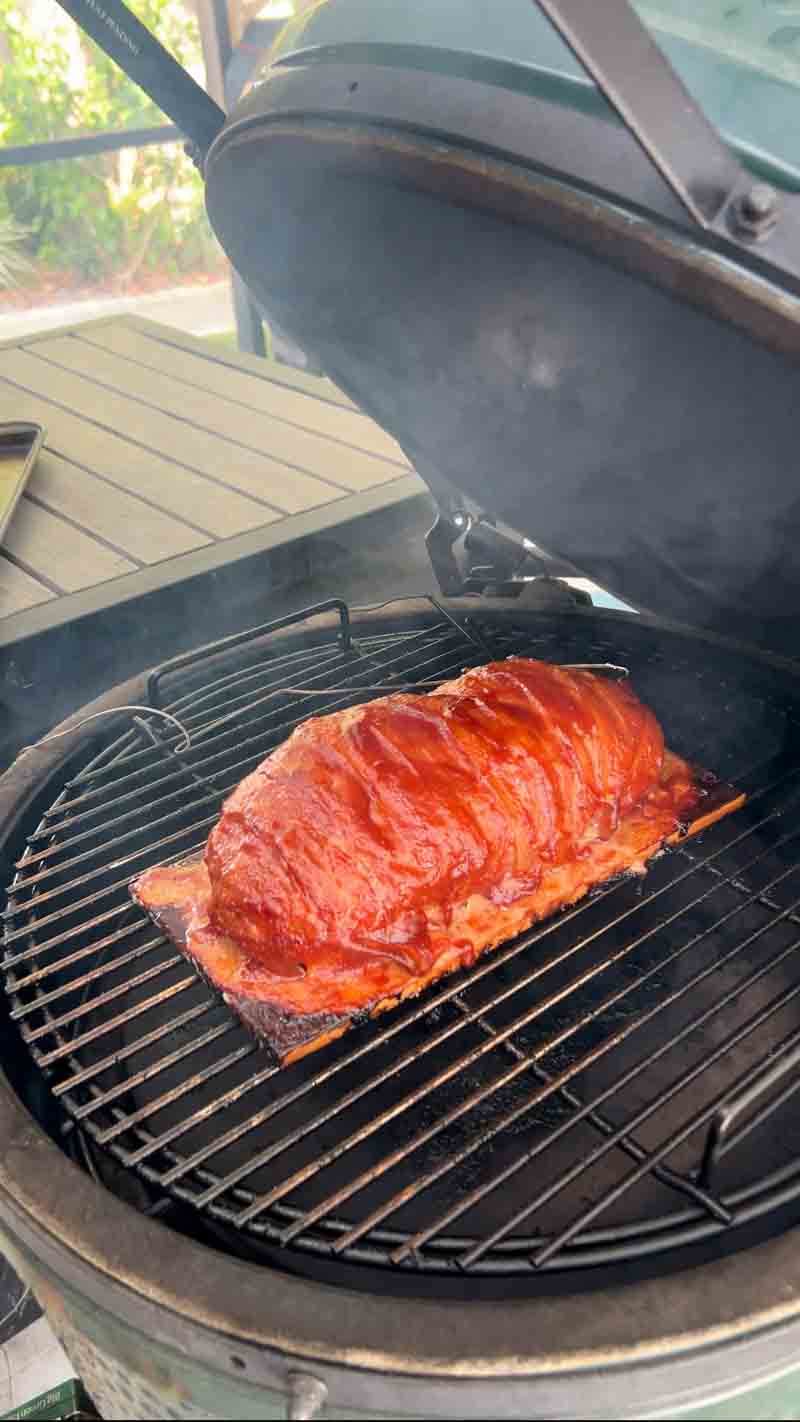
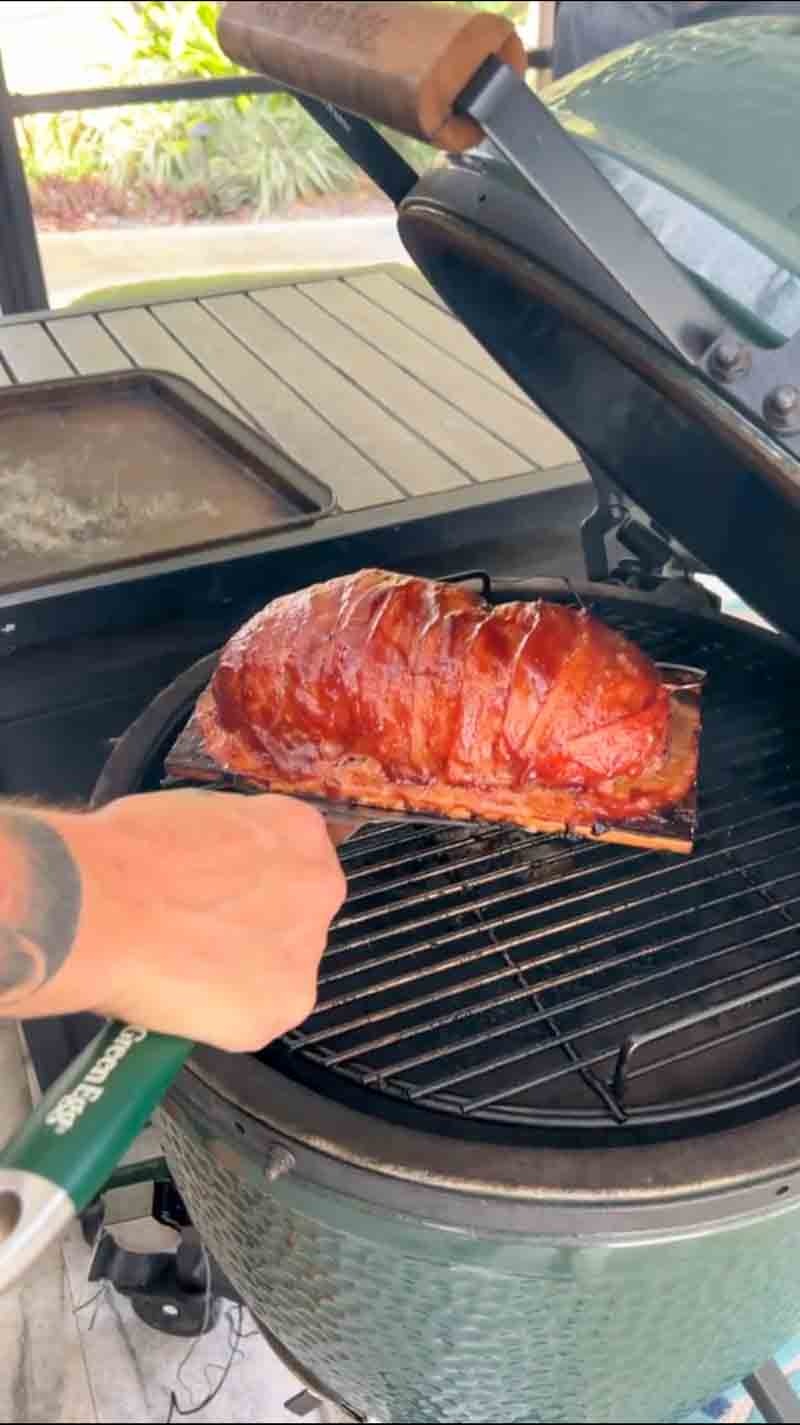
The final stretch is here. Once that Red Wine Glaze has set into a beautiful, sticky lacquer and your instant-read thermometer hits a perfect 160°F in the center of the beef, your work on the Big Green Egg is done.
- The Extraction: Carefully lift the entire cedar plank off the grates using heat-resistant gloves or a sturdy spatula. Place it back onto your baking sheet for a stable trip back to the kitchen.
- The Rest: Resist the urge to slice into it immediately! Let the meatloaf rest for at least 10 minutes.
- Why Rest? This is the “So What” of any great meat cook. During the rest, the internal juices that were pushed toward the center by the heat begin to redistribute throughout the loaf. If you cut it too soon, those juices will run out onto your board, leaving you with dry meat. A rested meatloaf is a juicy meatloaf.
- The Carry-Over: While resting, the internal temperature will likely rise another 5 degrees, ensuring every bite is safely cooked while remaining incredibly tender.
Buddha’s Pro-Tip: Serving on the Wood
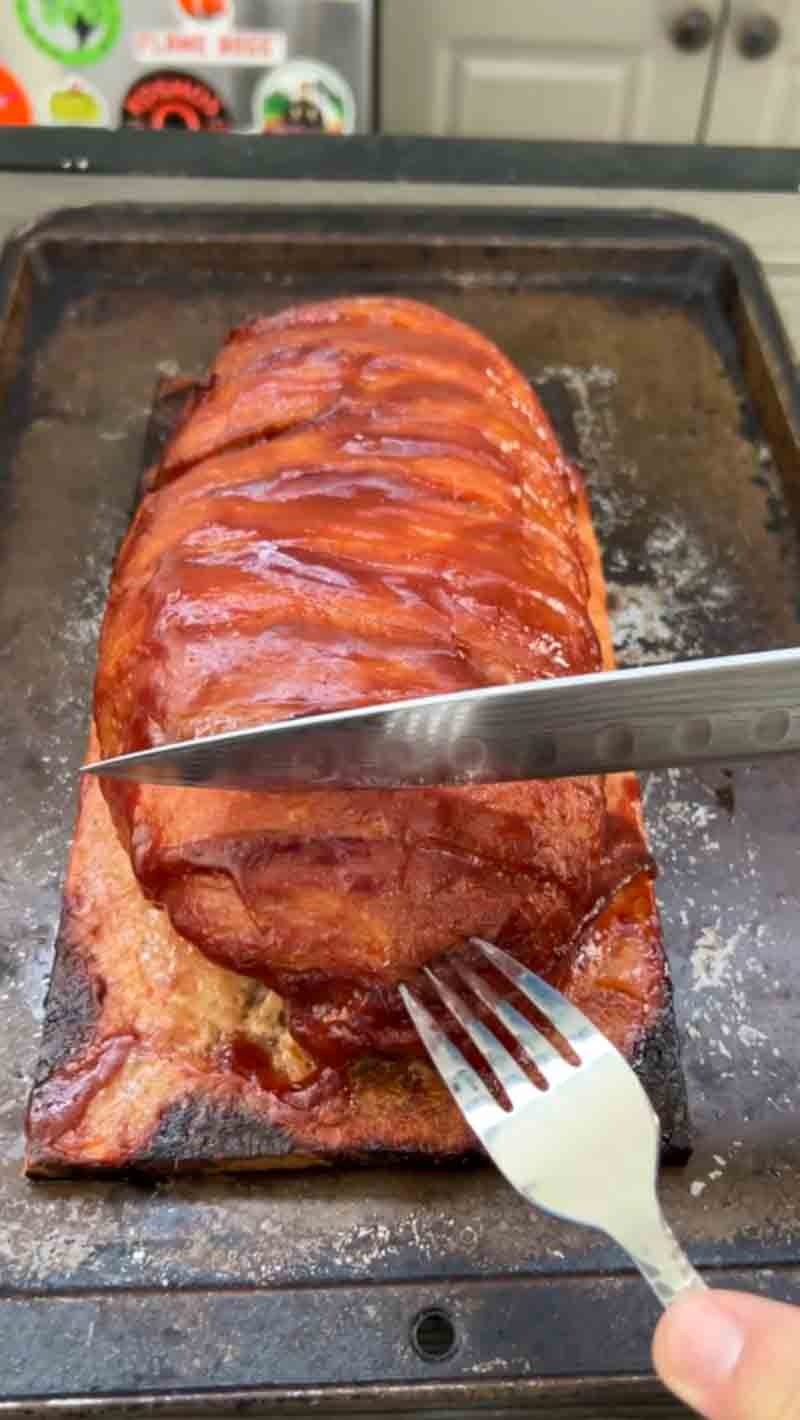
For a true “wow” factor at the dinner table, you can serve the meatloaf directly on the charred cedar plank. The residual heat from the wood keeps the meat warm, and the visual of the blackened board against the red glaze and crispy bacon looks incredible. Just make sure to place the plank on a heat-safe trivet or a wooden serving board to protect your table!
The Final Reveal: Slice and Serve
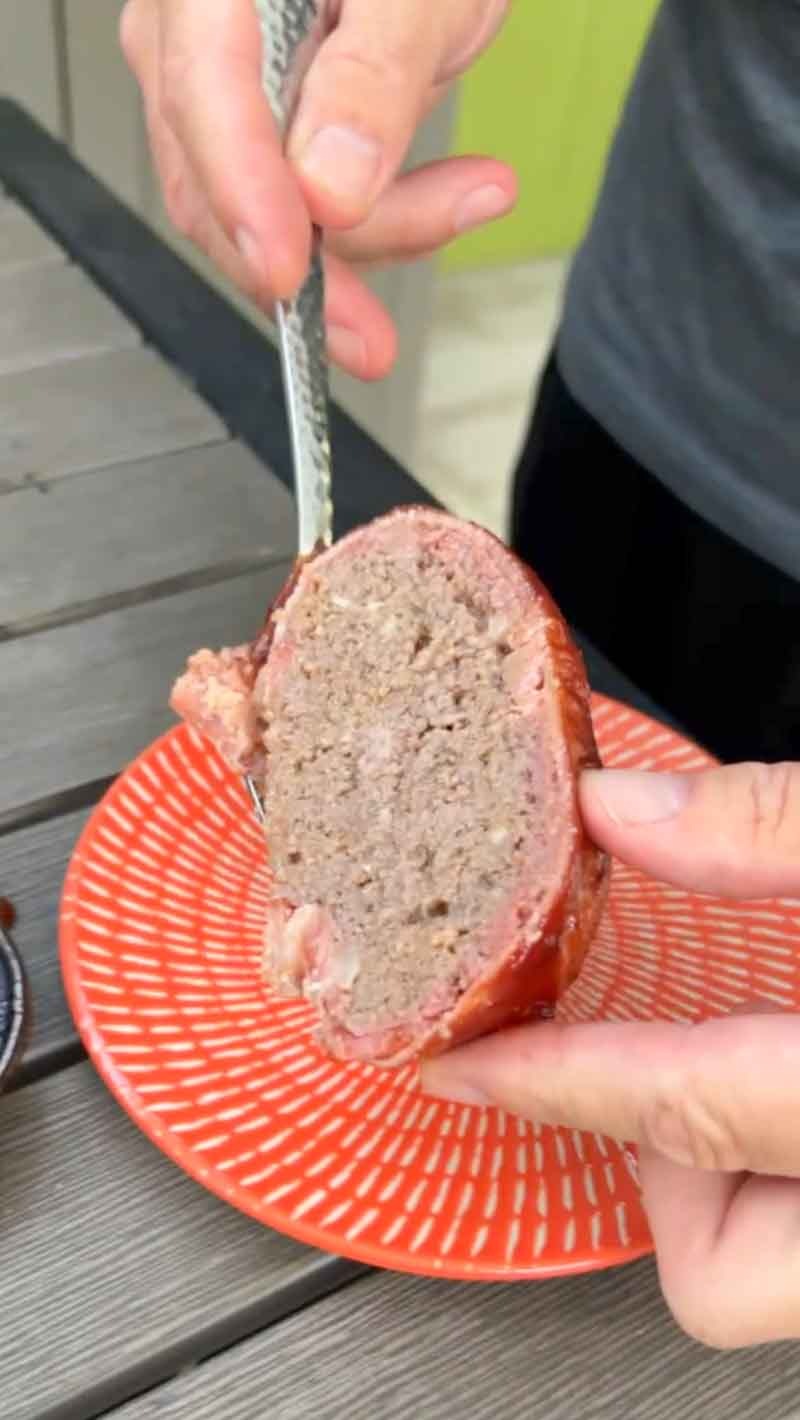
The patience of the rest period pays off the moment your knife slides through the crispy bacon into the tender, wood-infused beef. Because we used the cedar plank and kept the temperature steady, each slice should be perfectly succulent from edge to center.
- The Slice: Use a sharp serrated knife or a long carving knife to cut the meatloaf into thick, generous slices. This ensures the bacon wrap stays intact and the loaf holds its beautiful structure.
- The Presentation: You will notice a slight “smoke ring” near the bottom where the cedar steam worked its magic, and a gorgeous contrast between the dark, lacquered red wine glaze and the savory bacon.
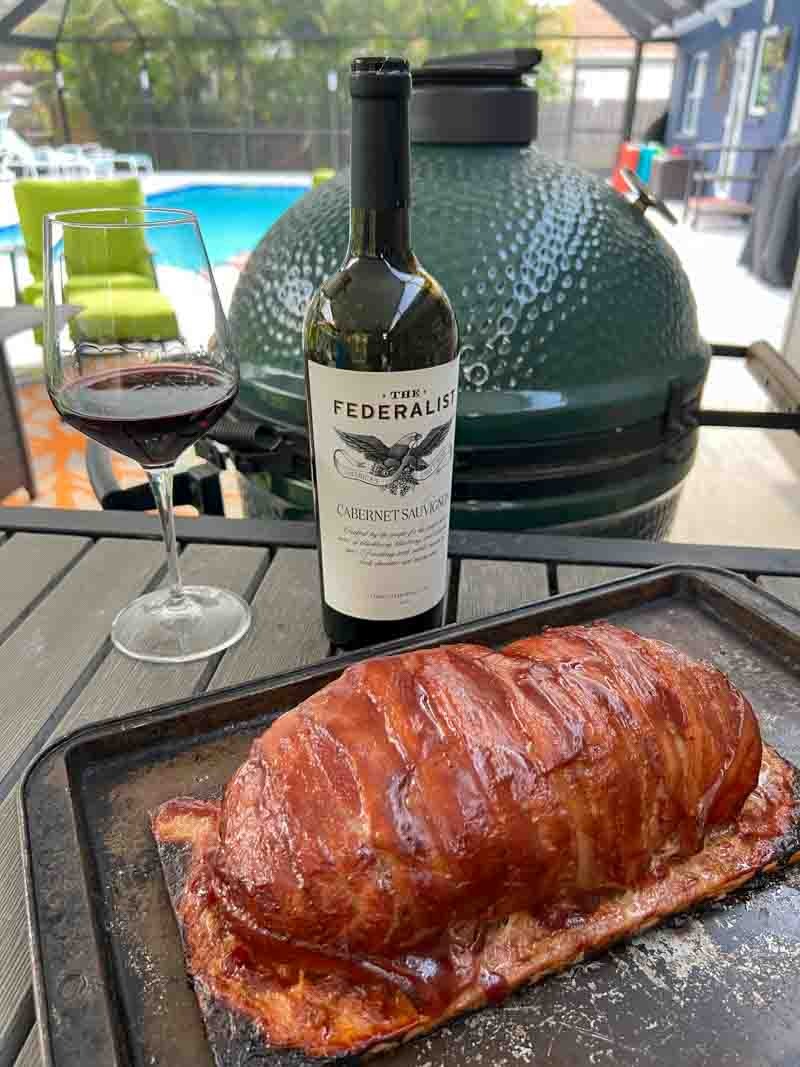
- The Pairing: To bring the whole experience full circle, pour a glass of that same Cabernet Sauvignon you used in the mix and the glaze. The dark fruit notes and firm tannins of the wine are the perfect match for the smoky, salty, and savory profile of the meatloaf.
The “So What?” — Why This Works
This isn’t just a meal; it is a masterclass in utilizing the Big Green Egg for more than just steaks and brisket. By combining the ancient technique of plank grilling with a modern red wine reduction, you’ve turned a humble weeknight staple into a gourmet event. The cedar provides the aroma, the bacon provides the moisture, and the wine provides the elegance.
Gather the family around, pass the plates, and enjoy the ultimate comfort food upgrade.
Cedar Planked Bacon Wrapped Meatloaf on the Big Green Egg
Equipment
- 1 cedar plank soaked
Ingredients
Meatloaf
- 2 pounds ground beef
- 1/2 cup red wine, cabernet sauvignon
- 1/2 cup bread crumbs
- 1/2 cup yellow onion, finely chopped
- 3 cloves garlic, minced
- 1/4 cup milk
- 2 eggs, beaten
- 2 tbsp Worcestershire sauce
- 1 tbsp Dijon mustard
- 1 tsp kosher salt
- 1/2 tsp black pepper
- 1/2 tsp smoked paprika
- 12-16 thinly sliced bacon
Red Wine Glaze
- 1/4 cup ketchup
- 2 tbsp red wine, cabernet sauvignon
- 1 tbsp brown sugar
Instructions
- Soak the Plank: Start by soaking your cedar plank in water for at least one hour before you plan to cook.
- Setup the BGE: Set up your Big Green Egg for indirect cooking with the convEGGtor and preheat to 350°F.
- Make the Mix: In a large mixing bowl, add the ground beef, red wine, breadcrumbs, chopped onion, garlic, milk, eggs, Worcestershire sauce, Dijon mustard, salt, black pepper, and smoked paprika. Mix gently by hand until just combined.
- Form the Loaf: Form the mixture into a uniform loaf shape on a cutting board. Ensure the loaf is sized to fit comfortably on your cedar plank.
- Wrap in Bacon: Layer the thinly sliced bacon over the meatloaf, slightly overlapping each piece until the entire surface is covered. Tuck the ends underneath the loaf.
- Transfer: Remove the cedar plank from the water. Place the meatloaf on top of the plank.
- The Cook: Place the planked meatloaf into the Big Green Egg. Close the lid and cook undisturbed for one hour.
- Make the Glaze: While the meatloaf cooks, whisk together the ketchup, red wine, and brown sugar in a small bowl. Set aside.
- Glaze and Finish: After one hour, brush the red wine glaze generously over the bacon. Close the lid and cook for another 20 minutes, or until the internal temperature reaches 160°F.
- Rest and Serve: Remove the meatloaf from the Egg and let it rest for 10 minutes. Slice and serve with a glass of Cabernet Sauvignon.
Nutrition information is automatically calculated, so should only be used as an approximation.