

This post contains affiliate links. Please see our disclosure policy.
There is something incredibly satisfying about mastering a new skill at the grill, especially when it involves a technique as visually stunning and flavor-packed as this one. If you have ever felt intimidated by a massive, 2.5-pound Tomahawk Ribeye, or wondered how to achieve that perfect steakhouse crust without a commercial broiler, you are in the right place. This post is all about the Caveman Method, a technique that strips away the barrier of the grill grate and puts your meat directly in contact with the soul of the cook: the fire.
While we are using a world-class piece of Snake River Farms American Wagyu, the real star here is the process. We are combining the precision of a reverse sear with the primal intensity of searing directly on red-hot lump charcoal. This dual-method approach ensures that your steak is buttery and edge-to-edge pink on the inside, while the outside carries a deep, smoky char that only 1,000-degree coals can produce.
So, pour yourself a glass of your favorite Cabernet Sauvignon, settle in, and let’s walk through how to transform a legendary cut of beef into a meal you will never forget.
Table of Contents
- Step 1: The Prep — Salt, Pepper, and Patience
- Step 2: The Setup — Indirect Heat and a Kiss of Smoke
- Step 3: Monitoring the Temperature and the Flip
- Step 4: Transitioning to the Caveman Sear
- Step 5: Fanning the Flames — The Caveman Setup
- Step 6: The Sear — Directly on the Embers
- Step 7: The Final Rest and Slicing
- How to Cook a Caveman Style Tomahawk Ribeye: The Ultimate Guide Recipe
Get My NEW Book
The Ultimate Big Green Egg Cookbook

Why Go Caveman?
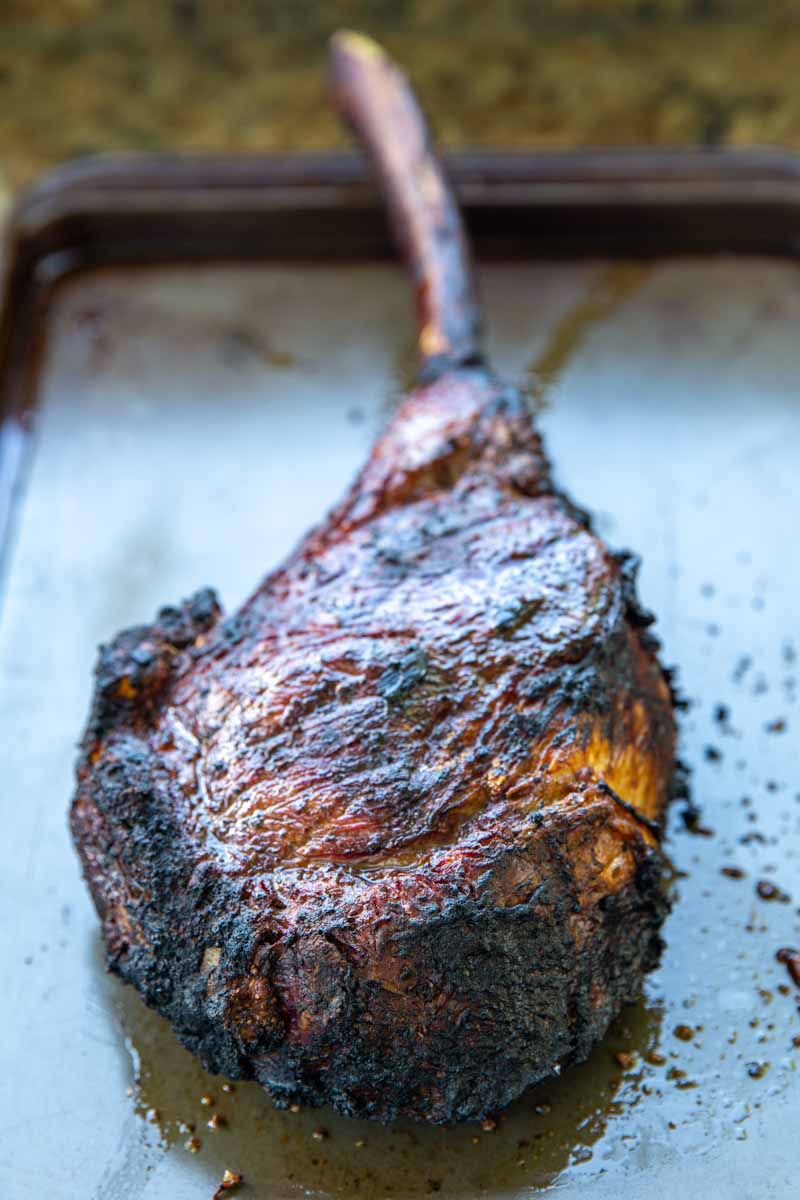
You might be asking why we would put a beautiful steak directly on the coals. Isn’t it messy? Won’t it taste like ash? Surprisingly, the answer is no. Because we are using high-quality lump charcoal, the intense heat sears the surface of the meat instantly, creating a crust so fast that the ash doesn’t actually stick. This “caveman” finish provides a unique, wood-fired flavor profile and a texture that you simply cannot get from a metal grate.
Step 1: The Prep — Salt, Pepper, and Patience
The beauty of a high-end steak like a Tomahawk is that the meat is the main attraction. You do not need complex marinades or heavy sauces; you simply need to enhance the natural beef flavor.
The 50/50 Rub
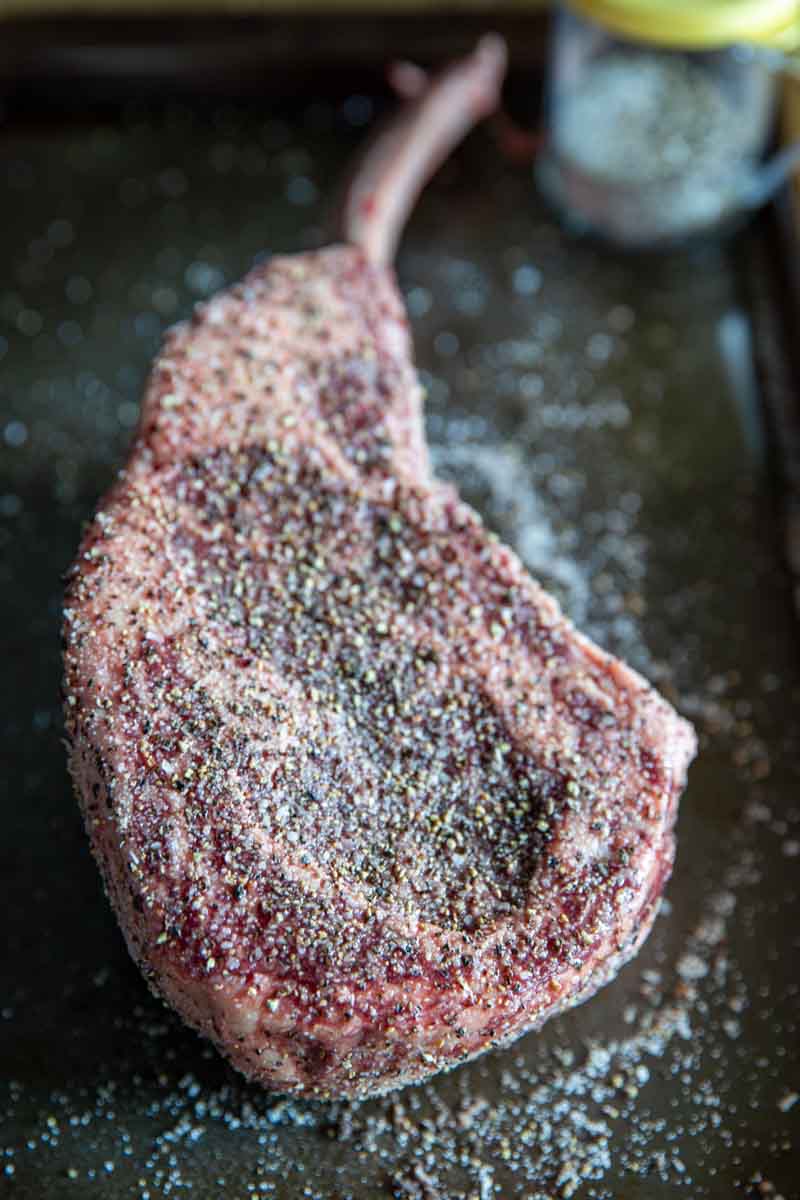
Once you remove the steak from its packaging, pat it completely dry with paper towels. Moisture is the enemy of a good sear. For seasoning, we are using the classic “Dalmatian Rub”: a 50/50 mix of Kosher salt and coarse ground black pepper.
- Why Kosher Salt? The larger grains are easier to distribute evenly and do not dissolve instantly, helping to draw out moisture and then re-absorb it to deeply season the interior.
- Why Coarse Pepper? Large, cracked peppercorns provide a spicy bite and contribute to the “bark” or crust that will eventually stand up to the heat of the coals.
The Dry Brine Technique
Generously coat every inch of the steak, including the thick sides. Do not forget the edges! After seasoning, let the steak sit at room temperature for at least 45 to 60 minutes while you prepare your Big Green Egg.
This serves two purposes. First, it allows the salt to penetrate the meat (a “dry brine” effect). Second, it takes the chill off the steak. Bringing a 2.5-pound piece of beef closer to room temperature ensures that the center warms up more evenly during the slow-cooking phase, preventing a cold, raw middle.
Step 2: The Setup — Indirect Heat and a Kiss of Smoke
To achieve that perfect edge-to-edge pink interior, we are using the reverse sear method. This means we cook the steak low and slow first, then finish with the high-heat sear.
The Indirect Configuration
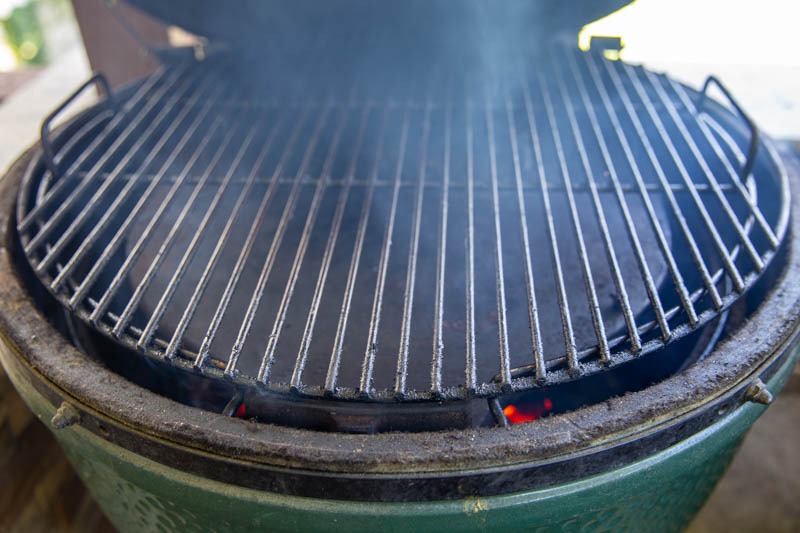
Set up your Big Green Egg for indirect cooking. Insert the ConvEGGtor (plate setter) with the legs facing up and place your stainless steel cooking grid on top.
- The Temperature: Light the lump charcoal and stabilize your dome temperature at 350°F. This temperature is the “sweet spot” for a steak of this thickness; it is hot enough to render the fat efficiently but gentle enough to prevent the outer layers from overcooking while the center reaches the target temperature.
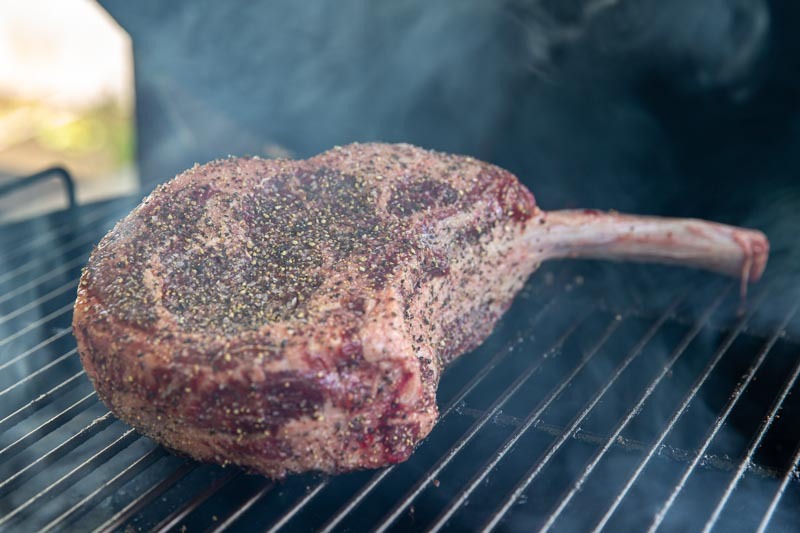
- The Wood Choice: Add a handful of Pecan wood chips to the charcoal just before you put the steak on the grill. Since we are working with a high-quality Wagyu cut, we want a “kiss” of smoke rather than a heavy punch. Pecan offers a mild, nutty sweetness that complements the rich, buttery flavor of the beef without masking it.
The First Stage of the Cook
Place the seasoned Tomahawk on the grid. Close the dome and let it roast. This phase is all about precision. You are looking for an internal temperature of 115°F to 120°F for a medium-rare finish. Depending on the exact thickness of your steak and the ambient temperature, this usually takes about 45 to 60 minutes.
Step 3: Monitoring the Temperature and the Flip
Precision is the most important part of the reverse sear. Because a Tomahawk is so thick, you cannot rely on a timer or “the poke test” to know when it is ready. You need to manage the internal temperature closely to ensure the steak cooks evenly from top to bottom.
Using Your Instant-Read Thermometer
About 20 to 30 minutes into the cook, use your ThermoWorks ThermoPop to check the internal temperature.
- The Technique: Insert the probe into the thickest part of the steak, making sure you are not hitting the bone, which can give a false reading.
- The Goal: You are looking for a steady climb. Checking early allows you to gauge how fast the Egg is cooking that particular piece of meat.
The Mid-Cook Flip
When you perform that first temperature check, go ahead and flip the steak. While the ConvEGGtor provides indirect heat, the side facing the stones can still cook slightly faster than the side facing the dome. Flipping the steak halfway through ensures that the heat distribution is symmetrical, leading to a more consistent internal color.
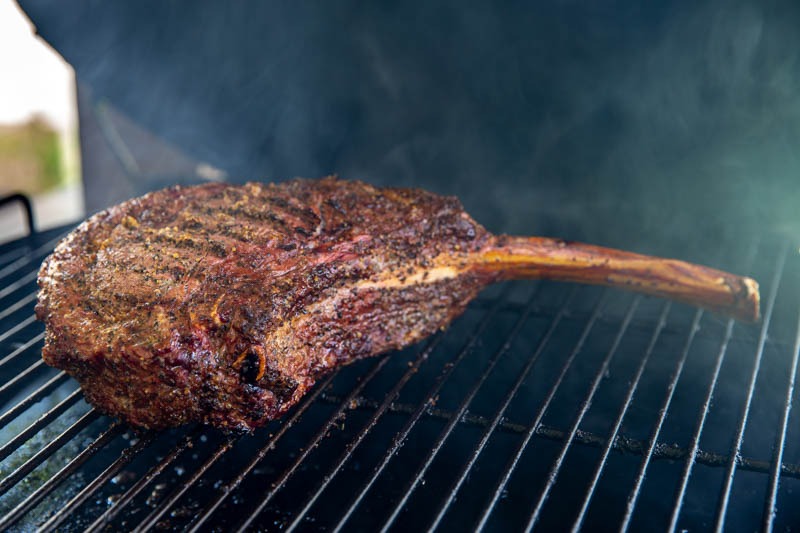
Continue monitoring the steak until it hits your target pull temperature of 115°F to 120°F. This usually takes about an hour total, but every steak and every fire is different. Once you hit that number, remove the steak from the Egg and place it on a tray.
Step 4: Transitioning to the Caveman Sear
Now comes the fun part. Remove the Snake River Farms Tomahawk Ribeye and let it rest for 10 minutes or so while you set up the Big Green Egg for the Caveman cook.
Setting the Stage
While the meat rests, you need to transition the Egg from an indirect roaster to a high-heat forge.
- Remove the Hardware: Carefully pull out the cooking grid and the ConvEGGtor. Use heat-resistant gloves, as these components will be extremely hot.
- Clean the Coals: Use a grill tool or ash tool to stir the charcoal. This knocks the loose ash off the remaining lumps and allows more oxygen to flow, which is vital for reaching searing temperatures.
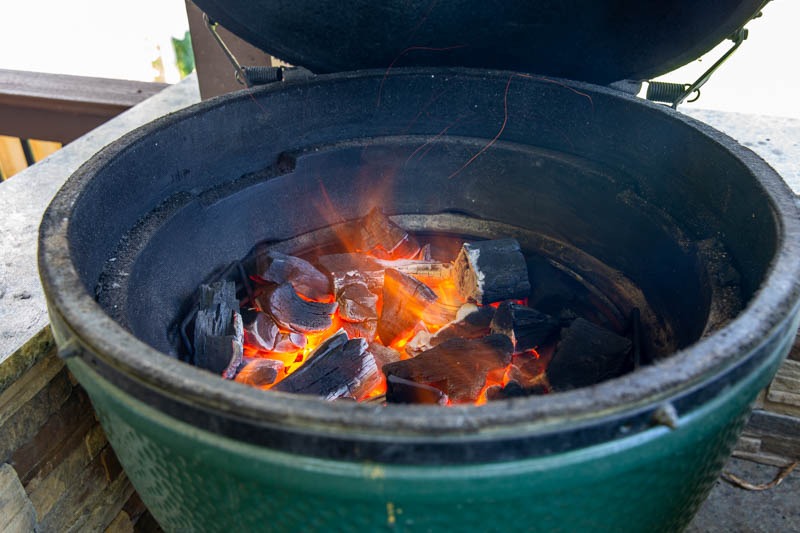
- Open the Vents: Open the bottom draft door and the top vent wide. You want these coals glowing red-hot. If there are any large, unlit pieces of charcoal, move them to the center to create a flat, even bed of fire.
What is a Caveman Cook?
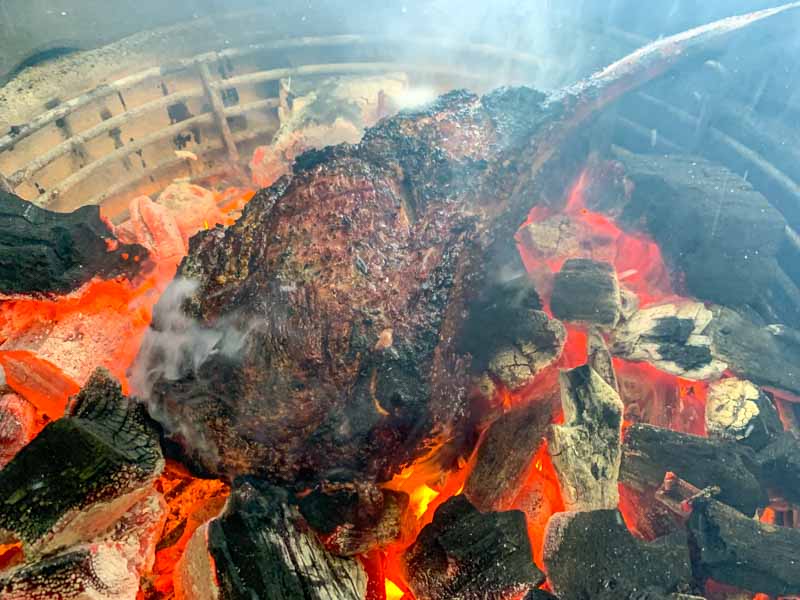
Some of you may not be familiar with this style of cooking and that is ok as it can be intimidating at first. Basically, you throw the meat right on the coals and cook it for a minute or two each side. For a larger cut of meat, cooking this way is a great way to do it; it adds incredible flavor and gives the meat a beautiful, rustic crust.
This is cooking at its most basic level. Because we are using high-quality lump charcoal (which is just carbonized wood), there are no chemicals or additives to worry about. The moisture in the meat creates a small layer of steam that prevents the ash from sticking, leaving you with nothing but a perfect, charred exterior.
Step 5: Fanning the Flames — The Caveman Setup
To get your Big Green Egg ready for the Caveman sear, you need to maximize oxygen flow to get the coals as hot as possible. This is the moment where the Egg transforms from an oven into a live-fire pit.
The High-Heat Configuration
- Open the Intake: Slide the bottom draft door open all the way. This allows the fire to pull in as much air as it needs to reach peak temperature.
- Clear the Deck: Remove the ConvEGGtor and the grill grate entirely. Set them aside in a safe, heat-proof area.
- The Open-Air Method: Leave the top of the Egg open. Unlike the roasting phase where we want to trap heat, the Caveman sear relies on the direct, radiant heat of the glowing embers. Leaving the lid open prevents the temperature from spiking too high for you to manage the meat and allows you to watch the sear happen in real time.
The Bed of Fire
Before the meat hits the coals, take your ash tool and give the charcoal a final stir. You want a flat, even bed of glowing red lumps. If you see any gray ash sitting on top of the coals, give them a quick blow or a fan with a piece of cardboard to clear it away. You want the steak to make contact with pure, glowing carbon.
Once you see that uniform red glow and feel the intense heat rising from the fire box, you are ready to drop the steak.
Step 6: The Sear — Directly on the Embers
Once the coals are screaming hot and glowing a bright, uniform red, it is time for the main event. This is where the magic happens and that legendary crust is formed.
Managing the Fire
Before you drop the steak, close the bottom vent. This is a crucial trick: by cutting off the fresh oxygen from below just as you start the sear, you prevent massive flare-ups caused by the rendering Wagyu fat dripping onto the coals. You want the intense radiant heat of the embers to sear the meat, not active flames to char it.
The Caveman Technique
- The Drop: Using your hands (protected by high-quality, heat-resistant grilling gloves), pick up the Tomahawk by the bone and place it directly onto the coals. You should hear an immediate, aggressive sizzle.
- The Timing: Cook the steak this way for 60 to 90 seconds. Because the heat is so intense, it does not take long to develop a dark, rich crust.
- The Flip: Use the bone as a handle to flip the steak over to a fresh spot on the coals. If a particular coal is stuck to the meat, just give the steak a gentle shake or tap it with your tongs; it will fall right off.
- Safety First: Make sure you are wearing heat-resistant grilling gloves to protect your cooking hand when handling the bone of the ribeye. Even with the lid open, the radiant heat coming off those coals is immense.
The Finish
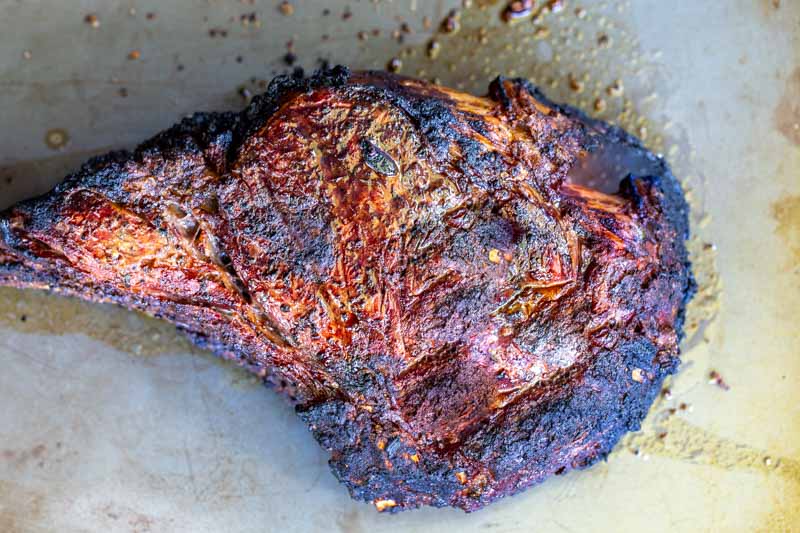
Once both sides have a beautiful, even char, use your ThermoPop one last time. For a perfect medium-rare, you are looking for a final internal temperature of 130°F to 135°F. The steak will continue to rise a few degrees as it rests.
Step 7: The Final Rest and Slicing
The temptation to cut into a steak this beautiful the second it leaves the fire is high, but the final rest is the most important part of the entire process.
Why Resting is Crucial
When you remove the Snake River Farms Tomahawk Ribeye from the coals, the muscle fibers are tight and the juices are under pressure. If you slice it immediately, those delicious juices will run out all over your cutting board, leaving you with a drier piece of meat.
- The Wait: Place the steak on a warm plate or a clean wooden cutting board. Let it rest for 10 to 15 minutes.
- The Physics: During this time, the internal temperature will equalize and the muscle fibers will relax, allowing the juices to redistribute throughout the meat. This is how you ensure every single bite is as juicy as the first.
How to Slice a Tomahawk
When you are ready to serve, follow these steps for the best presentation:
- The Bone: Run your knife along the curve of the bone to remove the entire ribeye in one piece. Set the bone aside (it is usually the prize for the cook to gnaw on later).
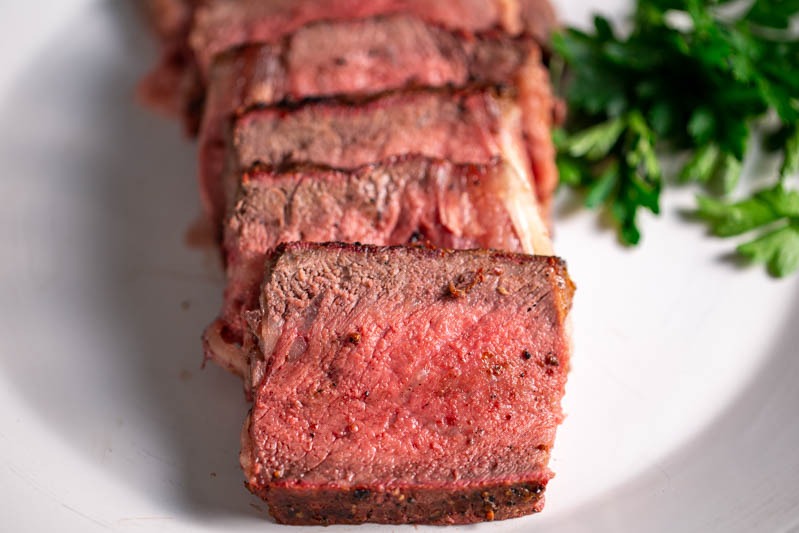
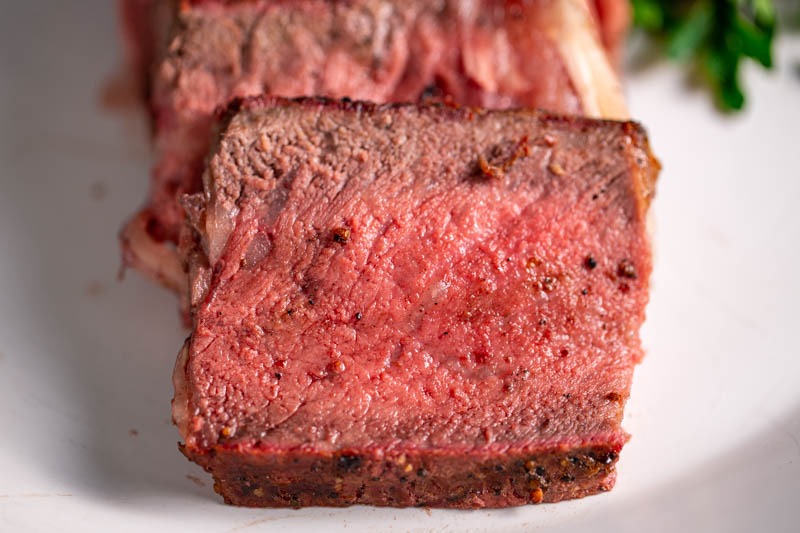
- Against the Grain: Slice the ribeye into thick strips (about 1/2 inch to 1 inch wide) across the grain.
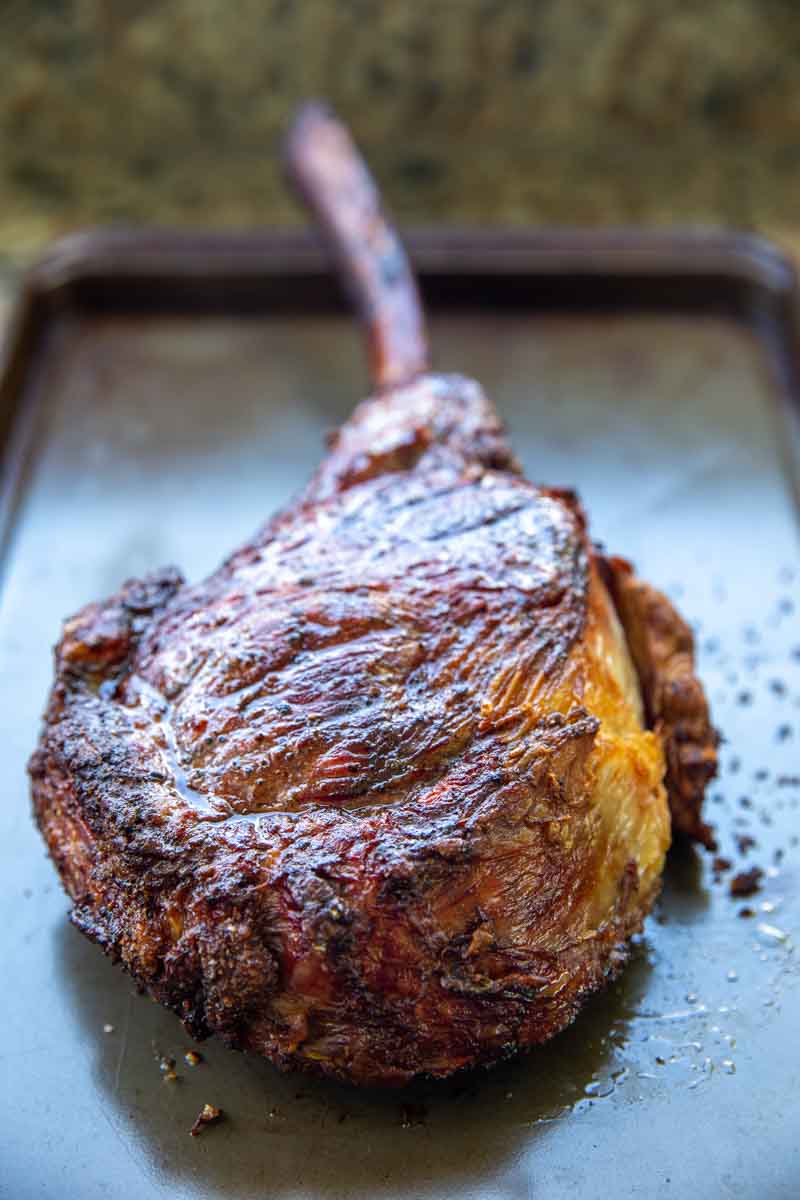
- The Reveal: Look for that edge-to-edge pink interior contrasted against the dark, coal-fired crust.
The Verdict
Cooking Caveman style is more than just a gimmick; it is a way to connect with the ingredients and the fire in a way that modern grilling often skips. The result is a steak with a texture and flavor profile that feels truly special. Pair this with a bold Cabernet Sauvignon and some grilled seasonal vegetables for a meal that your guests will be talking about for years.
How to Cook a Caveman Style Tomahawk Ribeye: The Ultimate Guide
Ingredients
- 2.5 pounds Tomahawk Ribeye
- 1 tsp Kosher salt
- 1 tsp Black Pepper
Instructions
- Preheat the Big Green Egg to 250°F setup for indirect cooking.
- Season the tomahawk ribeye with salt and pepper.
- Place the seasoned ribeye in to the Big Green Egg and let cook until the internal temperature measures 115°F.
- Pull the steak off the Big Green Egg and remove the ConvEGGtor and grill grate. Open top and bottom vent all the way and let the lump charcoal get red hot.
- When the coals are read hot, place the tomahawk steak directly on the hot bed of coals. Let this cook 90 seconds then flip the steak to the other side and let it cook 90 seconds more. When the crust is looking good, pull the steak and rest 15 minutes before slicing and serving.
Nutrition information is automatically calculated, so should only be used as an approximation.







Going at this technique tonight in Dallas , TX. Shovel we scrape or clean any residue from the tomahawk after the “caveman” method, prior to eating?
Not one thing… any residue is actually great flavor and color.