The Ultimate Guide to Big Green Egg Reverse Sear Tri-Tip
This recipe is for reverse seared Trip Tip using a Big Green Egg. Great cut of meat that is packed with flavor using this technique.
Servings: 6
Equipment
- 12" Cast Iron Pan
Ingredients
Steak Ingredients:
- 2 lbs Tri-Tip Roast
- 2 tbsp Olive Oil
- 4 tbsp BBQ Rub e.g., Meat Church Holy Cow
Sides Ingredients:
- 1 zucchini
- 1 yellow onion
- 2 ears Corn on the Cob
- 1 Poblano Pepper
Instructions
- Prep and Season: Trim any heavy silver skin from the roast. If there is a thick fat cap, trim it down to 1/8 inch. Apply a light coating of olive oil as a binder and season generously with your beef rub. Let the meat sweat at room temperature for 20 minutes.
- Setup the Big Green Egg: For the roasting phase, set up your Large Big Green Egg for indirect cooking by inserting the convEGGtor with the legs facing up. Stabilize the temperature at 300°F. If you are using two grills, set up your Mini Max for direct heat (no convEGGtor) and stabilize it at 450°F or higher with a cast iron skillet placed on the grate to preheat. If using one grill, see the note below for the transition.
- The Roasting Phase: Place the seasoned tri-tip on the grate of the Large EGG directly over a drip pan. This pan is vital for catching rendered fat and keeping the smoke flavor clean. Close the dome and roast the meat for approximately 45 minutes. Use a high-quality instant-read thermometer to check the internal temperature in the thickest part of the roast. Pull the meat when it reaches 130°F for a medium finish, or 115°F to 120°F if you prefer a traditional medium-rare.
- Prepare the Salsa and Sides: While the beef is roasting, take advantage of the high heat on your Mini Max. Place the corn and the poblano pepper directly over the coals. Rotate the corn frequently until the kernels are charred and sweet, and let the poblano skin blister and blacken completely. Remove the vegetables, peel the charred skin from the poblano, and mix the diced pepper and corn kernels with lime juice and cilantro for a fresh, smoky side dish.
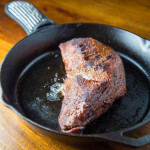
- The Cast Iron Sear: Move the roasted tri-tip over to the ripping hot cast iron skillet on the Mini Max. Sear the roast for exactly 2 minutes per side. You are looking for a deep, dark mahogany crust to form. Since the meat is already cooked through, this step is purely about developing texture and flavor on the surface.
- The Rest and the Master Slice: Transfer the tri-tip to a cutting board and let it rest for at least 15 minutes. This is the most important step for a juicy result. Once rested, look at the grain of the meat. Find the "crook" where the fibers change direction and slice the roast in half at that point. Rotate each half and slice thin strips perpendicular to the grain. This ensures the meat is tender and easy to eat, avoiding the "rookie mistake" of slicing with the grain.